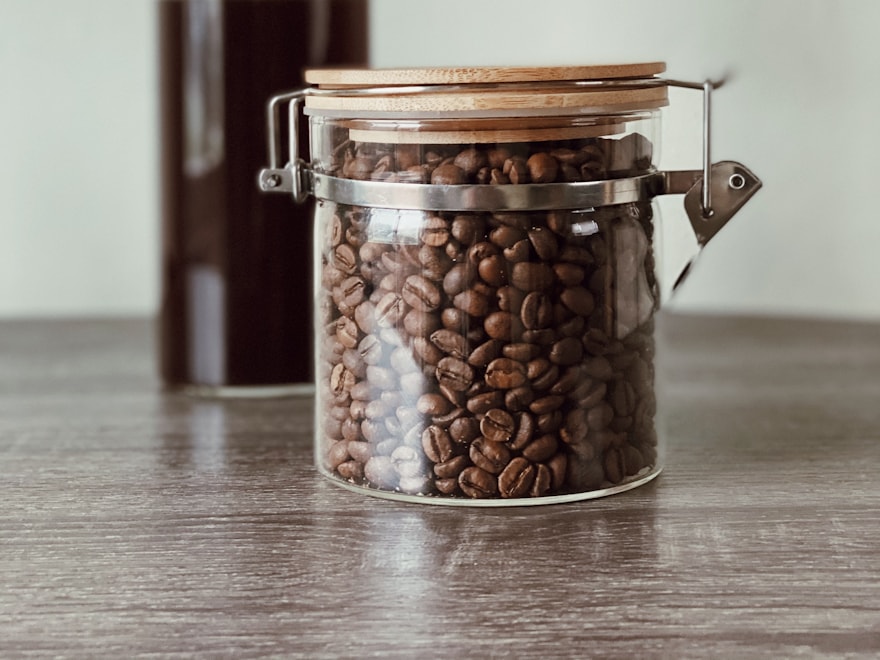
Food glass · Spice and seasoning jars
The dispenser first. The jar second. Clear glass that sells what is inside it.
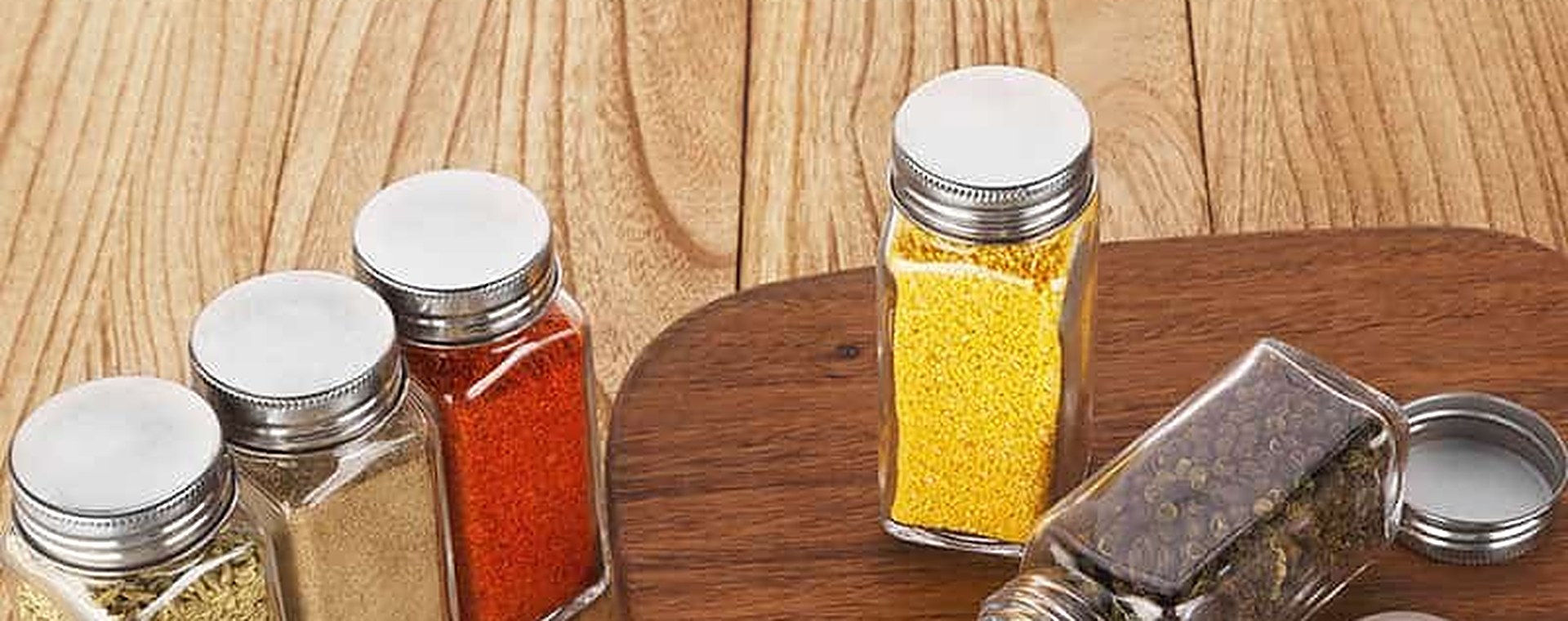
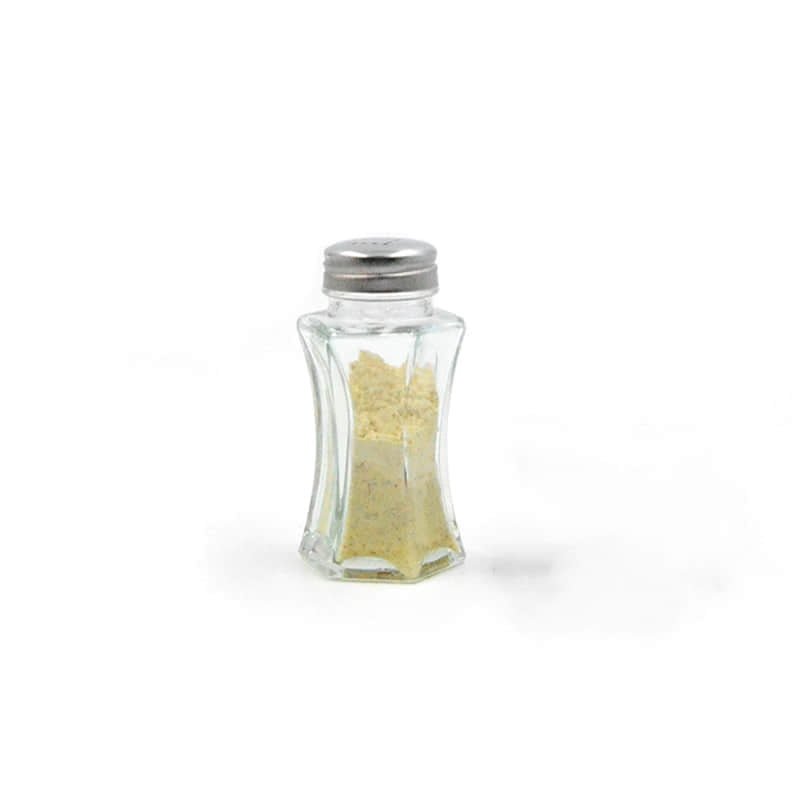
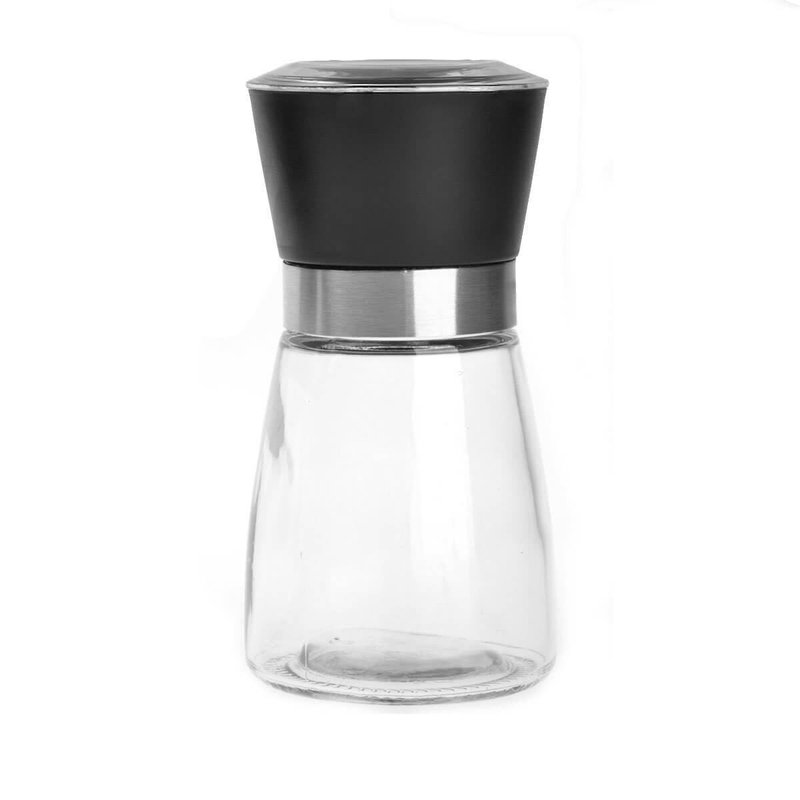
If you blend spice, own a seasoning brand or co-pack for one, you buy the dispenser first and the jar second, and both come off our own lines in Shandong. Your choice runs to sixteen running-mould jars from 50 ml to 250 ml (1.7 to 8.5 oz), round and French square. Nine dispensing systems price alongside the glass, so how your customer gets the spice out is settled in the same quotation as the jar.
Sixteen running-mould jars, grouped by how the spice leaves the jar. The dispenser filter narrows it to the bodies that carry each system, which is the order you actually buy in. We quote wholesale per jar and per cap.


No running-mould jar carries that dispenser at that size. Your quotation can still cover it: most heads and inserts cross over between bodies once the mouth opening matches.

You buy a spice jar back to front: your dispenser decides the jar, and the mouth opening decides your dispenser. Three things reach you in writing before a deposit.
What is at stake
Your fine chilli powder pours straight through a hole pattern cut for oregano, and a whole peppercorn jams a sift insert designed for salt. Your customer blames the brand for it. Choose the jar first and the dispenser afterwards, and you re-tool a cap after your first production run.
What we supply
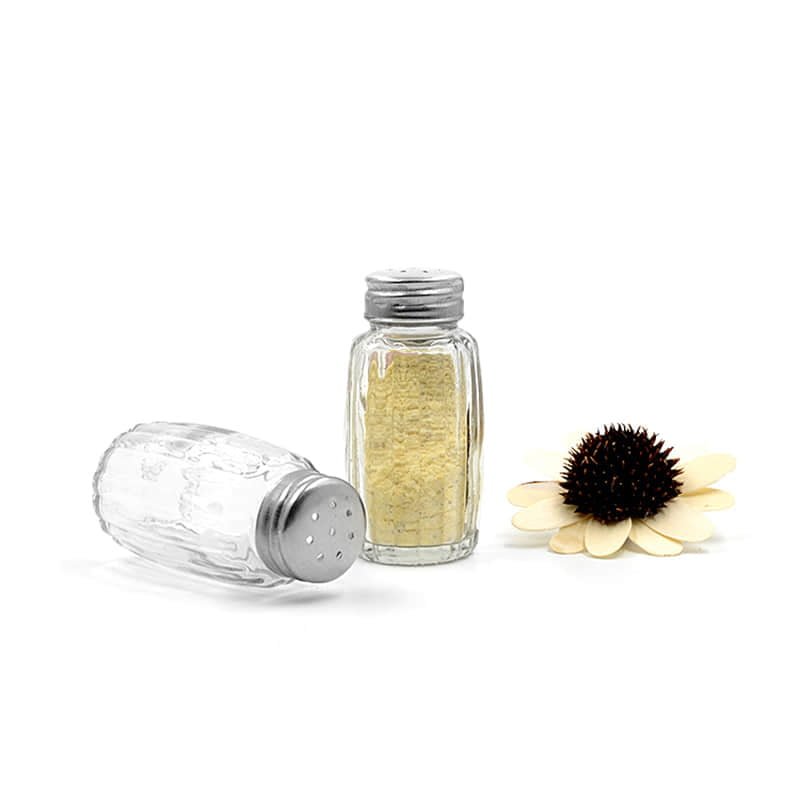
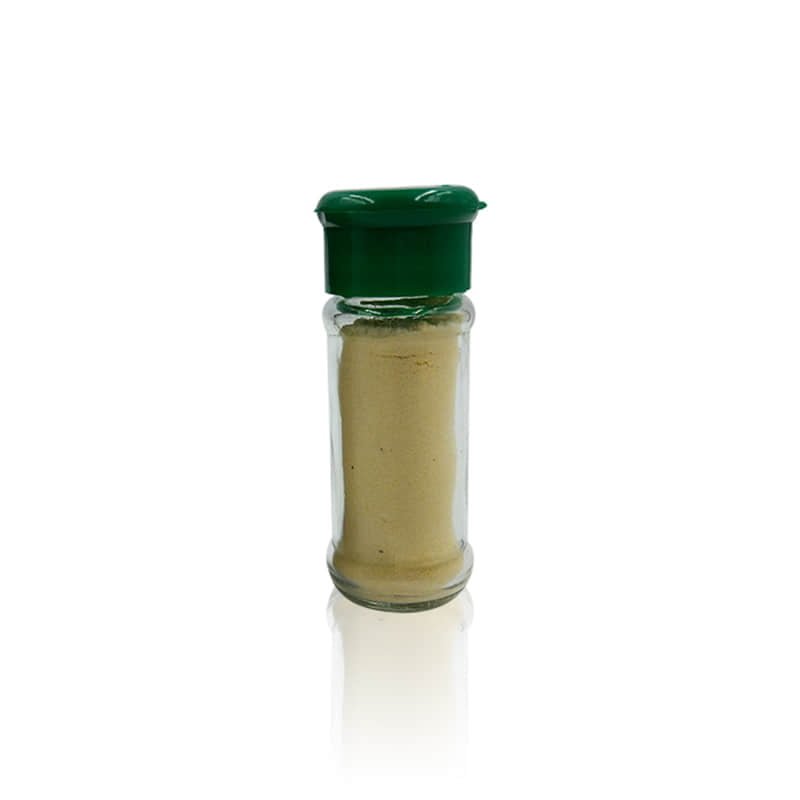
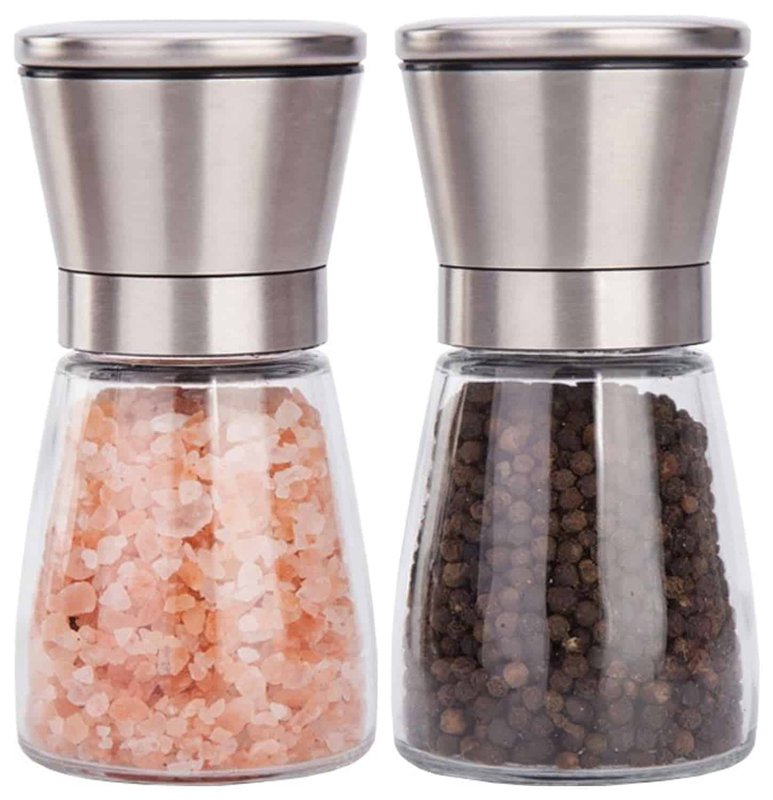
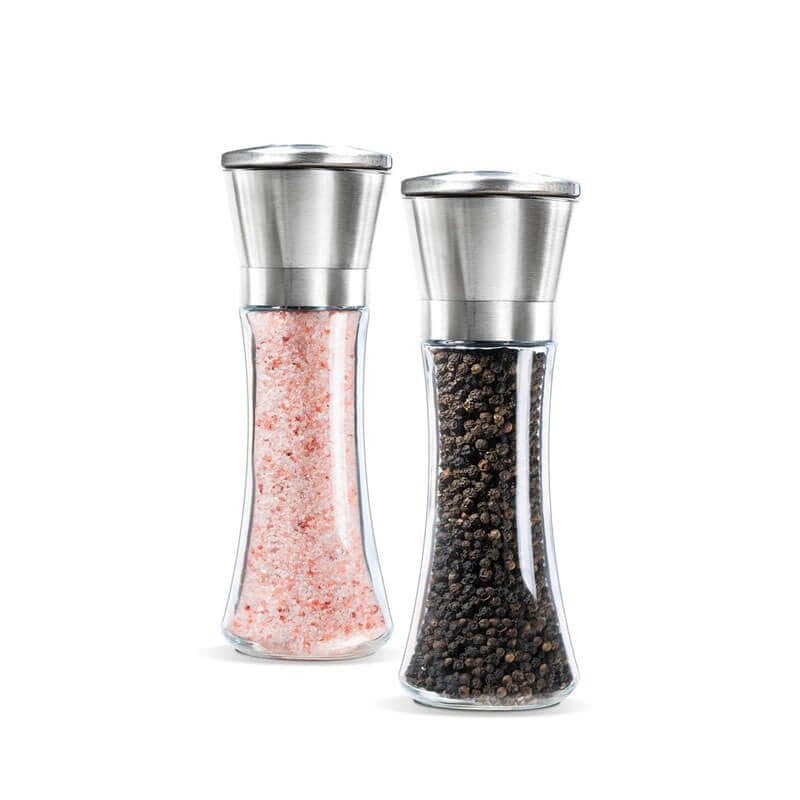
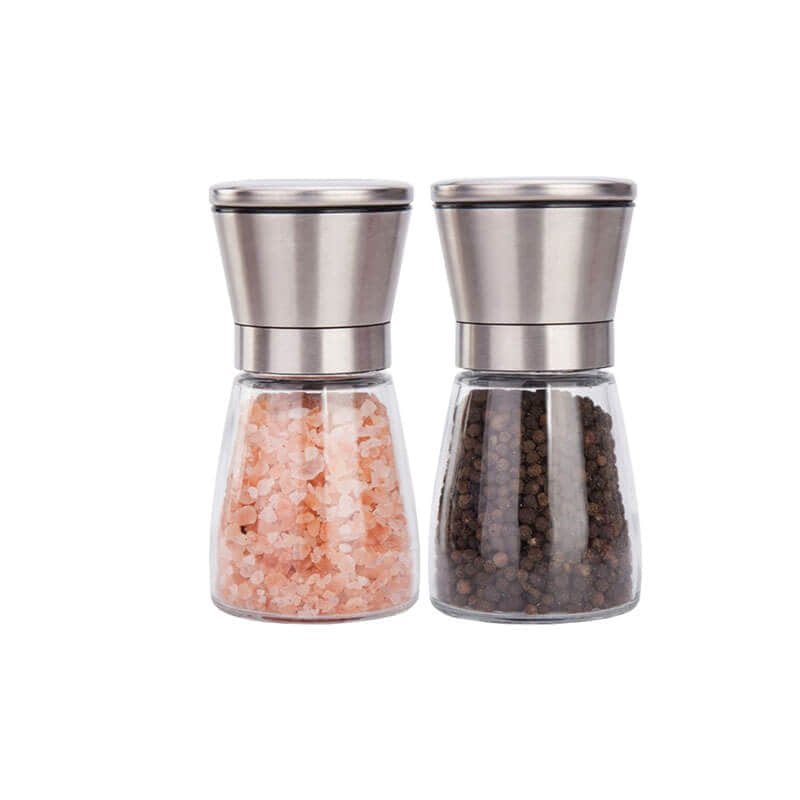
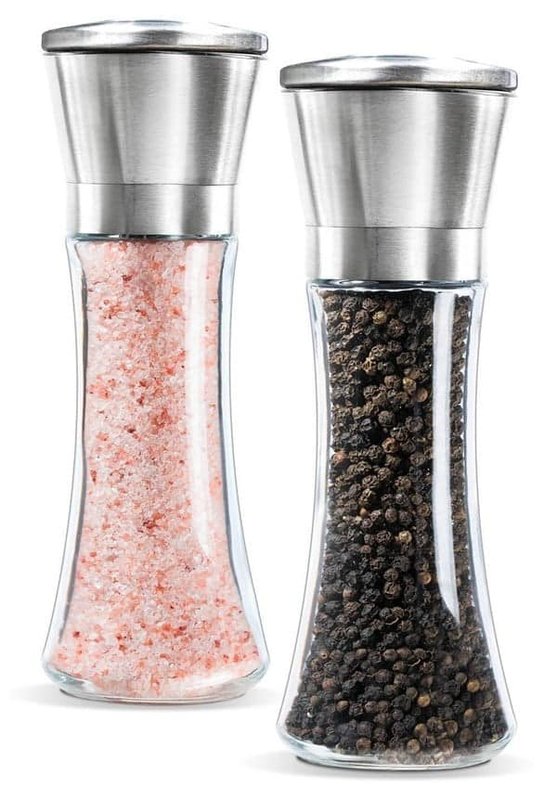
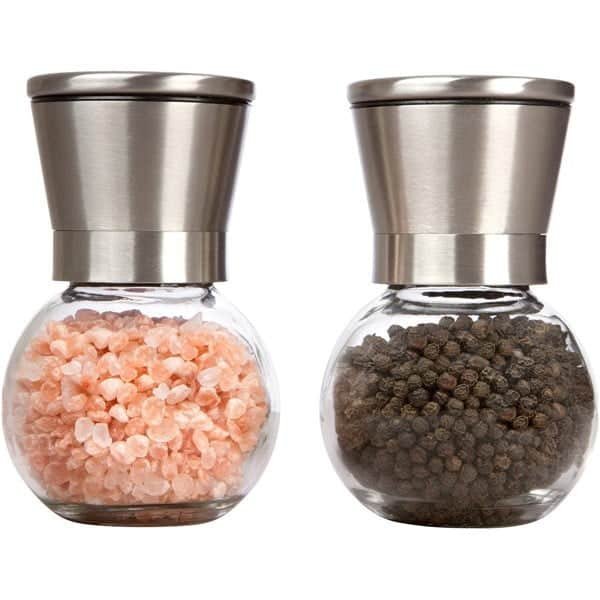
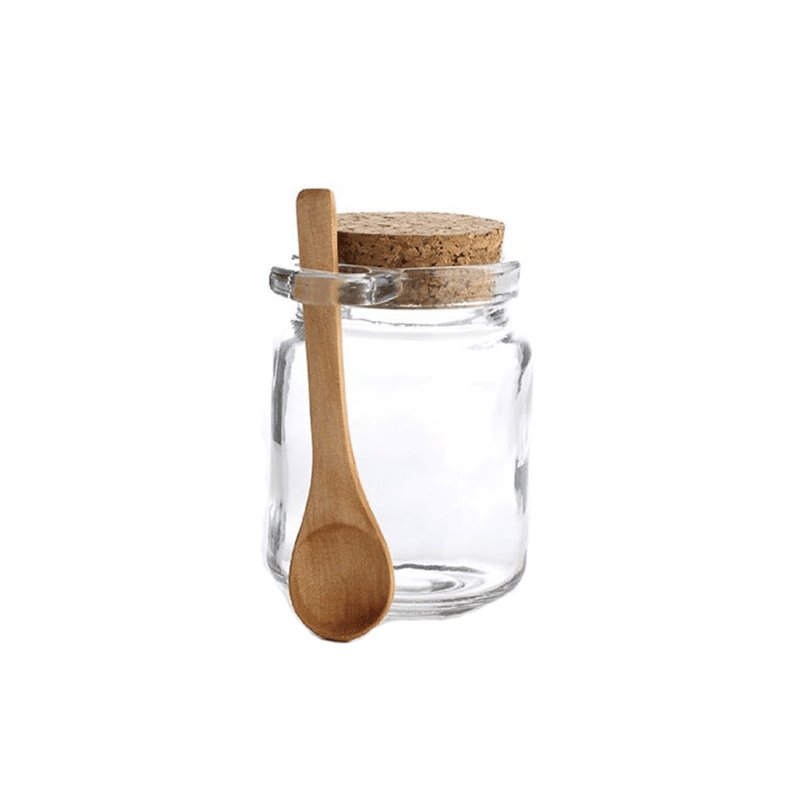
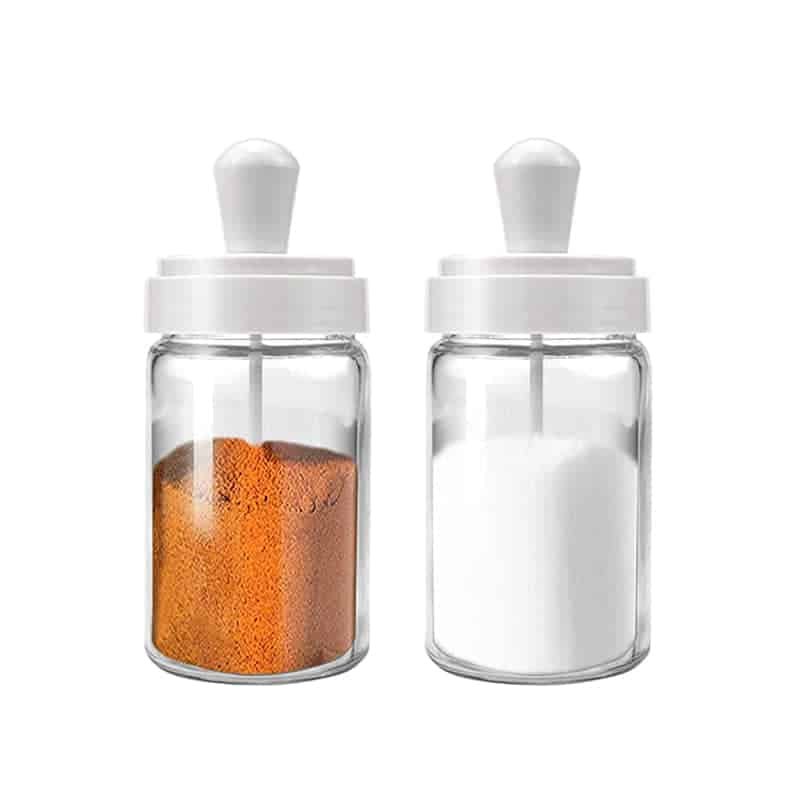
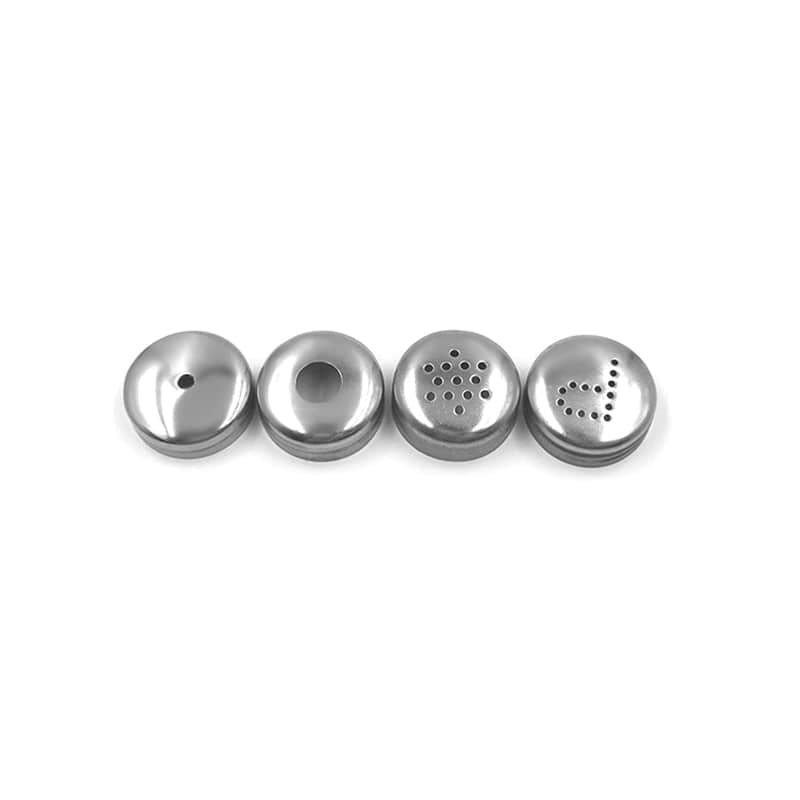
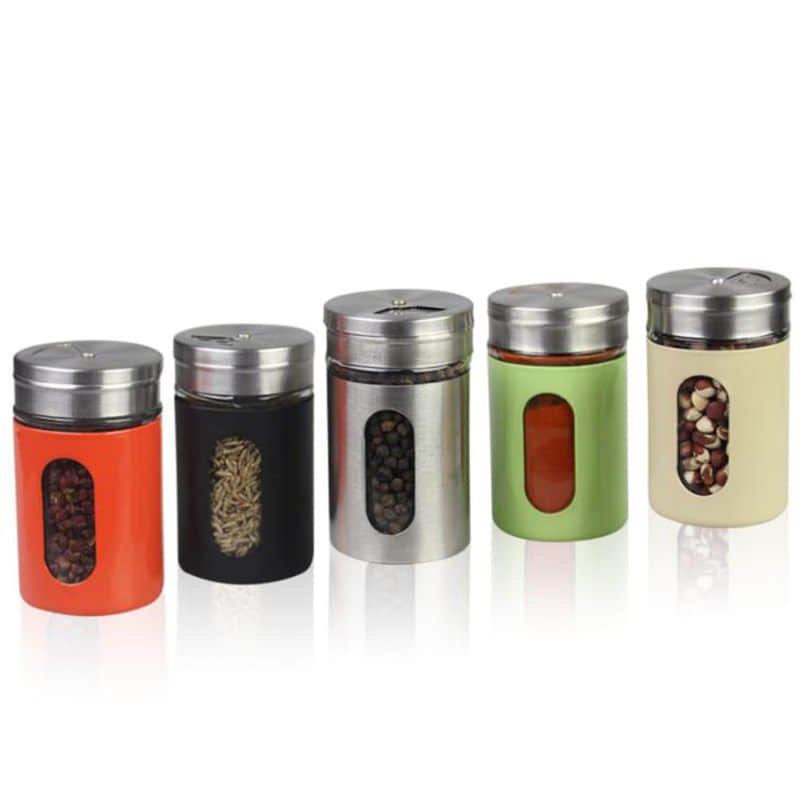
Nine systems run against these bodies for you: sift-and-pour inserts in several hole patterns, hinged flip caps, plastic and stainless grinder heads, clamp lids with a gasket, and lids carrying a brush, a spoon or a dipper. Your quotation prices the jar and the system together, per SKU.

What has to match
A sift insert is sized to the mouth, not to the jar. A range assembled from two suppliers carries two mouth openings, and the second one costs you a separate cap stock, a separate insert and a change on your capping line.
What we supply
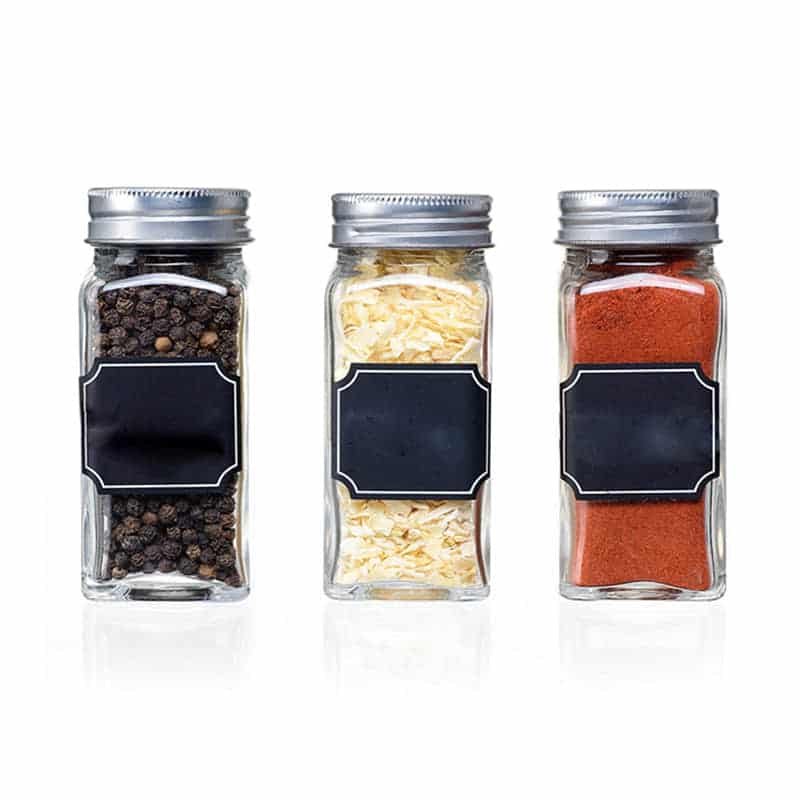
Your 4 oz square jar, the rack format most private-label brands use, carries a 31 mm mouth opening under a 41 mm stainless cap, at 102 mm tall by 42 mm wide with a 35 mm label panel. Every design ships its finish drawing with the quotation, so your cap supplier confirms the fit on paper.
What is at stake
Your ground spice loses aroma through a shaker cap long before it looks tired, and a whole spice keeps for a year behind a gasket. The same 4 oz body sells at two very different price points for you, depending on which of the two it carries.
What we supply
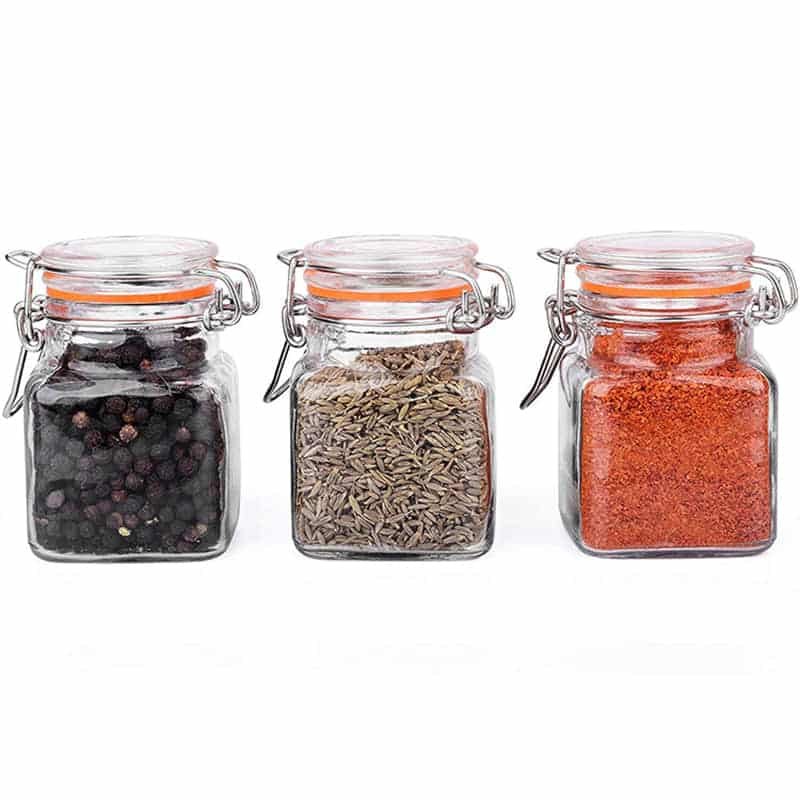
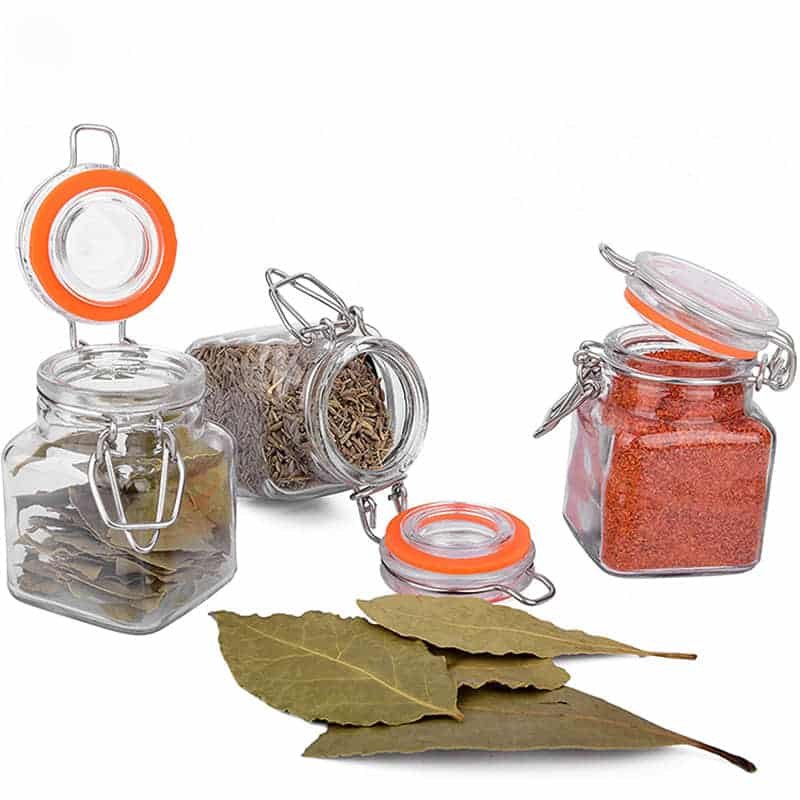
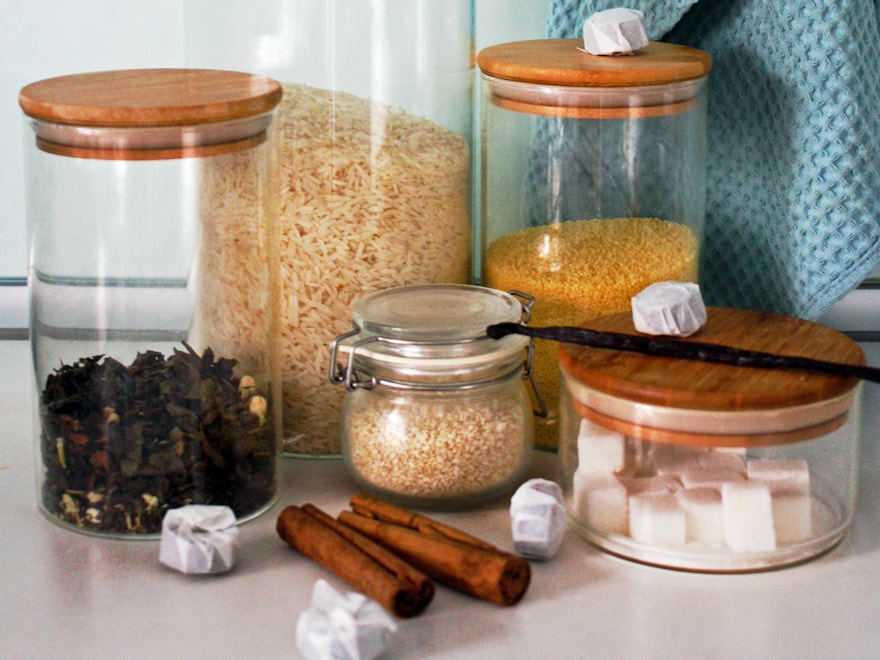
You can cover both ends here: sift-and-pour caps for a kitchen jar used weekly, and clamp lids with a rubber gasket for whole spice, saffron and blends that sit on a shelf. Samples of both go out together so you taste the difference before you commit.
Four families of dispensing system come with the jars, each matched to the mouth opening on the design you shortlist.
Your quotation states the insert, the outer cap and the mouth opening they seal against, so your closure supplier or ours signs off before any stock or tooling is committed.
Bulk terms from the factory. No tooling on a running mould, 15–20 days from confirmation, jars sampled with the dispenser fitted, and a container count printed beside your price.
Pallet or container
A running mould carries no tooling minimum, so your first order can be one pallet across two or three SKUs. Small jars fill a container fast, so start with a mixed pallet and scale the format that sells for you. Cutting steel of your own starts at 12,000 pieces in extra flint, 50,000 in standard flint.
15–20 days
From confirmation on running moulds, glass and dispensing system together. A custom mould adds 30–45 days to your lead time, counted from drawing approval.
On request
Jars go out with the inserts and heads fitted, so you test the sift pattern against your own blend before you buy it. On the custom path, an acrylic model lands in about 10 days at $500, then a sample mould at 35 days puts 5–10 decorated jars on your desk.
EXW · FOB
Warehousing and consolidation stay in-house, and we quote transit to your port. Your spice jars ride with sauce bottles or preserve jars in one container, which is how most opening orders are built.
≈60,000+ per 40HC
Small formats load hard in your favour: a 4 oz square runs well past 60,000 pieces per 40HC in export cartons. Your exact 20GP and 40HC counts arrive with your quotation.

A spice rack is read from a metre away, and clear glass leaves your label doing all of the work. Our Shandong plant screen prints, frosts, sprays, hot stamps and labels in-house, so your decorated glass keeps the same 15–20 days as plain.
We quote decoration per design, beside the glass. Decoration and labelling in detail →

A jar, a cap or a drawing starts the check. Sixteen running bodies cover almost any brief you bring, because this trade turns on the dispenser and not on the glass. When a jar of your own earns its keep, our mould shop prices it in three stages.
A full-size model of your jar, so shape, shoulder and label panel are signed off before steel is cut.
Real glass from a sample mould: 5–10 decorated jars with the dispensing system fitted, for your line and your retailer to approve.
Your production tooling runs on the flint lines in Shandong. Minimum 12,000 pieces in extra-flint, 50,000 in standard flint.

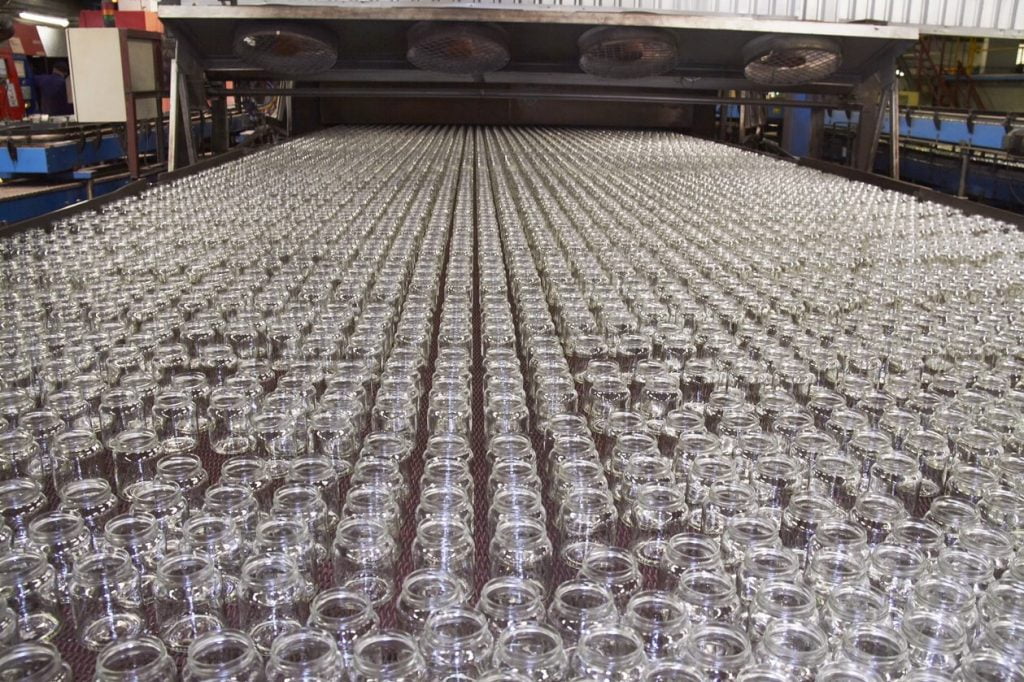
We form your jars in Shandong, decorate them on the same site and load them with our own warehouse team, so the jar, the cap and the carton come from one supplier. Seasoning brands in 40+ countries have shipped from these Shandong lines since 2013.
Gauged on every run, because a sift insert that drops out costs you a returned pallet and a chipped mouth brings a complaint about glass in food. Small jars are the easiest place in a factory to let a mouth drift, so every one of yours gets measured.
We verify brimful capacity by water-fill weight on every run, and the mould number in the base traces any drift on your pallet back to the cavity that caused it.
Controlled lehr curve on every jar, and we check residual strain under polarised light on every run of yours. A thin-walled 50 ml jar shows strain faster than a heavy one, so your small end gets checked at the same rate as your large.
Your shipment carries an EC 1935/2004 declaration of compliance for the EU and UK, food-contact documentation to FDA requirements for the United States, and ISO 9001. SGS test reports and third-party pre-shipment inspection come on request.
Dispensers, mouth openings and the 43-485 question, answered before your cap order goes out.
Usually. A photo with a ruler in frame, or the drawing from your cap supplier, identifies the running-mould jar whose mouth opening takes it. Where nothing matches, you hear it at the enquiry stage together with the custom-mould path and its costs.
There is no tooling minimum on the 16 running-mould jars, so your opening order can be one pallet across several SKUs. Cutting a new mould starts at 12,000 pieces in extra-flint or 50,000 in standard flint, the same figures any Chinese glassworks will quote you.
Your 4 oz French square measures 102 mm tall by 42 mm across, with a 31 mm mouth opening and a 41 mm cap. The US spice trade mostly buys a 43-485 sifter fitment, and 41 mm is not that thread, so where you already stock 43-485 caps, post one to us and we check it against the jar before you commit an order.
Yes. Your jars are formed on our own lines in Shandong, one of MAIDAO INDUSTRY's two production sites, and printed in Shandong. Grinder heads, sifters and clamp lids come from component makers we buy from weekly, and they reach you fitted, on our invoice.
102 mm tall and 42 mm wide, with a 31 mm mouth opening under a 41 mm stainless cap and a 35 mm round label panel on top, holding 118 ml. Most private-label brands and spice racks are built around that square, so your rack fit is settled.
The 4 oz square at 42 mm wide fits the common rack and drawer-insert pitch, and if you sell a countertop stand the 3 oz and 50 ml rounds suit it. Where your retailer's planogram fixes the width, that measurement decides the design, and knowing it early saves you a sample round.
The clamp-lid square is, with a rubber gasket that holds aroma in whole spice and blends for a shelf year. Sift-and-pour and grinder caps are dispensing closures: they suit a jar your customer opens every week. Both run on the same glass, so a range can carry one of each.
Yes. We price sift-and-pour inserts, flip caps, plastic and stainless grinder heads, clamp lids and utensil lids with the glass and ship them fitted, matched to the mouth opening of each design you list.
Yes. Your jars are clear soda-lime glass, shipped with food-contact documentation to FDA requirements for the United States and an EC 1935/2004 declaration of compliance for the EU and UK, and SGS test reports come on request.
Light fades paprika, turmeric and dried herbs over months, which is the trade-off you take for a jar that sells the spice on sight. Most take that trade, because a spice rack sells on colour and your jar turns over quickly. Where your blend sits longer, spray coating with a small window keeps the shelf appeal and cuts most of the light.
A jar, a cap or a blend specification is enough to start. Our food glass desk answers you with pricing, mouth openings and loading data inside 24 hours.
Matching running-mould jars, pricing and loading data come back within 24 hours.
The running moulds that fit get found before anyone talks about tooling.