Home & decor glass · Roll-on and roller bottles
The ball is the product. The glass is a reservoir. Everything that goes wrong goes wrong at the housing.
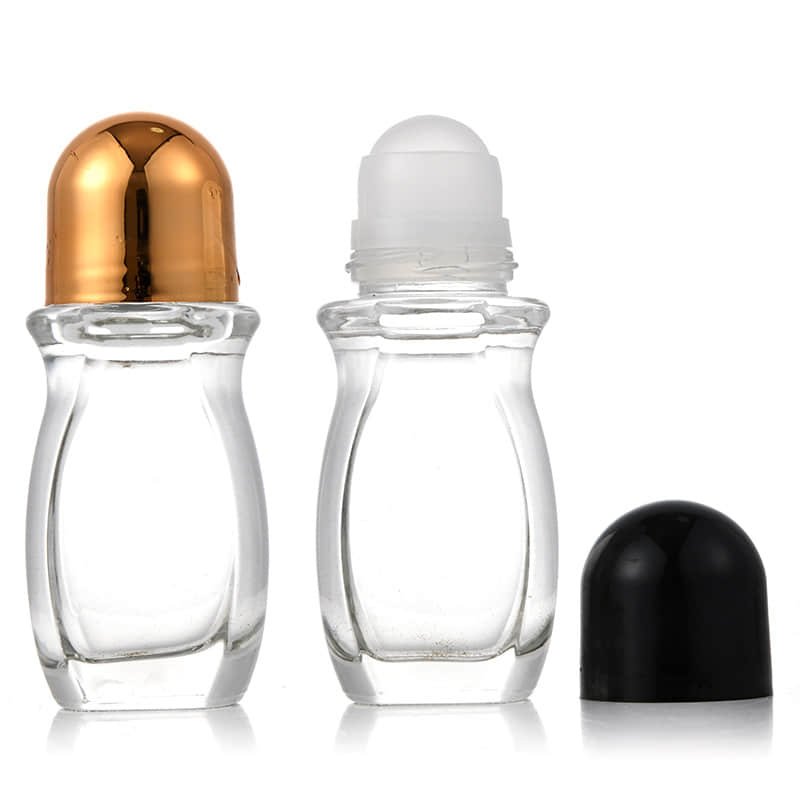
If you sell essential oils, aromatherapy blends or perfume oils, you buy the assembly rather than the glass, and we make that glass on our own lines in Shandong. Your four running-mould bodies cover 3 ml to 50 ml (0.1 to 1.7 fl oz), and three of them run the 10 ml step this whole trade is built on. Your quotation prices the ball, the housing and the cap beside the glass.
Four running-mould bodies from a 3 ml sampler to a 50 ml flat. The 10 ml step is the size your customer expects, and three of these four run it. We quote wholesale per body, with the fitment priced beside it.


No running-mould body carries that size. Your quotation can still cover it, because the roller fitment repeats across the 10 ml bodies.

Your roll-on is a small assembly that lives in a handbag. The glass rarely fails; the three parts on top of it do.
What is at stake
Stainless steel glides, stays cold against skin and suits an oil. Plastic costs less and drags on a thicker balm. Gemstone sells a wellness story and rolls unevenly, and a chipped one becomes your product recall. A roller chosen on price alone is the one your customer stops using after a week.
What we supply
We specify ball material against your formula, not a catalogue default, and send samples you can roll on skin before you commit. What goes in the bottle, and whether the range sells as wellness, both change the honest recommendation, so both belong on the enquiry.

What has to match
The housing presses into the neck and holds the ball. Too loose and it works free in a handbag and empties your perfume oil into the lining; too tight and your refillable range cannot be refilled. Almost every roll-on complaint reaching a brand traces to this joint.
What we supply
Bottles ship assembled, so your QA can fill one, cap it and carry it in a bag for a week before you list it. Where you sell the range as refillable, we specify a housing that comes out cleanly, and your quotation says so.
What is at stake
10 ml is the standard this trade runs on, so your quantities climb fast: a modest launch is tens of thousands of pieces, each with three fitment parts. At these volumes your carton and insert decisions move landed cost more than the glass price does.
What we supply
Your quotation gives carton dimensions and per-size 20GP and 40HC counts alongside the fitment pricing, so a 10 ml programme is costed as the assembly it is instead of as a glass line item.
Three parts sit on top of the glass, and all three reach you on the same order.
Your quotation lists the glass, the ball, the housing and the cap, so the roll-on that arrives is a finished product.
Bulk terms from the factory. No tooling on a running body, 15–20 days from confirmation, bottles sampled fully assembled, and a container count printed beside your price.
Pallet or container
A running mould carries no tooling minimum, so your first range can be a single pallet across sizes and colours, on identical terms for private-label wellness brands and indie perfumers. A mould of your own in extra flint starts at 12,000 pieces, which a 10 ml programme reaches quickly.
15–20 days
From confirmation on running moulds, glass and fitments together. Coloured frosting runs in our own plant, so your full colour range adds no second lead time. A custom mould adds 30–45 days from drawing approval.
On request
Bottles ship assembled, so you can fill one, roll it on skin and carry it in a bag for a week. On a product this small that week tells you more than any specification sheet.
EXW · FOB
Warehousing and consolidation stay in-house, and we quote transit to your port. Roller bottles fill the gaps in a mixed container, which is how most first ranges like yours travel.
Per size, with the quote
At 10 ml the carton and the insert cost more than the glass, so a headline container figure would tell you nothing useful. Your quotation gives carton dimensions and 20GP and 40HC counts per size.

Your customer holds this bottle every day, so its finish takes more wear than any other small bottle we make. Our Shandong plant frosts, sprays colour, screen prints, hot stamps and labels in-house, so your decorated glass keeps the same 15–20 days as plain.
We quote decoration per design, beside the glass. Decoration and labelling in detail →

A drawing, a rival's bottle or a photograph starts the check. Four running bodies and a full colour range cover most roll-on briefs, because your customer judges the ball and the finish first. When a body of your own is the point, our mould shop prices it in three stages.
A full-size model of your bottle, so you sign off shape, neck and label panel before steel is cut.
Real glass from a sample mould: 5–10 bottles assembled with balls and caps, for your QA to fill and carry.
Your production tooling runs on the flint lines in Shandong. Minimum 12,000 pieces in extra-flint, 50,000 in standard flint.

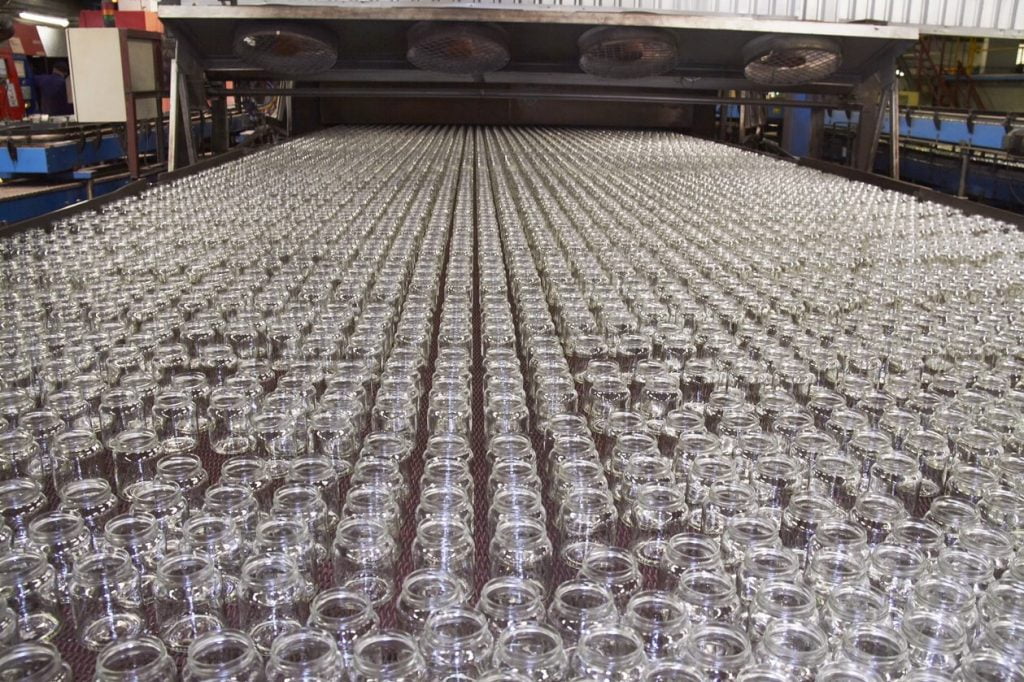
We form your bottles in Shandong, colour them on the same site and pack them with our own warehouse team, so the glass and the fitment arrive on one order. Oil brands in 40+ countries have shipped from these Shandong lines since 2013.
We gauge the neck on every run of yours, because a press-fit housing has no thread to hold it. A neck a fraction wide is a roll-on that empties into a handbag, and your customer blames the brand.
We fit balls, housings and caps here and roll-test them as a set, so your QA receives what your customer will use.
We check frosted colours against a retained reference, because a range where eight of your colours stand together shows any drift immediately.
Controlled lehr curve on every bottle, and we check residual strain under polarised light on every run of yours. A 3 ml body has very thin walls.
Ball, housing and cap, plus what a coated colour can and cannot do for your light-sensitive oil.
Steel glides, stays cool against skin and suits perfume and essential oil blends, which is why premium roll-ons use it. Plastic costs less and handles a thicker balm without dragging. What goes in the bottle decides the ball, and samples arrive with that one fitted.
That is the test this category lives on, and it is decided by the housing rather than the glass. Bottles ship assembled so your QA can fill one, cap it and carry it for a week before you list it. Where the range is refillable, the housing is specified to come out cleanly as well as stay in.
10 ml, about 0.34 fl oz, and three of the four bodies run it for you. You also have 3 and 5 ml for samplers and gift sets, and 30 and 50 ml on the flat body.
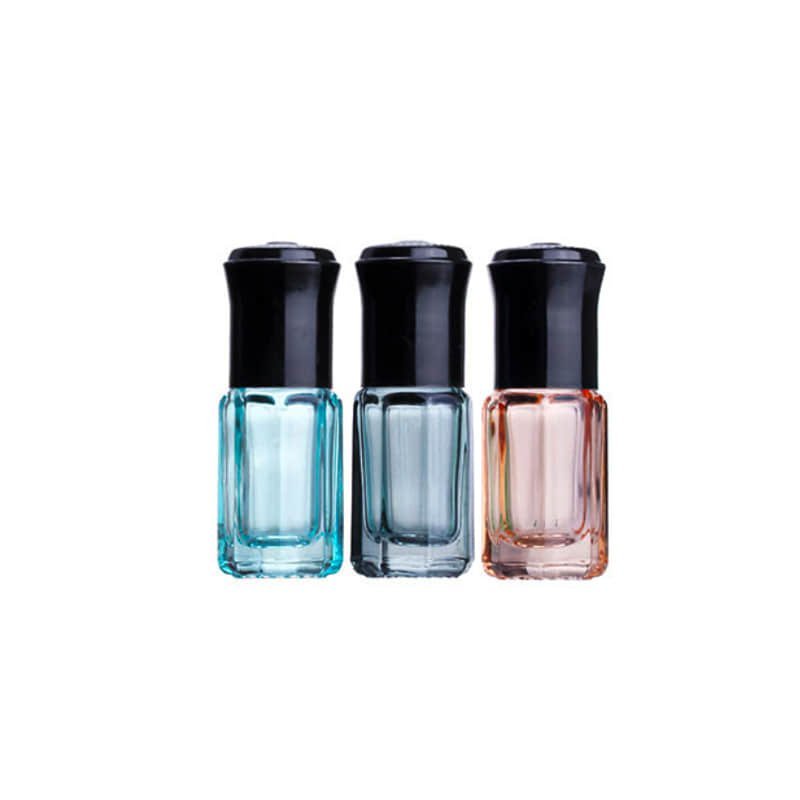
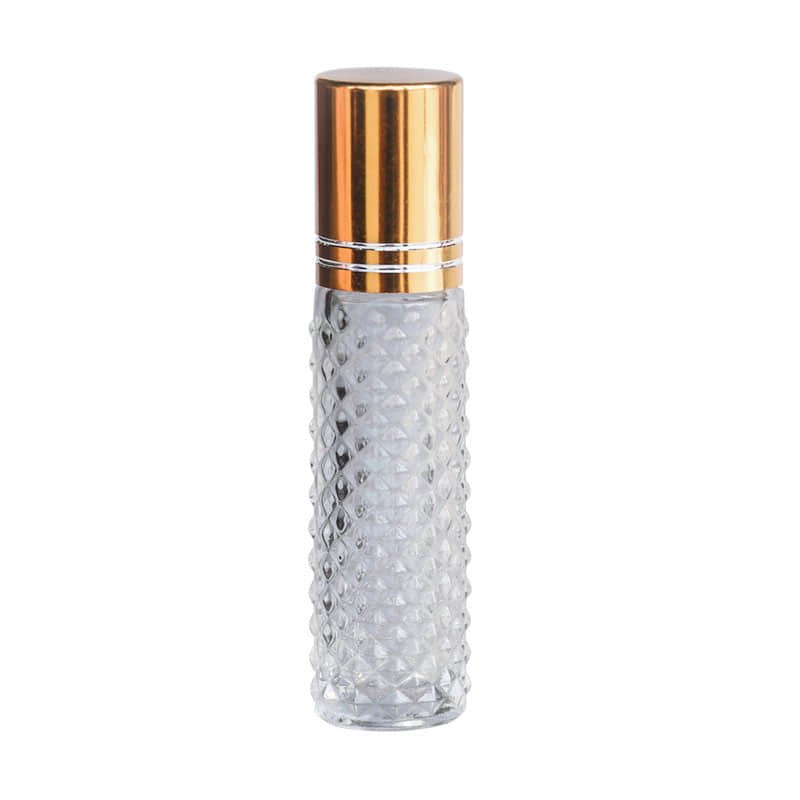
Not on these running moulds. Your four bodies carry frosted colour, tinted facets, an embossed diamond and a flat wide face, and the colour comes from coating instead of an amber melt. A coated body cuts light without matching what amber glass does, so where your formula genuinely needs amber, an amber melt becomes a mould of your own at 12,000 pieces.
The glass is ours. Your glass comes off our own lines in Shandong, one of MAIDAO INDUSTRY's two production sites. Rollerballs and housings come from the component makers we buy from every week, and they arrive fitted and on our invoice, so you chase one supplier instead of three.
We can source them, and the trade-off is worth naming before you commit: a gemstone ball sells a wellness story, rolls less evenly than steel, and a chipped one is a recall. Where your range is positioned that way, we quote it and tell you what it costs in performance.
There is no tooling minimum on the four running-mould bodies, so your first range can be a single pallet across sizes and colours. A mould of your own in extra flint starts at 12,000 pieces, which a 10 ml programme reaches faster than you might expect.
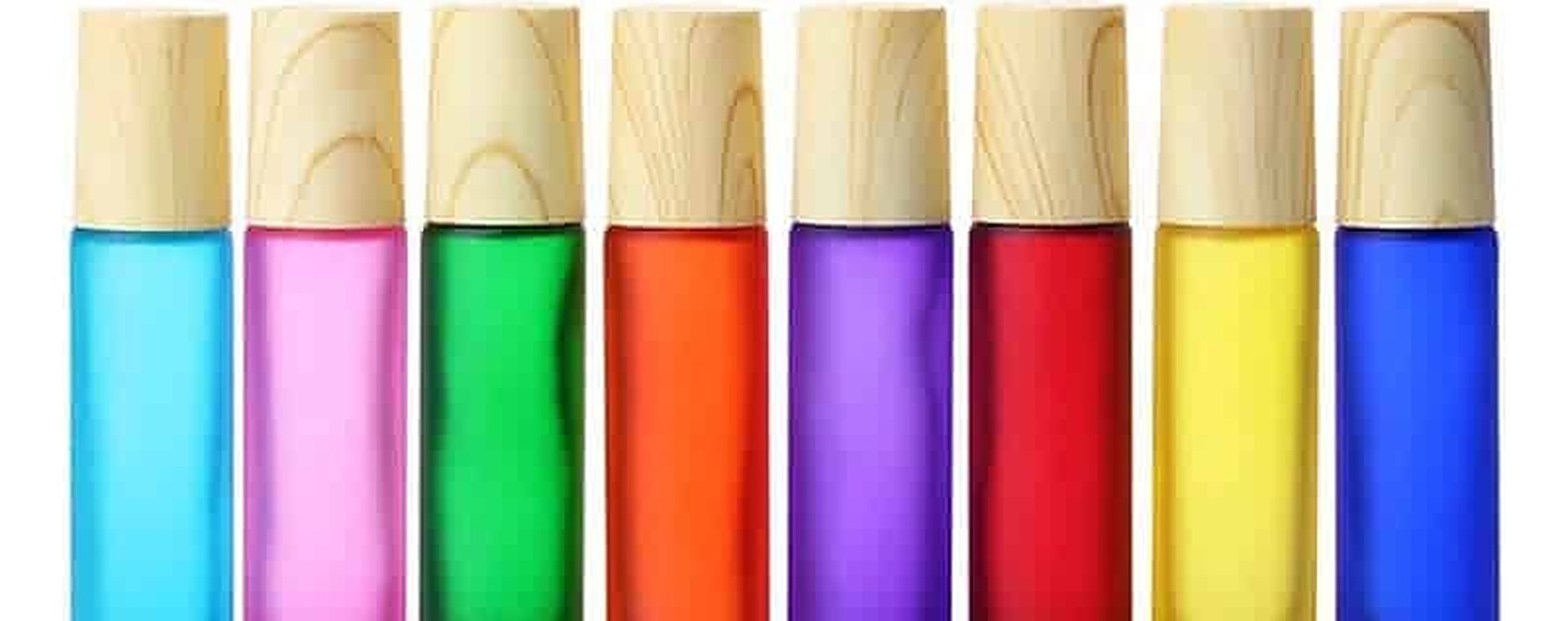
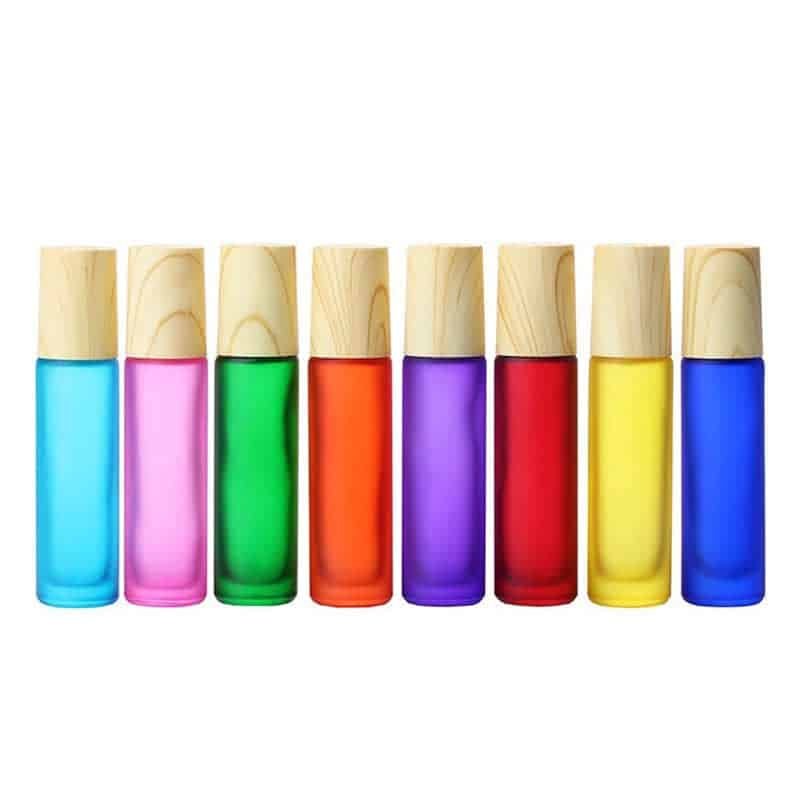
Yes, on one running body. Frosted colour, spray coating and electroplating all run in our own plant, so your eight colourways come off one mould with no second lead time.
Yes. Ball, housing and cap are fitted here and roll-tested as a set, so what your QA receives is what your customer will use, not a box of parts.
At 10 ml your carton and insert cost more than the glass, so a container headline would tell you nothing useful. Your quotation gives carton dimensions and per-size 20GP and 40HC counts alongside the fitment pricing.
A size, a colour or the oil you fill is enough to start. Our small-format desk answers you with pricing, fitment options and loading data inside 24 hours.
Matching bodies, fitment pricing and loading data come back within 24 hours.
The running moulds that fit get found before anyone talks about tooling.