Food glass · Confectionery and gift jars
A lid that seals, or a lid that shows. A shape that is the gift. Sizes down to a wedding favour.
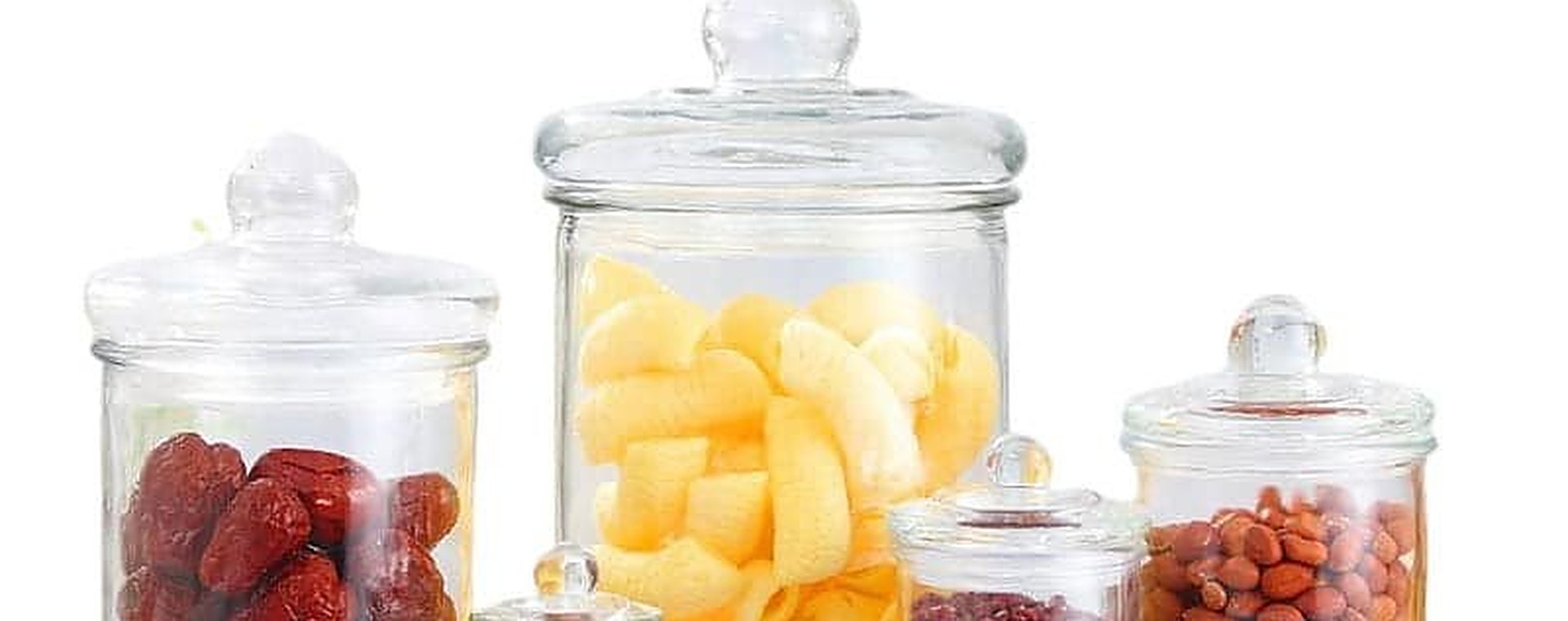
Confectioners, sweet shops, bakeries and candy-buffet suppliers buy these jars by the pallet. Your four bodies run 50 ml to 950 ml (1.7 to 32 oz) off our own furnaces in Shandong, in clear glass with tinplate, wooden or fitted glass lids. One question sorts the whole range: whether your candy needs a seal against humidity, or a lid that lifts off a counter jar all day.
Four running-mould designs, filtered by whether the closure seals or displays. Three share one ladder from 50 ml to 480 ml, so your wedding favour, your retail jar and your counter jar carry one look. We quote wholesale per design and per quantity.


No running-mould jar carries that closure at that size. Your quotation can still cover it, because the tinplate finishes repeat across the 50–480 ml ladder.

Candy jars split into two jobs that look alike and behave differently. Three things decide which one you are buying, and all three reach you in writing before a deposit.
What is at stake
Your hard candy goes tacky in a humid warehouse and a boiled sweet fuses into a single lump. A fitted glass lid on an apothecary jar looks right on your counter and keeps dust out, and it will stop none of that. Buy the display lid for a retail pack and your returns arrive stuck together.
What we supply
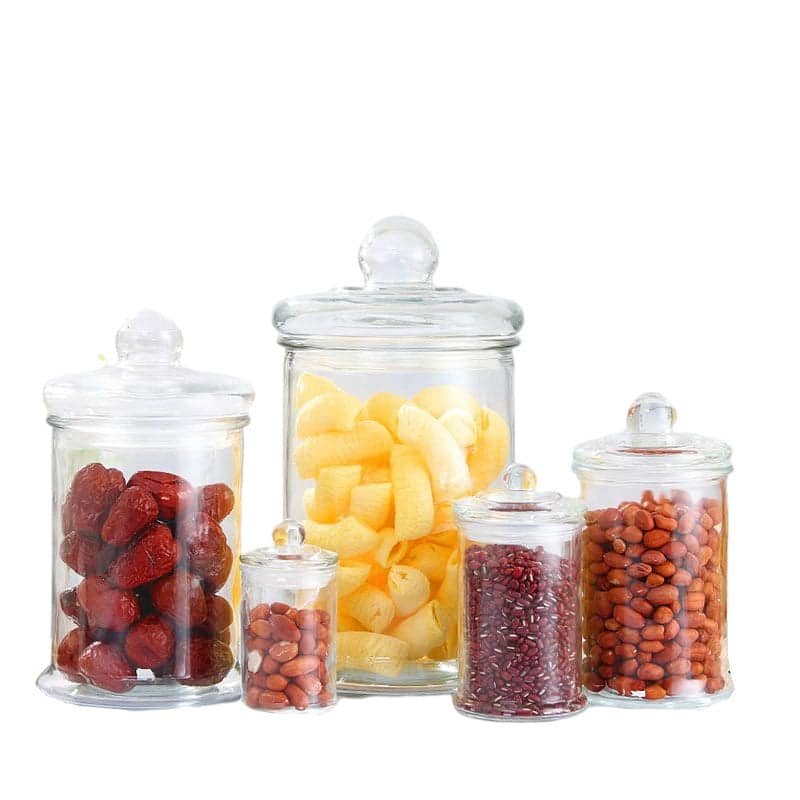
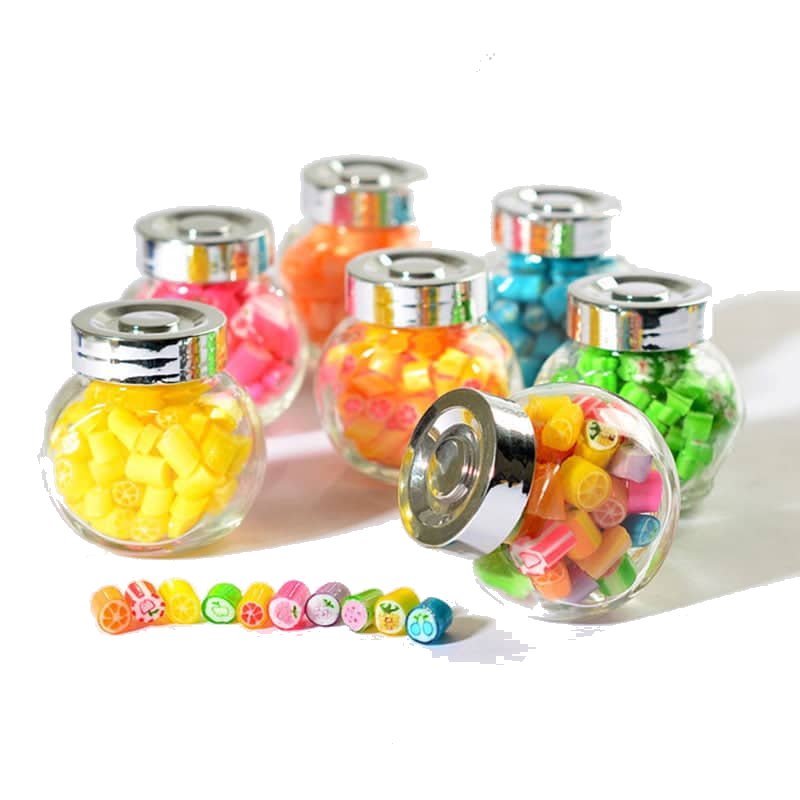
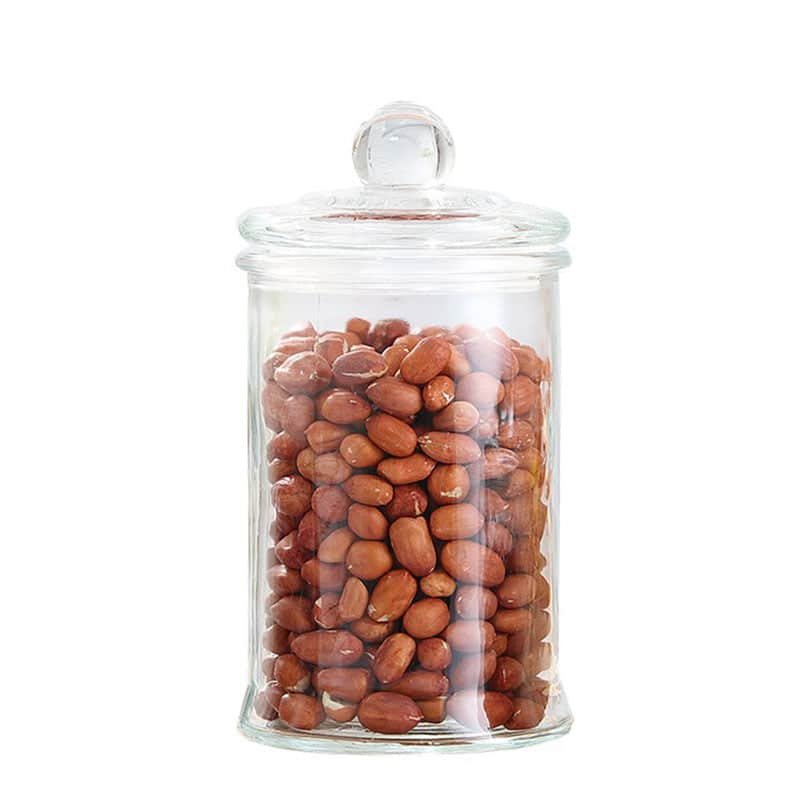
Two of these bodies close with plastisol-lined tinplate, which gives you a hermetic, tamper-evident seal as the liner cools. One closes with a wooden lid over a silicone ring. The apothecary jar takes a fitted glass lid, and your quotation says plainly which of the three you are getting.
What has to match
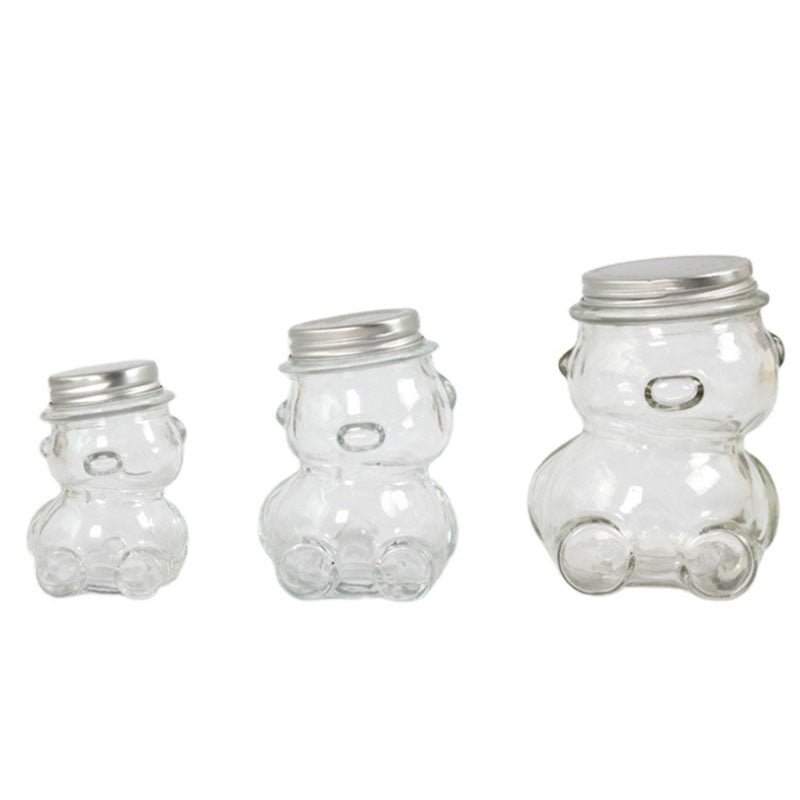
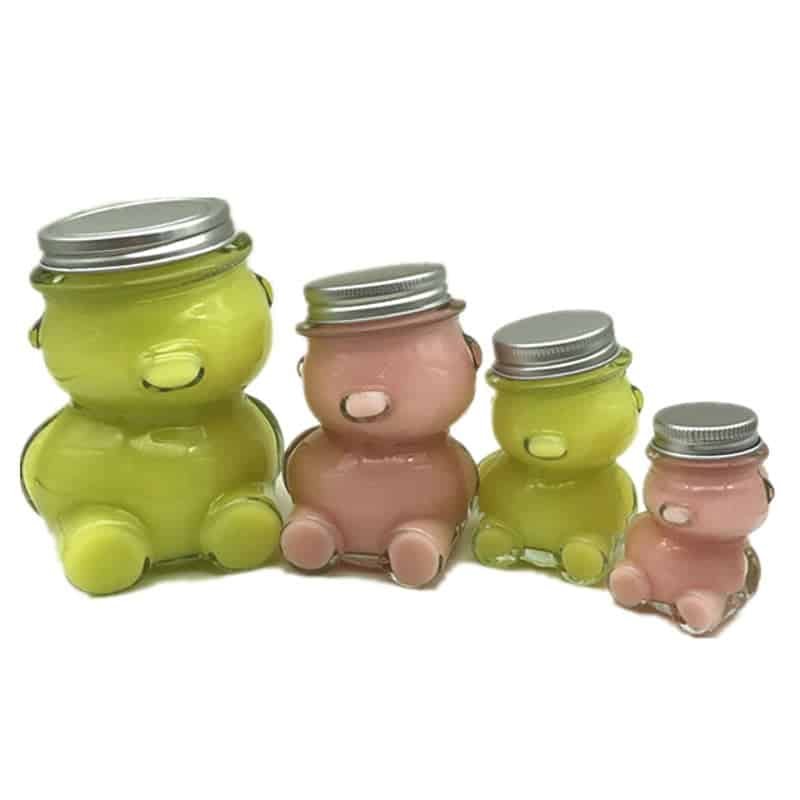
Nobody buys a bear jar for its capacity. Your gift or favour jar sells on silhouette, and the silhouette lives in the mould, so it is the one thing decoration cannot add later. Shape is therefore the one part of this category where tooling routinely earns back what you pay for it.
What we supply
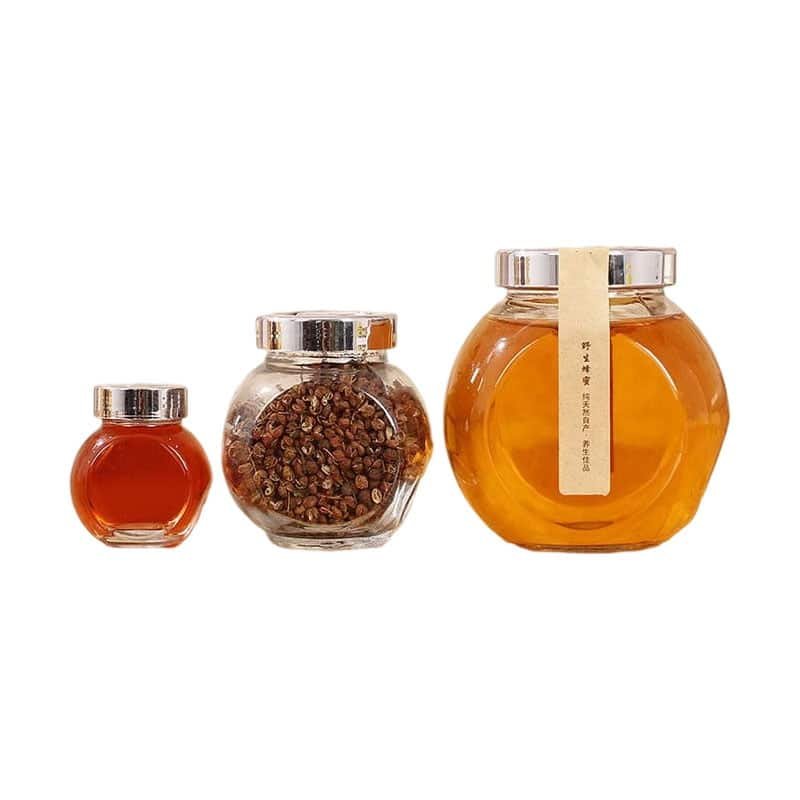
The bear and the flattened round both run on existing moulds across six sizes, so a novelty look costs you no tooling at all. Where you need a shape of your own, the tooling path is quoted by stage before you spend anything.
What is at stake
Your 50 ml favour jar weighs almost nothing and ships almost nothing but air and cardboard. Five thousand favours is a small order by value and a real one by volume, and the carton spec moves your landed cost more than the glass price does.
What we supply
Your quotation carries the carton dimensions and the per-size 20GP and 40HC counts, so a favour run and a counter-jar run get costed on the same basis. Your small sizes also combine well in a mixed container with jam or spice jars.
Three closure systems run against these bodies. Which one your jar takes depends on whether the candy inside has to stay dry.
Your quotation states the lid, the liner and the finish it seals against, so the difference between sealing and displaying is settled before you order.
Bulk terms from the factory. No tooling on a running mould, 15–20 days from confirmation, jars with the lid fitted, and a container count printed beside your price.
Pallet or container
A running mould carries no tooling minimum, so your opening order can be a single pallet across several sizes, on identical terms for private-label confectioners and gift packers. Steel of your own starts at 12,000 pieces in extra flint, 50,000 in standard flint, which is the route a bespoke novelty shape takes.
15–20 days
From confirmation on running moulds, glass and lids together. A custom mould adds 30–45 days to your lead time, counted from drawing approval.
On request
Jars go out with the lid fitted, so you can seal one and leave it in a warm room for a week before committing a season's stock. On the custom path, an acrylic model lands in about 10 days at $500, then a sample mould at 35 days puts 5–10 jars on your desk.
EXW · FOB
Warehousing and consolidation stay in-house, and we quote transit to your port. Small candy jars fill the gaps in a mixed container, which is how most favour and gift orders like yours travel.
Per size, with the quote
This range spans nearly twenty times in volume, so one anchor would mislead you. Your quotation gives carton dimensions and the 20GP and 40HC counts for each size you asked about.

Confectionery sells on colour through clear glass, and your brand goes on around it. Our Shandong plant frosts, sprays, screen prints, hot stamps, electroplates and labels in-house, which keeps your branded jar on the same 15–20 days as a plain one.
We quote decoration per design, beside the glass. Decoration and labelling in detail →

A drawing, a rival's jar or a photograph starts the check. Candy is one of the categories where the shape does the selling, so a moulded jar of your own can be worth the steel. Our mould shop prices that path in three stages, and the running jars get checked against your brief first.
A full-size model of your jar, so silhouette, lid seat and label panel are signed off before steel is cut.
Real glass from a sample mould: 5–10 decorated jars with lids fitted, for your buyer and your packing line to approve.
Your production tooling runs on the flint lines in Shandong. Minimum 12,000 pieces in extra-flint, 50,000 in standard flint.

We form your jars in Shandong, decorate them on the same site and pack them with our own warehouse team, so the company that quotes you is the company that melts the glass. Confectionery buyers in 40+ countries have shipped from these Shandong lines since 2013.
We gauge the seat on every run. On a sealing lid an out-of-round seat gives you a jar that closes and still lets humidity in; on a display lid it gives you a cover that rattles on the counter.
We check novelty bodies against a retained reference, because a bear out of a tired mould with a soft face is a gift jar nobody picks up.
Controlled lehr curve on every jar, and we check residual strain under polarised light on every run of yours. Moulded shapes hold strain unevenly, so we watch yours harder than a plain cylinder.
Your shipment carries an EC 1935/2004 declaration of compliance for the EU and UK, food-contact documentation to FDA requirements for the United States, and ISO 9001. SGS test reports and third-party pre-shipment inspection come on request.
Which lid seals, which lid only shows, and what a first order actually costs you.
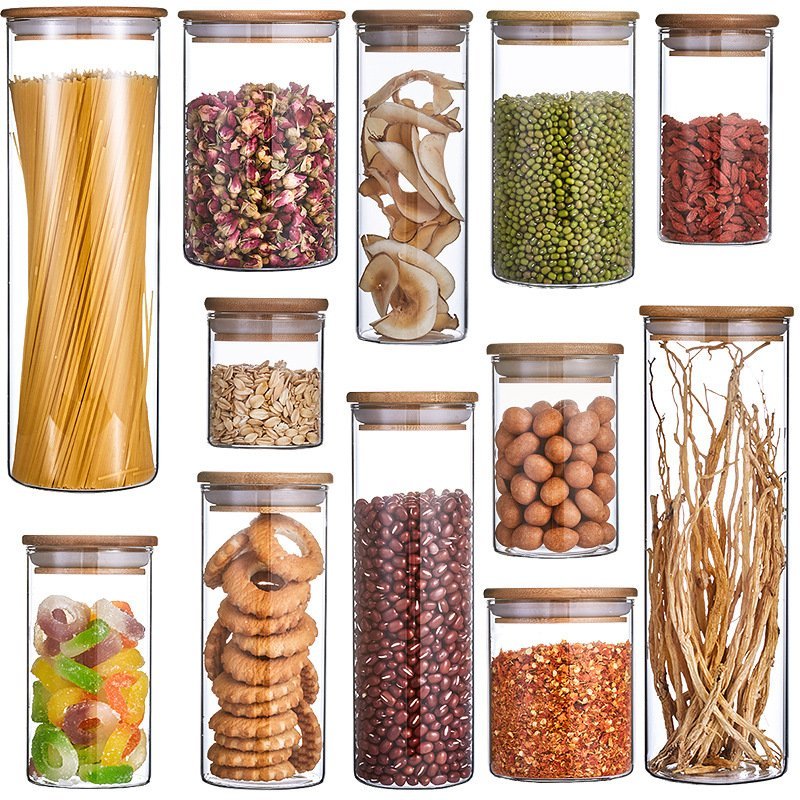
The bear and the flattened round close with plastisol-lined tinplate, where the liner sets against the glass and gives a hermetic, tamper-evident seal. The cylinder seals with a wooden lid over a silicone ring. The apothecary jar takes a fitted glass lid, which keeps dust off a counter display without sealing it.
50 ml, about 1.7 oz, the size most wedding favours and sample packs use. It runs across the bear, the flattened round and the cylinder, so your favour matches your full retail jar in the same range.
Not in this range. These four bodies stop at 950 ml (32 oz), which covers your favour, your retail jar and your counter jar. For bigger display jars, our storage jar and mason ranges run clip-tops to 5 litres and glass dispensers to 8 litres. One order can cover both, since both come off the same furnaces.
We melt and mould the glass ourselves in Shandong. On these running jars your minimum is a pallet, because the bodies already run for other buyers. A shape of your own starts at 12,000 pieces in extra flint, and the mould gets quoted in three priced stages before you commit anything.
There is no tooling minimum on the four running-mould designs, so your opening order can be a single pallet across several sizes. A bespoke novelty shape of yours starts at 12,000 pieces in extra flint, or 50,000 in standard flint.
Yes, and this is the food category where tooling most often pays you back, because a gift jar sells on silhouette. Your acrylic model takes about 10 days at $500, a sample mould 35 days at around $1,200, and production tooling $1,200 to $2,200 against a 12,000-piece minimum.
Yes. Plastisol-lined tinplate, wooden lids with a silicone ring and fitted glass lids are all quoted with the glass, matched to the finish of each design, and printed or branded if you want them to be.
Yes. Your order ships with food-contact documentation to FDA requirements for the United States and an EC 1935/2004 declaration of compliance for the EU and UK, and SGS test reports come on request.
That depends on the closure, not the glass. A plastisol or silicone seal keeps humidity out through your warehouse and your container; a display lid does not. Where your sweets are hygroscopic and the destination is humid, the sealing closures are the only ones worth listing.
Enough that the carton spec matters more than the glass does. Small jars ship mostly air and cardboard, so your quotation gives carton dimensions and the 20GP and 40HC counts per size instead of one headline figure.

A size, a lid or a photo of the jar you use today is enough to start. Our food glass desk answers you with pricing, dimensions and loading data inside 24 hours.
Matching running-mould jars, pricing and loading data come back within 24 hours.
The tooling path is quoted by stage before anything is committed.