Beverage glass · Swing-top and flip-top bottles
Carbonated or still, settled first. Gaskets quoted as spares. Amber where the light is the problem.
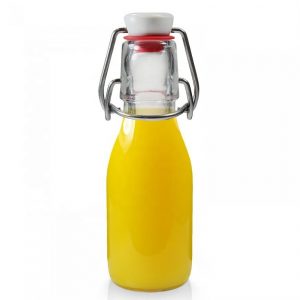
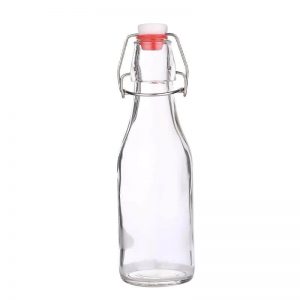
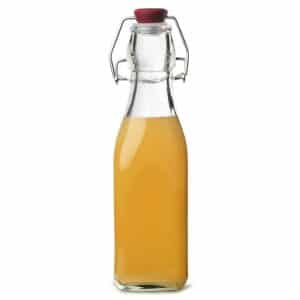
If you brew kombucha or kefir, make cordials or sell to homebrewers, you buy this bottle for what happens after you fill it, and every one comes off our own lines in Shandong. Your round, square and amber beer profiles run 100 ml to 1 litre (3.4 to 34 fl oz), all on the same ceramic stopper and wire bail. A live ferment keeps building pressure in the bottle, so what you fill decides the body long before the label does.
Running-mould bodies on one closure system, filtered by profile and colour. Amber is your answer where light is the problem, clear where the drink is the display. We quote wholesale per body, with stoppers and spare gaskets priced beside it.


No running-mould bottle carries that colour at that size. Your quotation can still cover it, because the closure is common across every body here.

A swing top is the only bottle we make that your customer opens and closes fifty times. Three things follow from that, and all three reach you in writing before a deposit.
What is at stake
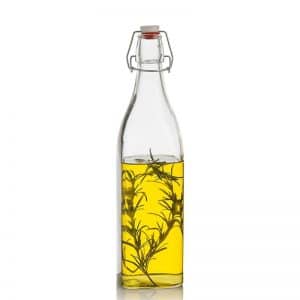
Kombucha, kefir, water kefir and bottle-conditioned beer keep fermenting after you close them, and the pressure they build has nowhere to go. Choose a cordial bottle and fill it with a live ferment, and you have the one packaging error that ends in glass across a floor. Cordial, oil, vinegar and syrup ask nothing of the bottle by comparison.
What we supply
The intended contents belong in your first message, because they decide which of these bodies are suitable at all. Your quotation states, per design, what it is made for, and where your product carbonates in the bottle you get that answer before a sample ships.
What has to match
The ceramic stopper does not seal anything. The gasket does, and it is the part that hardens with your heat, your cleaning and time. On a refill or returnable range your glass outlives several gaskets, and a customer who cannot buy a replacement throws away the bottle.
What we supply
Every body takes the same stopper assembly, so one gasket stock covers your whole eleven-size listing. Gasket material is stated on your quotation and spares are priced alongside the bottles, which is what your customer service will need in the first year.
What is at stake
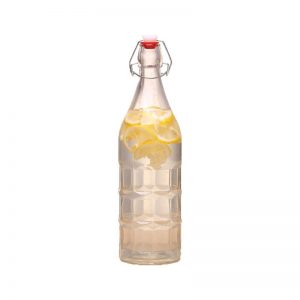
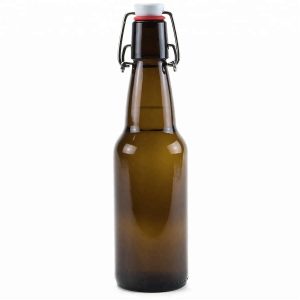
Hop compounds break down under light and turn your beer skunky, which is why brewers have used brown glass for a century. Clear glass sells your cloudy kombucha or coloured cordial on sight, and does nothing for a hopped beer under a shop light.
What we supply
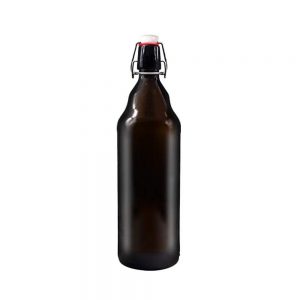
Amber runs at 330 ml, 500 ml and 1 litre on beer profiles, and clear runs across every body you might list. Both take the same closure, so if you sell beer and a soft drink from the same door you run one stopper and one gasket across both.
One closure system runs the whole ladder, and your quotation prices the stopper, the bail and a spare gasket run beside the glass.
Your quotation states the stopper, the gasket material and the bail finish, so none of the three non-glass parts is left to assumption.
Bulk terms from the factory. No tooling on a running body, 15–20 days from confirmation, bottles sampled with the stopper fitted, and a pallet count printed beside your price.
Pallet or container
A running mould carries no tooling minimum, so your opening order can be a single pallet across several sizes, on identical terms for private-label drinks brands and craft breweries. Cutting steel of your own starts at 12,000 pieces in extra flint, 50,000 in standard flint.
15–20 days
From confirmation on running moulds, glass and stopper assemblies together. A custom mould adds 30–45 days to your lead time, counted from drawing approval.
On request
Bottles ship assembled, so you can fill, close and leave one in a warm room for a week before committing a season. On the custom path, an acrylic model lands in about 10 days at $500, then a sample mould at 35 days puts 5–10 bottles on your desk.
EXW · FOB
Warehousing and consolidation stay in-house, and we quote transit to your port. Your swing tops travel with juice or beer bottles in one container, which is how most opening orders are built.
Per size, with the quote
The wire assembly adds carton volume that a plain bottle does not, so a screw-cap loading figure would mislead you here. Your quotation gives carton dimensions and the 20GP and 40HC counts per size.

A swing top stays in a fridge door for weeks, so your mark on the glass and on the ceramic gets seen more than a label on a shelf ever does. Our Shandong plant screen prints, frosts, sprays, hot stamps and labels in-house, so your decorated glass keeps the same 15–20 days as plain.
We quote decoration per design, beside the glass. Decoration and labelling in detail →

A bottle, a stopper or a drawing starts the check. Running bodies cover almost any brief you bring, because a bail and a rim have to agree to a tolerance that fresh steel has to earn. When a bottle of your own is the point, our mould shop prices it in three stages.
A full-size model of your bottle, so shape, shoulder and label panel are signed off before steel is cut.
Real glass from a sample mould: 5–10 bottles with the stopper assembly fitted, for your line and your retailer to approve.
Your production tooling runs on the flint lines in Shandong. Minimum 12,000 pieces in extra-flint, 50,000 in standard flint.

We form your bottles in Shandong, decorate them on the same site and load them with our own warehouse team, so the glass, the bail and the gasket come from one supplier. Fermenters in 40+ countries have shipped from these Shandong lines since 2013.
We gauge the lip the gasket presses onto across every run. A lip that runs out of round gives you a bottle that closes with a satisfying snap and still leaks, and that fault only shows up in your customer's fridge.
Controlled lehr curve on every bottle, and we check residual strain under polarised light on every run, with polariscope results on request. Anything that carbonates in your bottle makes that the one check we would never skip.
We measure it across the run, because on a pressure product the thin spot is where your bottle decides to fail. Distribution matters more here than average weight does.
Your shipment carries an EC 1935/2004 declaration of compliance for the EU and UK, food-contact documentation to FDA requirements for the United States, and ISO 9001. SGS test reports and third-party pre-shipment inspection come on request.
A bottle that seals is half of what your live ferment needs, so the rest is answered too.
Only against a design confirmed for it, and that confirmation comes from us in writing, because the look of a bottle tells you nothing about it. A live ferment keeps building pressure after the stopper closes, so the intended contents belong in your first message and the quotation answers design by design.
Yes to both. The gasket seats on the ceramic stopper and changes in seconds without tools, and we price spare gaskets and complete stopper assemblies alongside your bottles. On a returnable or refill range they belong on the same order, because the glass outlives the rubber by years.
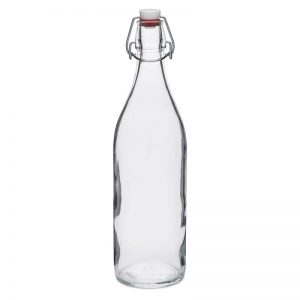
500 ml and 1 litre are the two sizes this trade buys, and both run in clear for you, with the litre also in amber. Your 500 ml sells as a 16 oz bottle and your litre as a 32 oz. Both take the same ceramic stopper and the same gasket, so your spares stock stays at one part number.
The manufacturer. Your bodies come off our own lines in Shandong, one of MAIDAO INDUSTRY's two production sites. Brewing supply shops sell six-packs and twelve-packs to homebrewers, which is the right way to buy a first batch; a pallet is where the freight starts working for you.
Hop compounds break down under light and give your beer a skunky character, and brown glass blocks most of what causes it. Clear suits a cloudy kombucha or a coloured cordial that sells on being seen. Amber runs here at 330 ml, 500 ml and 1 litre.
There is no tooling minimum on the 11 running-mould bodies, so your opening order can be a single pallet across several sizes. An embossed brand mark needs steel of your own, which starts at 12,000 pieces in extra flint or 50,000 in standard flint.
Yes. Every body takes the same ceramic stopper and wire bail, so your eleven-size listing runs on one gasket stock and one spare part. That is the main reason to buy the range from one source.
Yes. Your order ships with food-contact documentation to FDA requirements for the United States and an EC 1935/2004 declaration of compliance for the EU and UK, and SGS test reports come on request.
Yes, and it is the cheapest branding you can buy, because the stopper is the part your customer handles every time they open the bottle. Printed stoppers are quoted with the glass.
They ship fine and they load differently. The wire assembly adds carton volume a plain bottle does not, so your quotation gives carton dimensions and per-size container counts instead of a screw-cap figure that would flatter the numbers.
A size, a colour or what you are fermenting is enough to start. Our beverage desk answers you with pricing, closure options and loading data inside 24 hours.
Matching running-mould bottles, pricing and loading data come back within 24 hours.
The running moulds that fit get found before anyone talks about tooling.