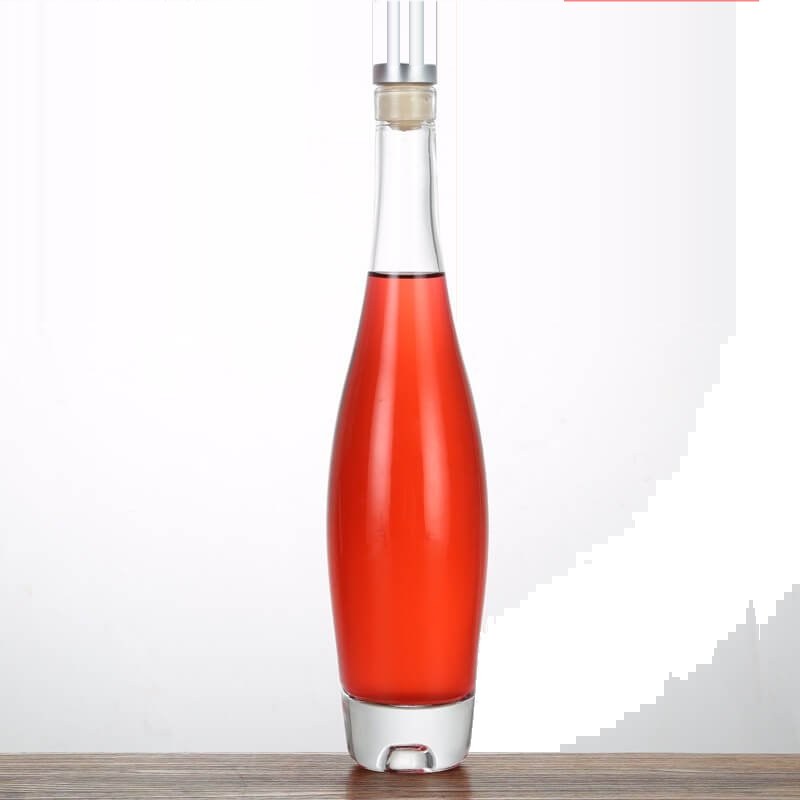
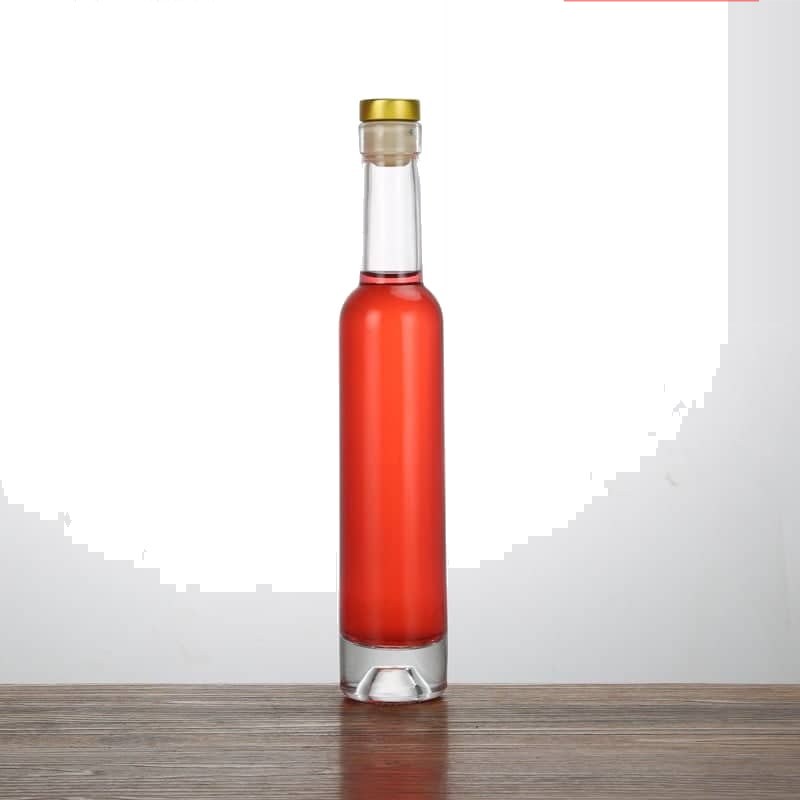
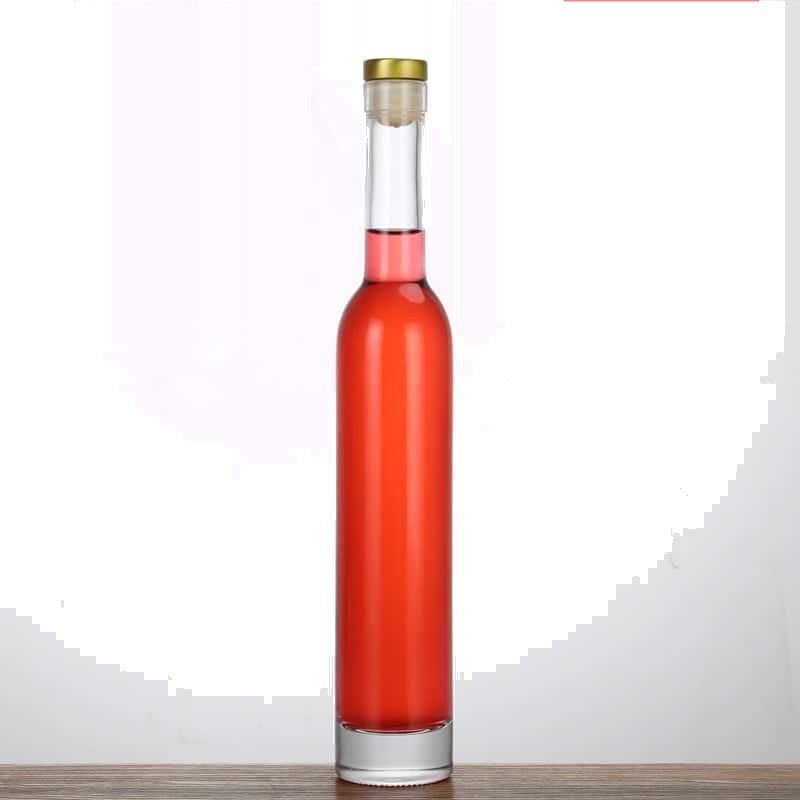
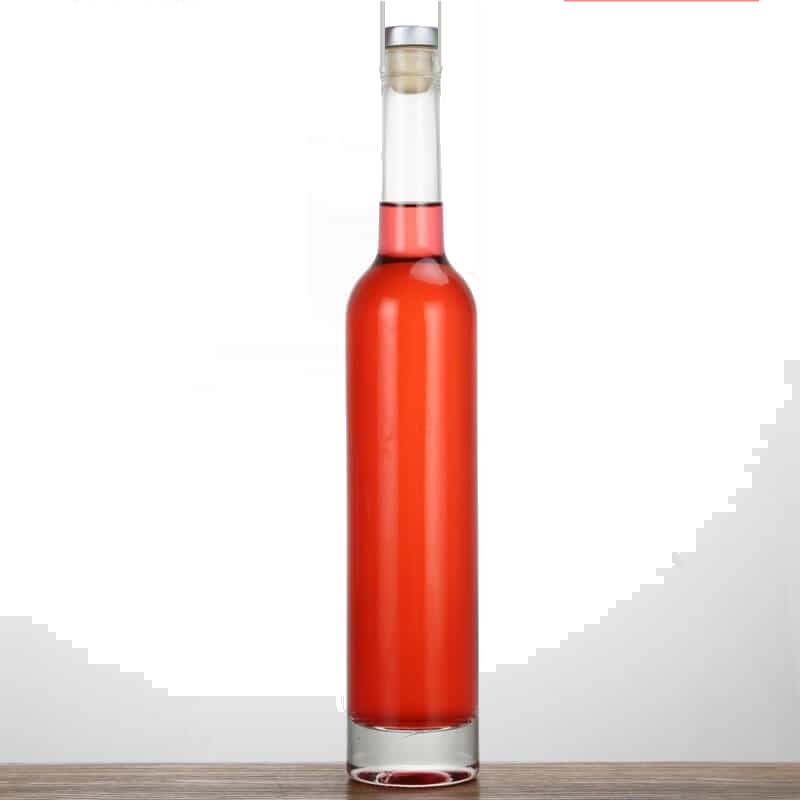
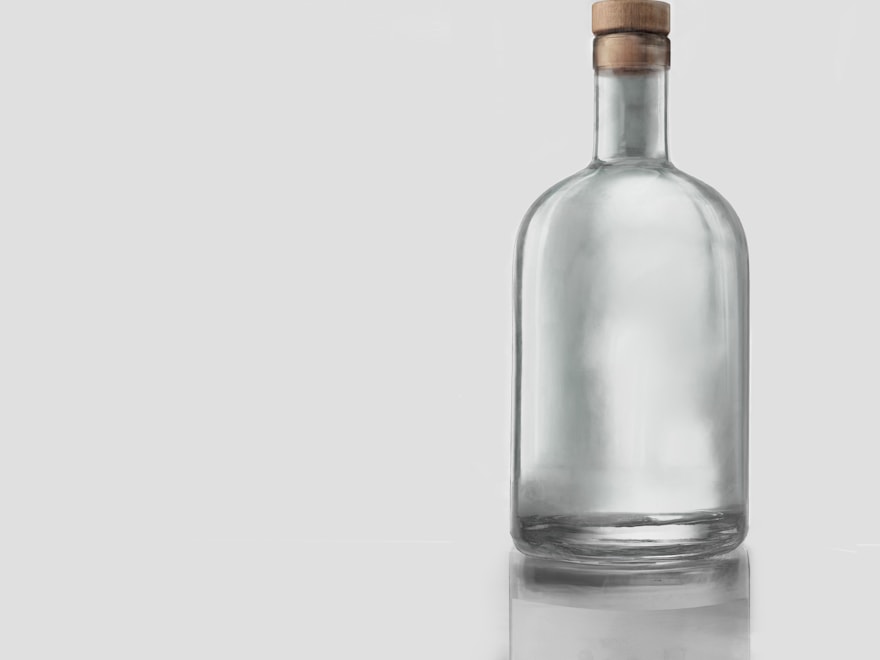
Spirits glass · Ice wine and dessert wine bottles
Super flint, because the colour is the product. Heights on every card, because these bottles are taller than they look.
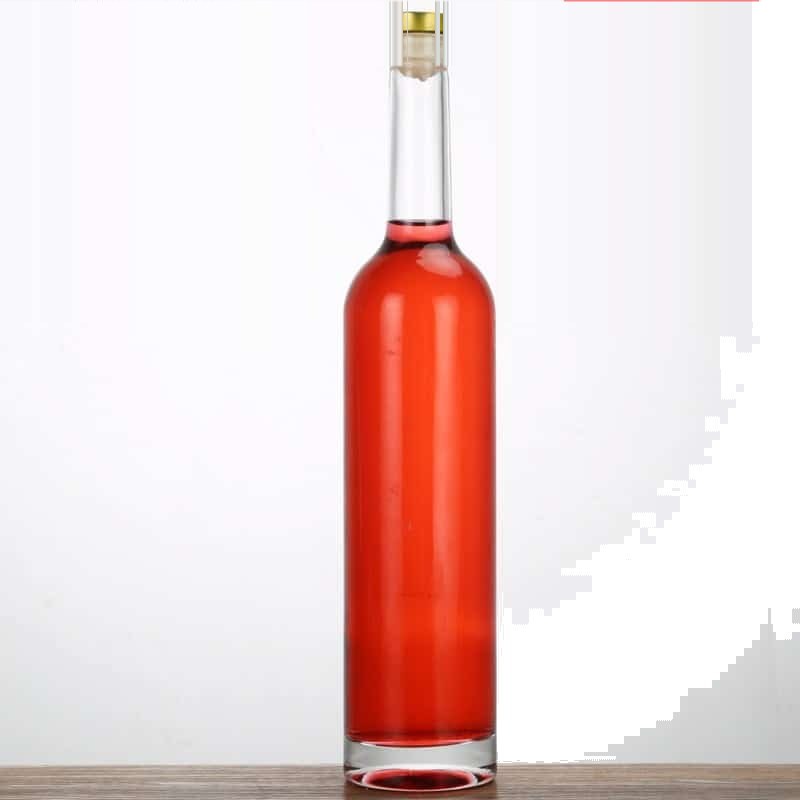
If you make dessert wine, ice wine or a liqueur, you buy this bottle on height as much as on volume, and we melt the super flint in our own furnaces in Shandong. Your two profiles run eight sizes from 175 ml to 750 ml, all on cork finishes. A 375 ml dessert bottle here stands 33 cm, taller than a full 750 ml Bordeaux, so your carton is the first question and every height sits on the card.
Eight running-mould bottles in two profiles, with the height and body diameter you need printed on every card. We quote wholesale per size, because in this range your gift box and your carton cost more attention than the unit price.


No running-mould bottle carries that profile at that size. Your quotation can still cover it, because the cork finish is common across both profiles.

Dessert wine sells in small bottles that behave like tall ones. Three things follow from that, and all three reach you in writing before a deposit.
What is at stake
Your 375 ml bottle stands 33 cm high, taller than a standard 750 ml Bordeaux at 32.5 cm. A half bottle that will not lie in your wine carton, will not stand on a 30 cm shelf and fouls your gift-box insert is a problem you find at the packing bench, after the glass has arrived.
What we supply
Every card publishes height and diameter for you, from 27.4 cm at 175 ml to 35 cm at 750 ml. Your quotation carries carton dimensions alongside them, so your gift box, your shelf and your shipper are checked on paper before you order.

What has to match
Ice wine, late-harvest and botrytis wines are bought on colour. Ordinary flint carries a faint green cast that reads as dullness against a golden wine, and your customer paying premium prices for a half bottle notices.
What we supply
The whole range is super flint, the highest-clarity melt we run. That melt also sets your tooling minimum if you ever go custom: 12,000 pieces in extra-flint against 50,000 in standard flint, which puts a bottle of your own unusually within reach.
What is at stake
These necks are long and narrow, which makes the silhouette read as dessert wine and makes them awkward on your bottling line if it was built for standard wine. Corking depth, capsule length and the grip a labeller needs all change.
What we supply
Every design ships its finish drawing with the quotation, and we quote capsules with the glass so the length matches your neck instead of arriving short. Where a contract bottler runs your line, that drawing is what they will ask for first.
One finish family runs across these bodies, and we price your closure in the same quotation as the glass.
Your quotation states the finish, the cork and the capsule length, so your bottler signs off before any glass is committed.
Bulk terms from the super-flint plant. No tooling on a running body, 15–20 days from confirmation, corked samples in your hand, and a pallet count printed beside your price.
Pallet or container
A running mould carries no tooling minimum, so your first vintage can be a single pallet, on identical terms for private-label bottlers and wineries. A mould of your own in extra flint starts at 12,000 pieces, which is low enough that dessert-wine producers reach it more often than most.
15–20 days
From confirmation on running moulds. A custom mould adds 30–45 days to your lead time, counted from drawing approval.
On request
Bottles go out so your bottler runs a corking trial on the long neck before you commit a vintage. On the custom path, an acrylic model lands in about 10 days at $500, then a sample mould at 35 days puts 5–10 bottles on your desk.
EXW · FOB
Warehousing and consolidation stay in-house, and we quote transit to your port. Your dessert bottles travel with wine or spirits bottles in one container, which is how most opening orders ship.
Per size, with the quote
Tall slim bottles waste more carton than their volume suggests, so your small format is not a cheap freight line here. Your quotation gives carton dimensions and 20GP and 40HC counts per size.

Dessert wine is bought as a gift more than as a dinner wine, so your bottle carries more of the sale than your label does. Our Shandong plant frosts, sprays, screen prints, hot stamps, electroplates and labels in-house, so your decorated glass keeps the same 15–20 days as plain.
We quote decoration per design, beside the glass. Decoration and labelling in detail →

A drawing, a rival's bottle or a photograph starts the check. Eight running sizes in two profiles cover almost any brief you bring, because the category is small and the shapes are settled. When your estate wants a bottle of its own, our mould shop prices it in three stages.
A full-size model of your bottle, so you sign off shape, neck length and label panel before steel is cut.
Real glass from a sample mould: 5–10 bottles for your bottler and your buyer to approve.
Your production tooling runs on the flint lines in Shandong. Minimum 12,000 pieces in extra-flint, 50,000 in standard flint.

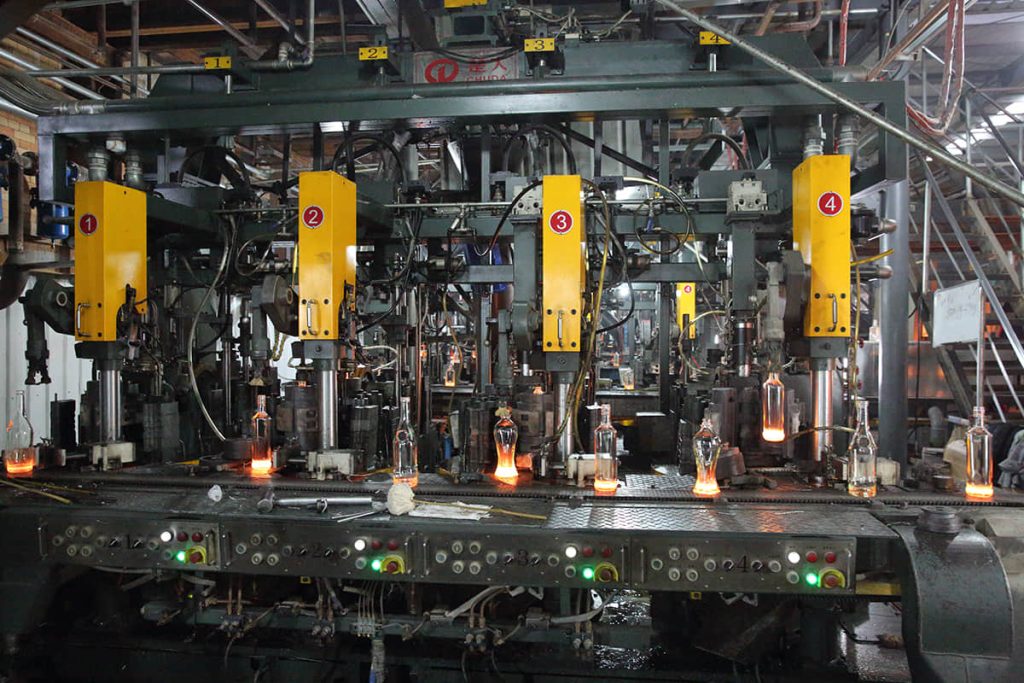
We melt super flint in Shandong, where 7 lines turn out 600,000 pieces a day, and clarity is what a dessert wine buyer judges first. Your bottles are annealed, inspected and packed inside the group, and wineries in 40+ countries have shipped from these Shandong lines since 2013.
We check the super flint melt against a retained reference. A batch that runs slightly green changes how your wine reads on a shelf without changing anything about the wine.
We measure overall height across your run, because on bottles this tall a few millimetres decide whether your carton closes. Your figures are the ones we hold to.
Controlled lehr curve on every bottle, and we check residual strain under polarised light on every run of yours. Long slim necks cool unevenly, so your range gets watched harder than a standard wine bottle.
Your shipment carries an EC 1935/2004 declaration of compliance for the EU and UK, food-contact documentation to FDA requirements for the United States, and ISO 9001. SGS test reports and third-party pre-shipment inspection come on request.
In this range your box costs more thought than your bottle, so the figures come first.
375 ml is the standard dessert-wine half bottle and the size your trade expects. You also have 175, 200, 275 and 500 ml for gift and tasting formats, and 750 ml where you want a full bottle.
33 cm on both profiles, at 5.5 cm across on the straight bottle and 6.5 cm on the bowling. Taller than a standard 750 ml Bordeaux, which catches out your cartons, gift boxes and shelf clearances more often than any other spec in this category.
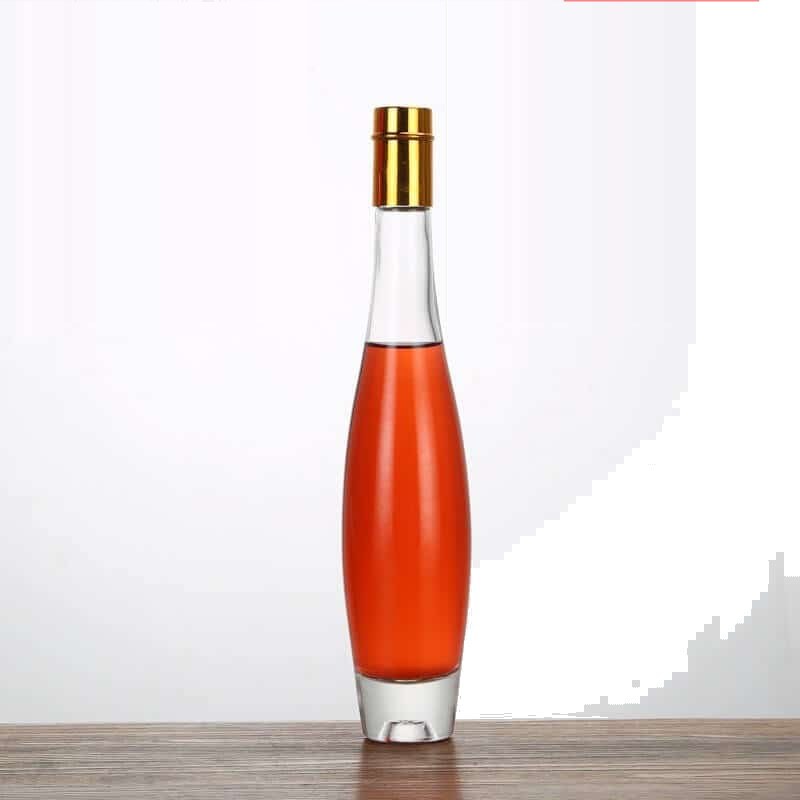
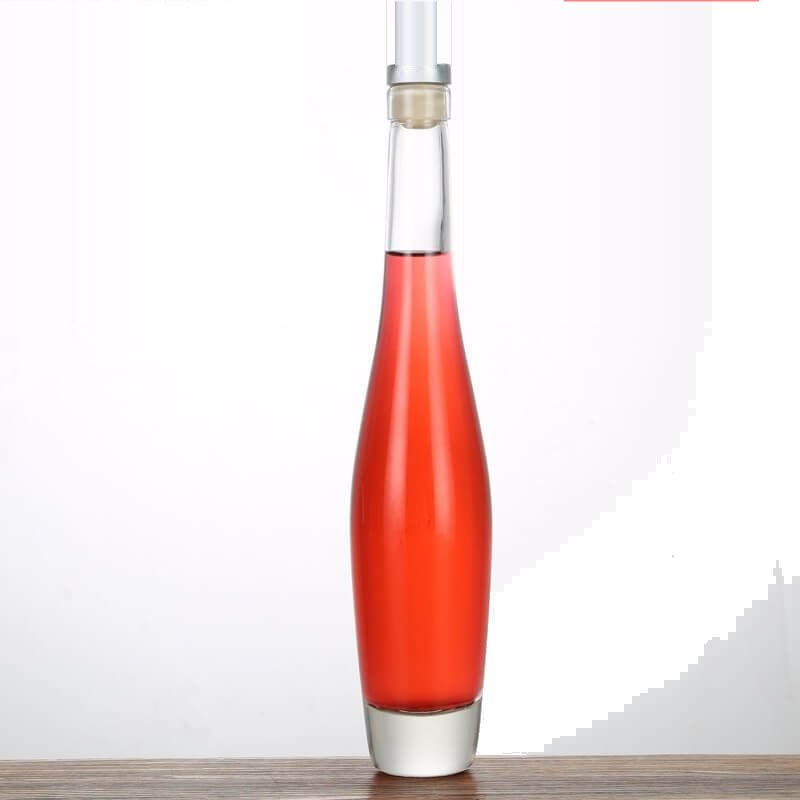
The straight profile at 375 ml is that bottle: 33 cm tall and 5.5 cm across, in super flint on a cork finish. The bowling profile at the same volume runs the same 33 cm but 6.5 cm across, which reads heavier on a shelf and needs a wider cell in your carton. Both sit on running moulds, so neither costs you tooling.
A manufacturer. We melt the super flint at our Shandong plant, one of MAIDAO INDUSTRY's two sites in Shandong and Xuzhou, and SGSBOTTLE is the export brand that quotes and ships it to you. Wine supply distributors hold cases of six and twelve for a small estate; from a pallet upward, buying from the furnace starts to pay you back.
Your wine is golden, and ordinary flint carries a faint green cast that reads as dullness against it. Super flint is the highest-clarity melt we run, and at premium prices per millilitre your customer sees the difference.
There is no tooling minimum on the eight running-mould bottles, so your first vintage can be a single pallet. A mould of your own in extra flint starts at 12,000 pieces, which is within reach once you want a bottle nobody else can order.
Yes, quoted with the glass. Capsule length matters here because the necks are long, so ordering them together saves you a capsule that stops short of where it should sit.
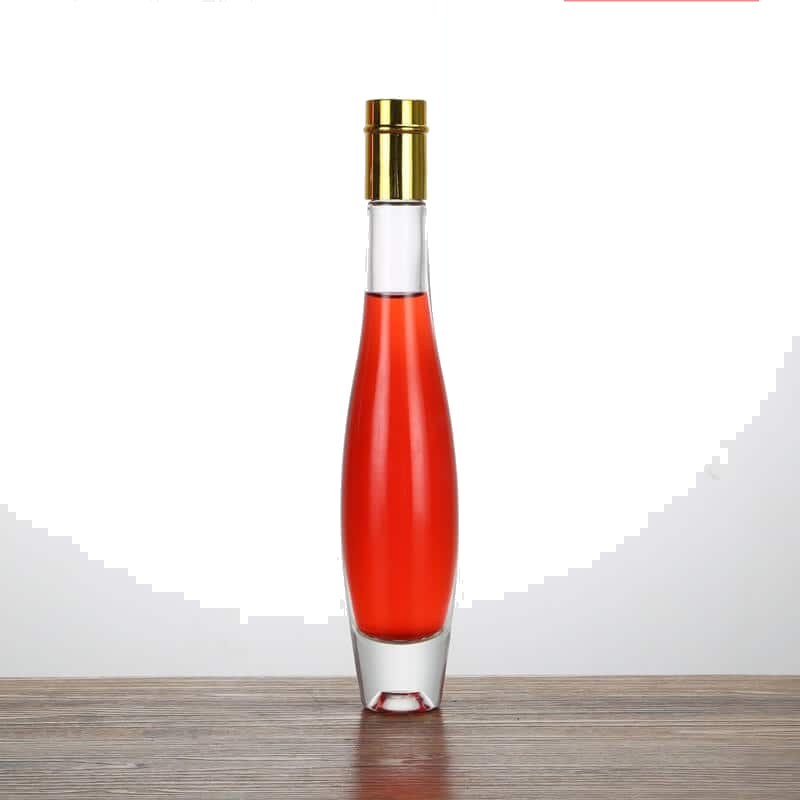
A waisted bottle that narrows through the middle and flares at the base, which reads as a gift bottle on your shelf. It runs 175 to 500 ml against the straight tall-necked profile's 200 to 750 ml, and both take the same cork finish.
Yes. Your order ships with food-contact documentation to FDA requirements for the United States and an EC 1935/2004 declaration of compliance for the EU and UK, and SGS test reports come on request.
Less efficiently than their volume suggests, because a tall slim bottle wastes space in your carton. Your quotation gives carton dimensions and per-size 20GP and 40HC counts, which is the honest way to compare a 375 ml dessert bottle against a standard half bottle.
A size, a profile or the box you pack into is enough to start. Our wine desk answers with pricing, heights and loading data inside 24 hours.
Matching running-mould bottles, heights and loading data come back within 24 hours.
The running moulds that fit get found before anyone talks about tooling.