Every quote answered within 24 hours  ·  Mon–Sat 8:30–18:00 (GMT+8)  ·  sales@sgsbottle.com
Dense green conifer forest seen from the air, the carbon sink a glass bottle is measured against

Sustainable Glass Packaging, Melted on Our Own Lines

Your bottle's footprint comes from the furnace and from the container it crosses the ocean in, and both sit inside the two sites MAIDAO runs in Shandong and Xuzhou. Natural gas since 2016, 20–30% recycled cullet in the batch, and NNPB forming that takes weight out of a wall your drinker never notices.

Guides on cullet, carbon and EPR fees →
2016Natural gas since
20–30%Recycled cullet
100%Recyclable, no limit
14Production lines

Where the Carbon in Your Glass Bottle Comes From

Three separate sources, and your leverage over each one is different.

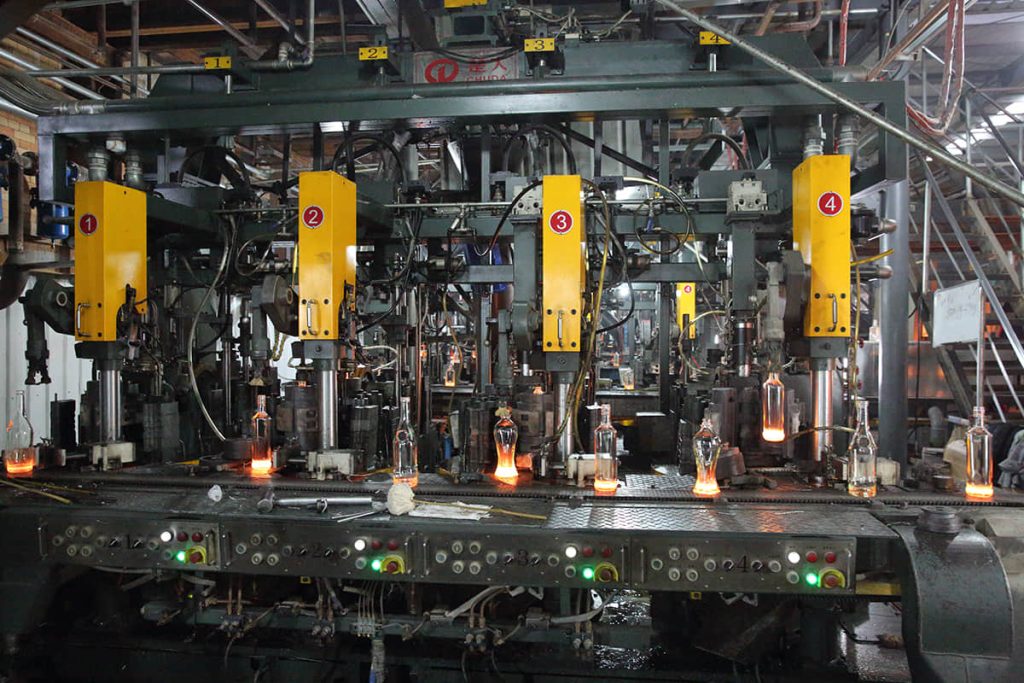
Hot glass bottles on the forming section of an IS machine at the Shandong factory

Combustion at the furnace

The fuel that holds a furnace at melting heat is the largest single share, and it belongs to your factory rather than to your buying decisions. SGSBOTTLE, a glass bottle manufacturer with 14 lines in Shandong and Xuzhou, came off coal onto natural gas in 2016, so every bottle formed since carries that profile.

Process chemistry in the batch

Soda ash and limestone give up CO2 as they decompose, and that happens whatever fuel a plant burns. Cullet is your lever against it: melted glass has already given up its carbon, so every tonne of cullet in the batch displaces raw carbonates and the emissions they would have released.

Freight to your market

Glass is dense, so the lane out of China puts real weight into your total. A lighter 750 ml (25 oz) bottle carries less glass through the furnace and less mass across the ocean, and the two savings add rather than cancel.

The lever that stays with you

Gram count follows your order into every bill after the furnace: sea freight, the EPR fee your importer pays per tonne of glass placed on the market, and the pallet positions your warehouse rents.

4 Levers That Move Your Bottle's Footprint

All four run today across the two sites, and each of them reaches your invoice somewhere.

2016

Natural gas at the melt

The conversion off coal cut CO2, SO2 and NOx at the furnace, where a bottle's largest emission share comes from.

20–30%

Recycled cullet in the batch

Clean, colour-sorted cullet melts under the heat raw batch needs, so it cuts fuel and carbonate chemistry at once.

NNPB

Lighter glass, same drawing

Narrow-neck press and blow spreads glass evenly enough to take weight out of the wall, in Shandong.

100%

Recyclable without limit

Glass goes back to the furnace with no loss of purity, so your cullet this year becomes your bottle next year.

Which of Our 2 Sites Melts Your Colour

Colour and glass type decide the site, and the site decides how much cullet your batch can carry.

SiteGlassLinesInspectionWhat it runs
Shandong, Shandongflint and super flint7Machine + manualvolume flint and super flint
Xuzhou, Jiangsuflint7100% manualour own plant, mixed runs

Cullet share moves with colour and with what the collection stream around a site delivers, so the figure for your order comes back with your quotation instead of as a site-wide average. Flint carries less than amber and green, because contamination shows in clear glass.

Bottle Weight, Container Count and the Bill You Pay Twice

Your load plan and your EPR return read from the same gram count.

FormatUnits per 40HCWhat moves the number
750 ml (25 oz) round25,000Pallet pattern and carton size.
750 ml (25 oz) irregular22,000An oval or square footprint loses cases.
12 oz (355 ml) beverage60,000Bottle height and the crate you fill.

Taking weight out of a wall starts as a mould decision. It changes the drawing, your filling line has to accept the new bottle, and the saving only counts once your line runs it at speed.

Your EPR fee follows that gram count every year the SKU sells, so a lighter bottle keeps paying you back long after the tooling has stopped costing anything.

What You Can Ask For in Writing

Four things your quotation and document pack carry, and one thing they do not.

The cullet position for your colour
Stated for the site that would melt your order, with your quotation.
Request It
Bottle weight on the finish drawing
Every quotation carries the drawing; a lighter option comes back against the same one where the mould allows.
Request It
Load plan and units per 40HC
Pallet pattern, carton count and container fill for your lane.
Request It
Food-contact and material certificates
ISO 9001, SGS reports, EC 1935/2004, FDA, RoHS, CA Prop 65 and CNAS.
Request It

A third-party verified life-cycle assessment and a certified environmental management system are different documents from anything in that pack. Your enquiry gets a straight answer on what exists before any number reaches your customer's file.

6 Guides Your Packaging and ESG Team Can Use

The library entries these figures rest on, written for the people who buy packaging.

Cullet: How 30% Recycled Glass Changes Your Melt

Cullet is crushed recycled glass fed back into the furnace. What it does to energy, quality and your recycled-content claim, and why colour separation limits it.

Read the guide →

The Carbon Footprint of Glass: 3 Sources of Emissions

Melting, chemistry and freight each contribute. Where the carbon in a glass bottle actually comes from, what cullet and fuel change, and which lever is yours.

Read the guide →

Recycled Content Claims: 4 Parts of a Defensible Figure

A recycled content figure on your pack is a public claim. What pre and post-consumer mean, how mass balance works, and what evidence a regulator expects.

Read the guide →

The Glass Recycling Loop: 4 Stages to the Furnace

Collected glass and furnace-ready cullet are not the same thing. What happens between the bin and the batch, and why colour sorting decides the outcome.

Read the guide →

Reading a Packaging LCA: 5 Questions Before You Trust It

Two life cycle assessments of the same bottle can disagree completely. What scope, functional unit, trips, allocation and sponsorship each do to a result you are shown.

Read the guide →

Packaging Waste Rules and EPR Fees: 4 Things to Know

Extended producer responsibility charges you by weight, every year you sell. Who the obligated party is, how fees are modulated, and what your reporting rests on.

Read the guide →

Sustainable Glass Packaging Questions Buyers Ask

Recycled content, fuel, footprint figures and EPR fees.

How much recycled glass is in your bottles?

Cullet runs 20–30% of the batch across our melts. The share for your order depends on colour and on the site that runs it: flint carries less than amber or green, because contamination shows in clear glass, and your quotation states the position for your colour.

Are glass bottles recyclable?

Yes, without limit. Glass returns to the furnace with no loss of purity or performance, and cullet melts under the heat raw batch needs, so a returned bottle saves fuel as well as raw material.

What fuel do your furnaces run on?

Natural gas, since 2016. The conversion off coal cut CO2, SO2 and NOx across the two sites in Shandong and Xuzhou, and it covers all 14 lines.

Can you give me a carbon footprint figure for my bottle?

Not as a third-party verified number. What comes back with your quotation is the input your own assessment needs: bottle weight from the drawing, the cullet position for your colour, the fuel at the furnace and the units per 40HC on your lane.

Does a lighter bottle lower my EPR fees?

Yes, where your market charges by weight, and most markets do. The fee lands every year the SKU sells, so grams taken out at the mould stage keep returning long after you have paid for the tooling.

What is cullet, and does it weaken a bottle?

Cullet means crushed glass going back into the furnace with the raw batch, and clean cullet costs your bottle nothing in strength. Glass loses no quality on remelting; what does cause defects is contamination, when ceramics, stones or metal ride the cullet stream into your glass.

Send Us the Bottle You Ship Today

Your current bottle, your annual volume and your markets are enough to start. What comes back:

Get My Quote
See how a custom mould gets lighter →

sales@sgsbottle.com · Mon–Sat 8:30–18:00 (GMT+8)