Beverage glass · Beer bottles and growlers
Amber as standard. A format per market. Growlers that pour, and bottles that keep.
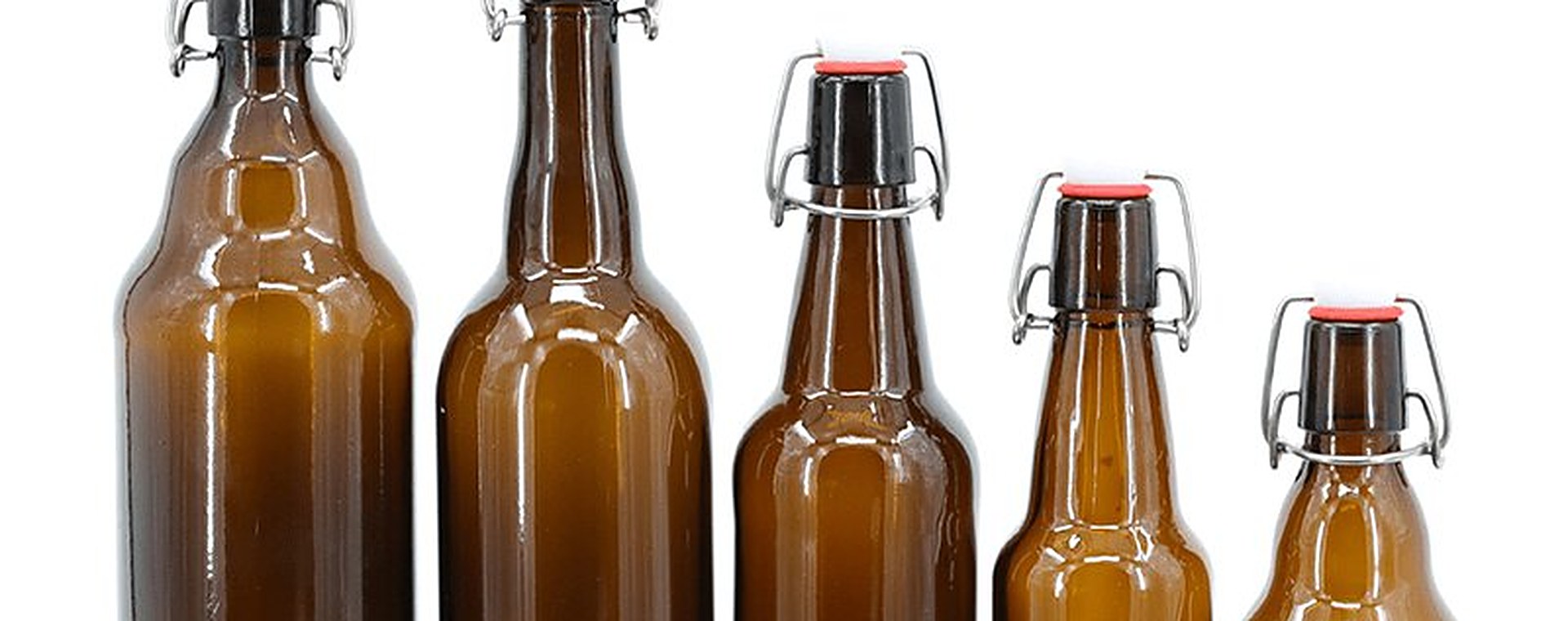
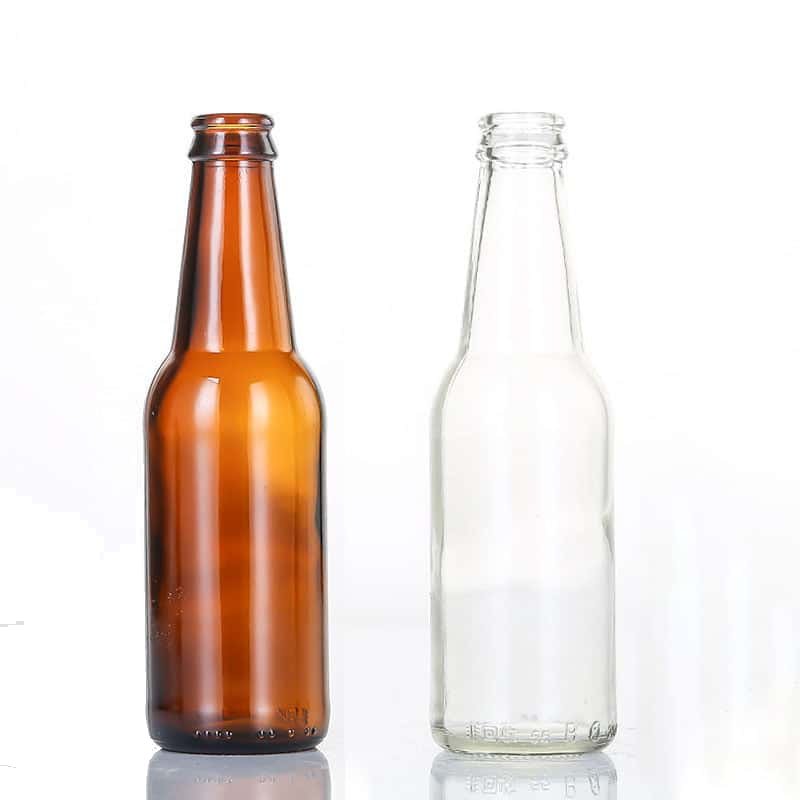
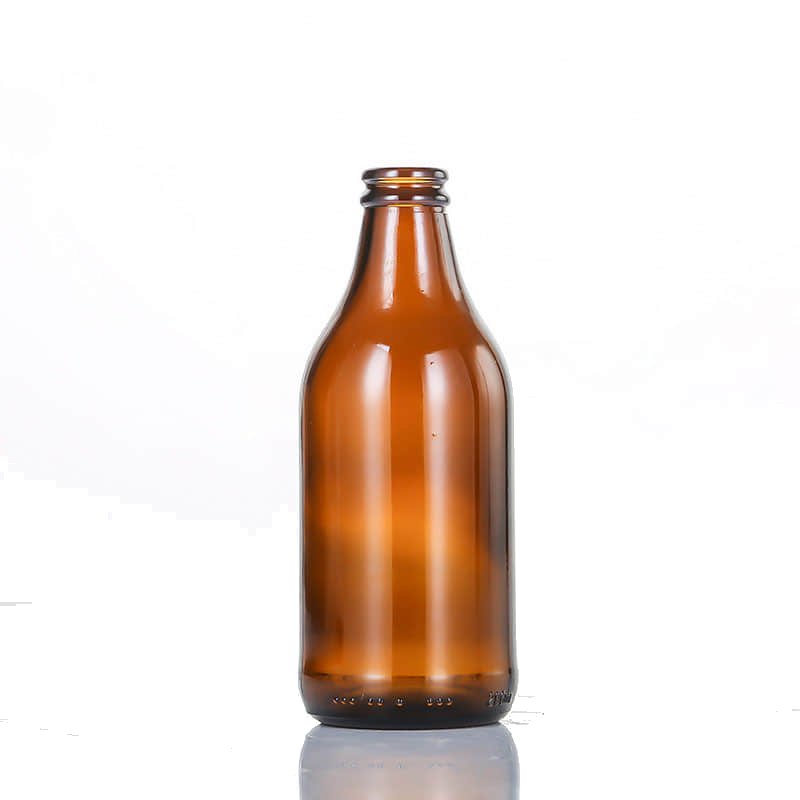
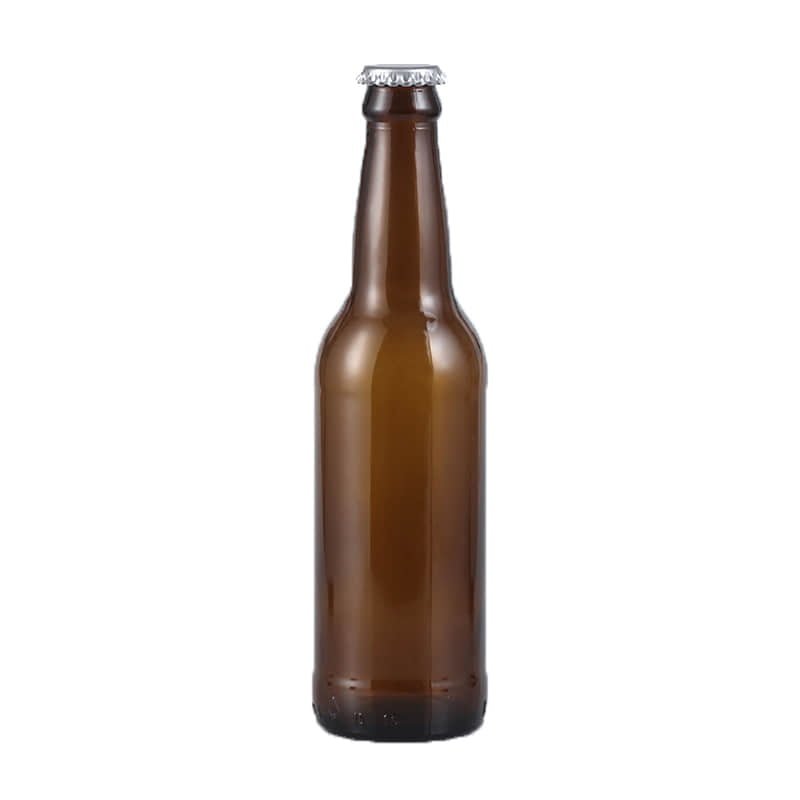
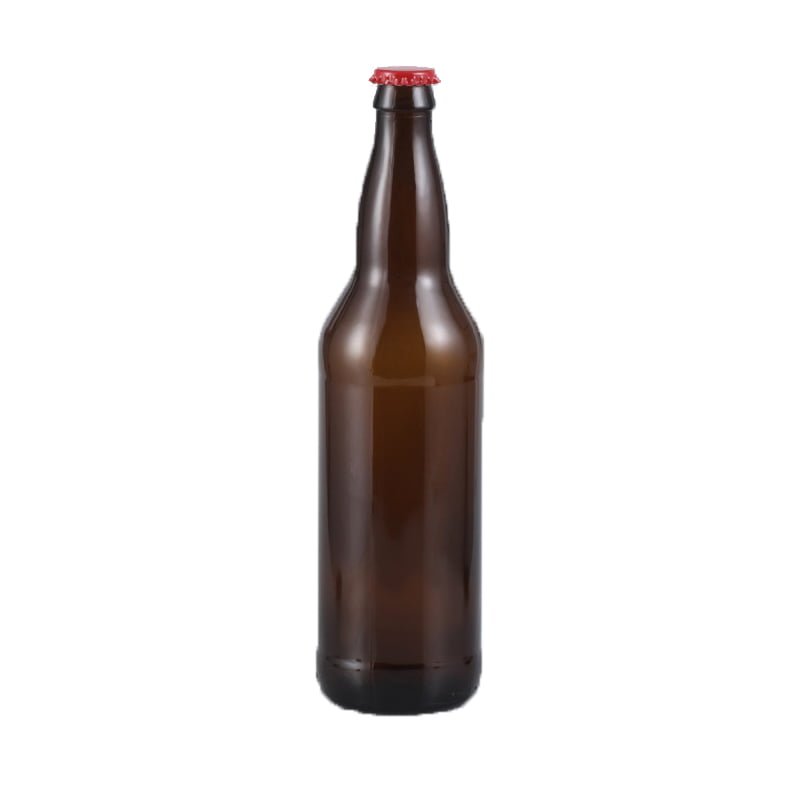
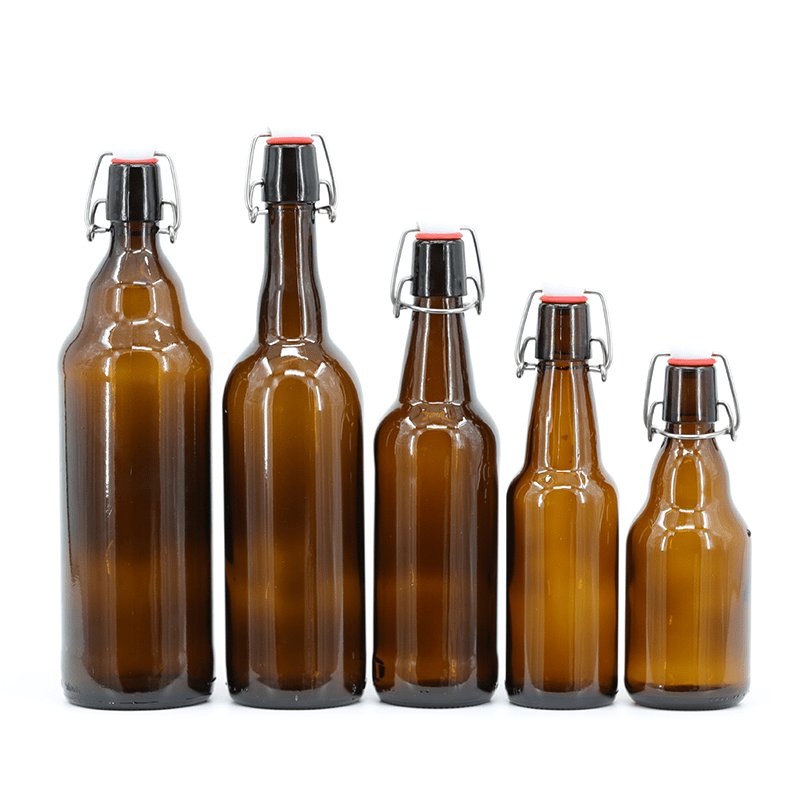
If you brew, contract-fill or run a taproom, you buy this glass by the pallet, and it comes off our own amber lines in Shandong. Your choices are longnecks at 250, 330 and 500 ml, a 296 ml stubby, 650 ml and 1 litre bombers, a swing-top ladder and 64 oz growlers. Your format is a distribution decision, so we group them by closure and by the trade each one belongs to.
Eight running-mould bodies, filtered by closure. Each size belongs to a particular trade, so your choice sits closer to distribution than to design. We quote wholesale by the pallet and by the container on one sheet.


No running-mould body carries that closure at that size. Your quotation can still cover it, because the crown finish repeats across every bottle format here.

Your beer packaging turns on three things that have nothing to do with how the bottle looks. All three reach you in writing before a deposit.
What is at stake
A 330 ml longneck is a European retail bottle, a 296 ml stubby is a North American one, a 650 ml bomber is how American craft breweries sold big beers for a decade, and a 750 ml is Belgian. Crates, cartons, shelf trays and the price your customer expects all follow the format. Pick the wrong one and you are fighting your own distributor from the first pallet.
What we supply
Six bottle formats run across 250 ml to 1 litre, so if you sell into two markets you can carry both without two suppliers. Your quotation gives carton and pallet data per format, which is where the format decision is actually settled.

What has to match
A crown looks like the most standardised closure in drinks, and for you it mostly is. The capping head is where it goes wrong: a chuck set for one finish profile crimps skirts unevenly on another, and you discover that as leakers three weeks after packaging.
What we supply
Every crown-finish design ships its finish drawing with the quotation, so your capper supplier or your head brewer confirms the profile on paper. Where you already run a bottle, a photo with a ruler in frame narrows the range down before any sample moves.
What is at stake
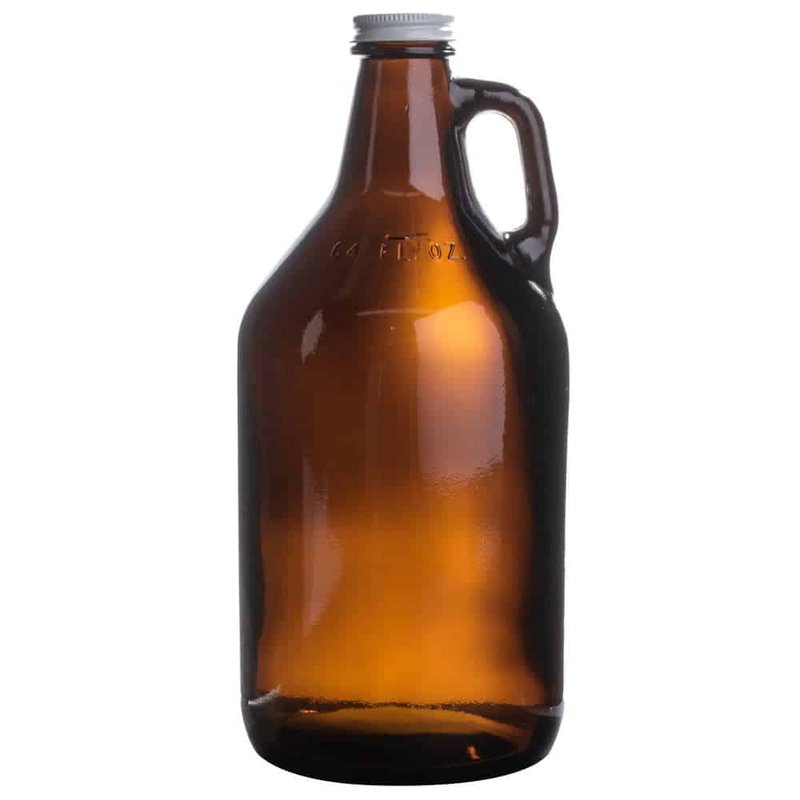
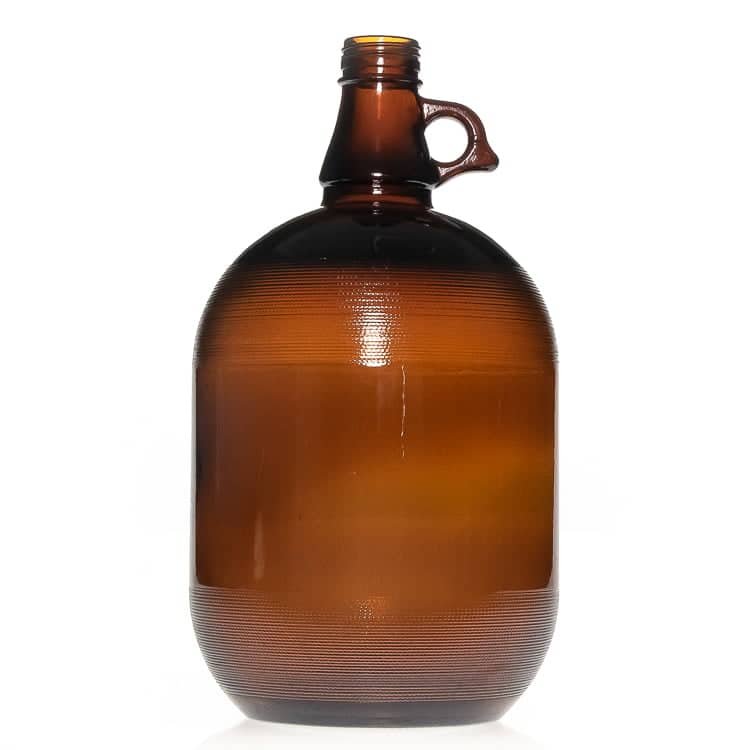
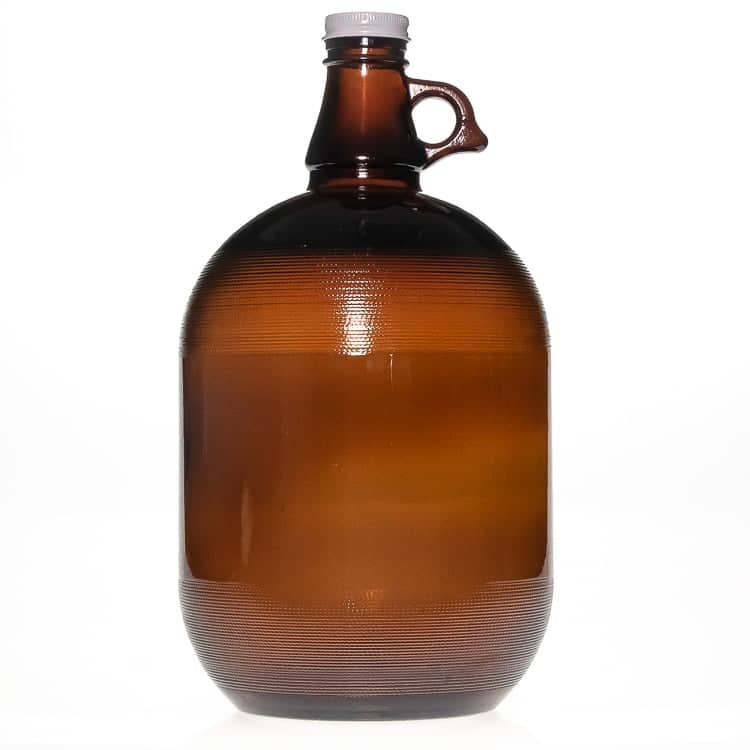
A screw-capped growler is a taproom vessel. It carries your beer home to be drunk that day, because a plastic cap on a 64 oz jug will not hold carbonation the way a crown on a 330 ml does. Sell growler-filled beer as shelf stock and you collect flat-beer complaints that read like a brewing fault.
What we supply
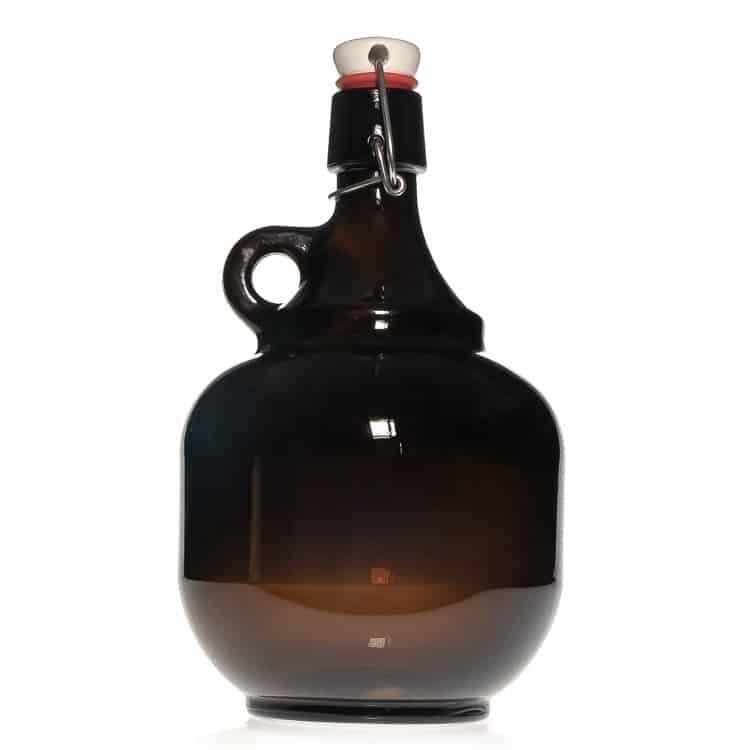
We quote the growlers as what they are, with handles, screw caps and a swing-top version where you need a tighter seal. Where the beer has to survive a shelf, the crown-finish bottles are the ones on that list, and your quotation says which is which.
Three closure systems run against these bodies, each matched to the finish on the design you shortlist.
Your quotation states the closure and the finish it seals against, so your capping line signs off before any stock is committed.
Bulk terms from the factory that melts the amber. No tooling on running moulds, 15–20 days from confirmation, capped samples in your hand, and a pallet count printed beside your price.
Pallet or container
A running mould carries no tooling minimum, so your first order can be a single pallet, on identical terms for private-label brewers and contract packers. Cutting steel of your own starts at 12,000 pieces in extra flint, 50,000 in standard flint.
15–20 days
From confirmation on running moulds, glass and closures together. A custom mould adds 30–45 days to your lead time, counted from drawing approval.
On request
Bottles ship with the closure, so your capper can crimp one and your line can run a trial before you commit a season's packaging. On the custom path, an acrylic model lands in about 10 days at $500, then a sample mould at 35 days puts 5–10 bottles on your desk.
EXW · FOB
Warehousing and consolidation stay in-house, and we quote transit to your port. Your beer bottles travel with swing tops or juice bottles in one container, which is how most opening orders are built.
Per format, with the quote
A 330 ml longneck and a gallon growler are not comparable loads, so one anchor would mislead you. Your quotation gives carton dimensions, pallet patterns and the 20GP and 40HC counts per format.

A craft shelf gets decided at arm's length, so your brand has to work on the surface of glass that is already tooled. Our Shandong plant frosts, sprays, screen prints, hot stamps, electroplates and labels in-house, so your branded bottle keeps the same 15–20 day lead time as a plain one.
We quote decoration per design, beside the glass. Decoration and labelling in detail →

A drawing, a rival's bottle or a sketch starts the check. You will most likely find your format on our running moulds, because distribution rewards a standard bottle and a standard crate. When nothing fits, our mould shop quotes the tooling in three stages before you spend anything.
A full-size model of your bottle, so shape, shoulder, handle and label panel are signed off before steel is cut.
Real glass from a sample mould: 5–10 bottles for your capper, your filler and your distributor to approve.
Your production tooling runs on the flint lines in Shandong. Minimum 12,000 pieces in extra-flint, 50,000 in standard flint.

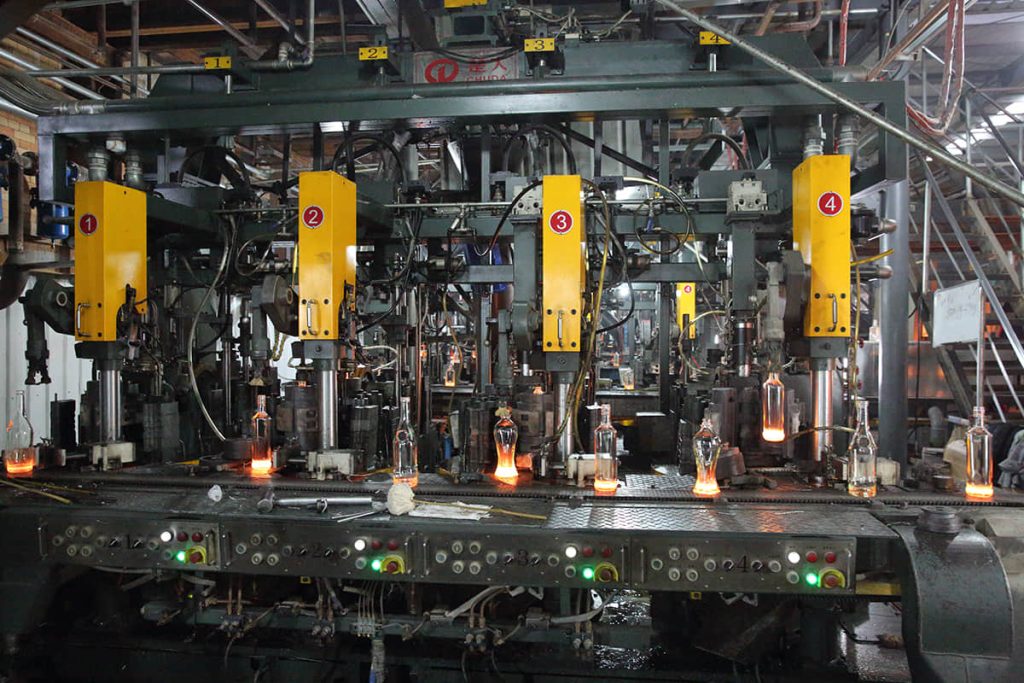
We melt amber in Shandong, where 7 lines turn out flint and amber at volume, and amber beverage glass is one of the two things those lines exist for. Your bottles are decorated in Shandong and loaded by our own warehouse team, and breweries in 40+ countries have shipped from these lines since 2013.
We gauge the finish on every run, because a crown that crimps unevenly leaks at your distributor weeks after it left your filler.
Controlled lehr curve on every bottle, and we check residual strain under polarised light on every run, with polariscope results on request. Your carbonated beer in a warm truck finds every piece of strain a lehr left behind.
Measured across the run. On a pressure product the distribution of glass matters more than the average weight, and the thin spot decides where your bottle fails.
Your shipment carries an EC 1935/2004 declaration of compliance for the EU and UK, food-contact documentation to FDA requirements for the United States, and ISO 9001. SGS test reports and third-party pre-shipment inspection come on request.
Formats, crown finishes and the 12 oz question, answered straight, including where our ladder cannot help you.
Light breaks down hop compounds and gives your beer a skunky character, and amber blocks most of the wavelengths that do it. Clear and green are a marketing choice that costs you shelf life, so every bottle in this range is amber.
A 650 ml bottle with a tall shoulder and a crown finish, the format American craft brewers use for big and seasonal beers. It runs here alongside a 1 litre version on the same body.
Not on a running mould. Our amber longnecks run 250, 330 and 500 ml (8.5, 11 and 17 oz), which are the European trade sizes, and the US formats we can ship you from stock are the 22 oz bomber and the 64 oz growler. A 355 ml longneck of your own is a custom mould at 12,000 pieces in extra flint, quoted in three stages.
Not the way a crown-capped bottle will. A screw-capped growler is a taproom vessel, filled for your customer to drink within a day or two. Where your beer has to survive a shelf, list the crown-finish bottles; the swing-top growler sits between the two.
There is no tooling minimum on the eight running-mould bodies, so your first order can be a single pallet. An embossed brewery mark needs steel of your own, which starts at 12,000 pieces in extra flint or 50,000 in standard flint.
The furnaces are ours. MAIDAO INDUSTRY runs two sites in Shandong and Xuzhou with 14 production lines between them, and your amber comes out of the Shandong plant. SGSBOTTLE is the export brand on your invoice, so one company quotes, melts, decorates and ships.
They take the 26 mm crown that production cappers are built around, and every design ships its finish drawing with the quotation so your capper supplier confirms the profile. Uneven crimping causes most leakers, and that is a finish question before it is a glass one, so your capping head profile belongs on the enquiry.
250, 296, 330 and 500 ml plus 650 ml and 1 litre bombers cover most of what you need in both. Your North American formats are the 296 ml stubby and the 650 ml bomber; your European retail sizes are 330 ml and 500 ml; 750 ml runs on the swing-top ladder.
Yes. Your order ships with food-contact documentation to FDA requirements for the United States and an EC 1935/2004 declaration of compliance for the EU and UK, and SGS test reports come on request.
Yes, by screen printing your mark straight onto the amber glass, and onto the crowns as well. Both are quoted with the glass. An embossed mark in the glass itself needs a mould of your own, priced by stage.
A format, a market or the bottle you fill today is enough to start. Our beverage desk answers with pricing, drawings and pallet counts inside 24 hours.
Matching running-mould bottles, pricing and pallet data come back within 24 hours.
The running moulds that fit get found before anyone talks about tooling.