Food glass · Sauce and condiment bottles
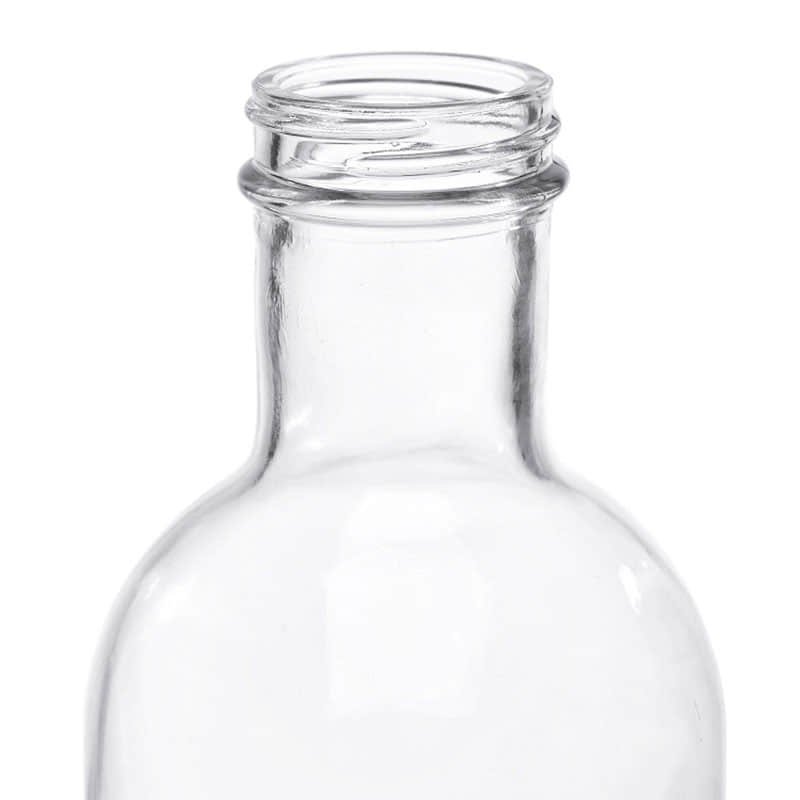
The neck first. The reducer that fits it. Glass weight on the card, because glass is priced by the gram.
If you are a craft sauce maker, a BBQ brand or a co-packer, you buy this bottle at the neck, and every one comes off our own lines in Shandong. Your five running-mould bodies cover 90 ml to 360 ml (3 to 12 oz), including a 150 ml woozy that lands on the US 5 oz. Glass weight is printed on every card, because a glassworks prices by the gram and your unit cost follows the gram.
Five running-mould bottles, sorted by the neck. Here the neck decides everything downstream: the fitment, the cap, and how you prove your bottle has not been opened. We quote wholesale per bottle, with the closure priced beside it.


No running-mould bottle carries that neck at that size. Your quotation can still cover it, because the reducer and cap systems cross over between several of these bodies.

A sauce bottle is bought at the neck. Three things follow from it, and all three reach you in writing first.
What is at stake
A reducer bore cut for a thin vinegar sauce blocks on the chilli seeds in yours. One cut for a chunky salsa lets a habanero sauce out in a flood, and your customer pours a ruined plate. The bottle looks identical either way, so you find out after your first production run.
What we supply
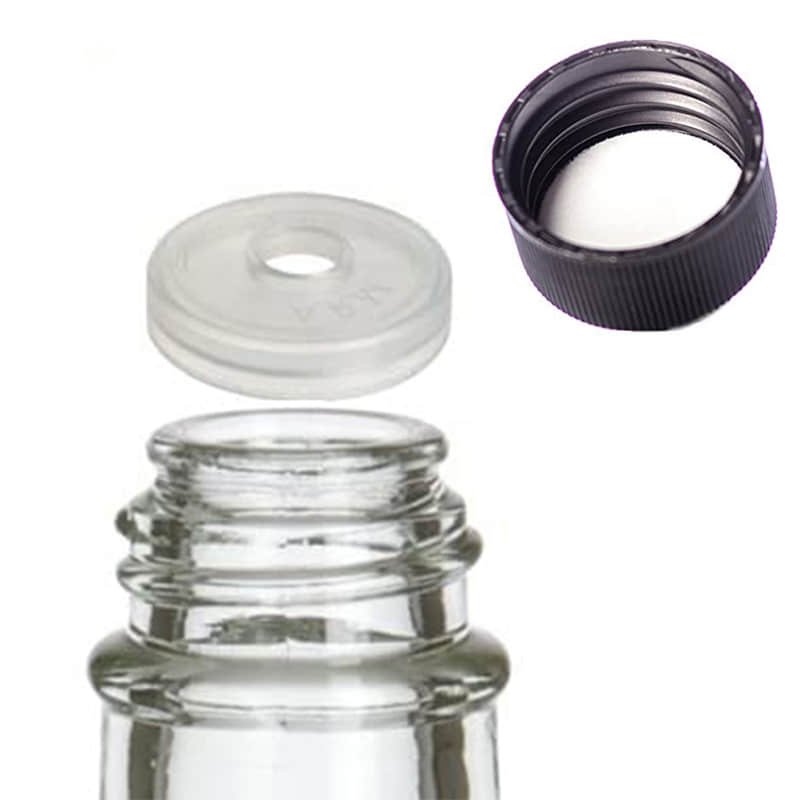
The woozy neck here is finished to take an inset reducer, and the bore is chosen against what you are actually bottling. A sample of the sauce, or its viscosity, comes back as a reducer already pressed into the bottle, so you pour your own product through it before you buy the container.

What has to match
These two look alike on a shelf and behave nothing alike on your line. A ring neck carries a raised bead sized for a shrink band. A lug neck takes a twist-off cap whose button drops when your seal breaks. Your capping line already does one of them, and retrofitting the other is a capital decision, not a purchasing one.
What we supply
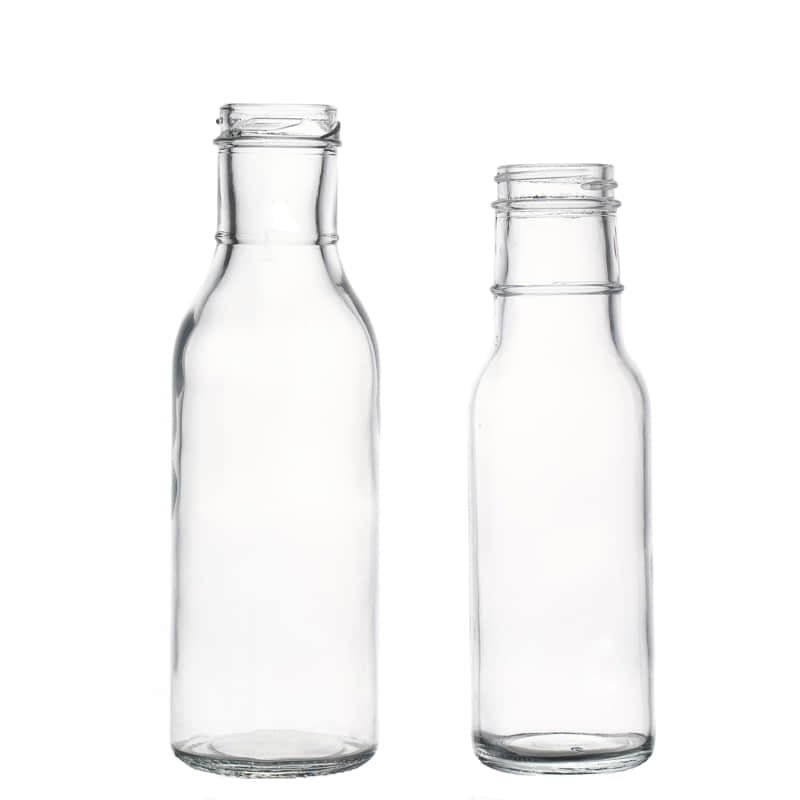
Both run at 8 oz and 12 oz on the same body height, so you can move between them without redrawing a label. Every design ships its finish drawing with the quotation, and your closure supplier confirms the fit on paper before you commit.
What is at stake
Glass sells by the weight of the melt, so two 150 ml bottles at 147 g and 190 g are not the same purchase for you. Compare quotes on millilitres and you lose on grams, and the lighter bottle also loads more into your container.
What we supply
Every woozy card gives you its glass weight: 126 g at 90 ml, 147 g at 150 ml, 150 g at 160 ml, with heights and diameters beside them. Your quotation carries the same figure for every design, so you can compare an offer against ours on the number that actually drives the price.
Four closure systems run against these bodies, each matched to the neck on the design you shortlist.
Your quotation states the reducer bore, the cap and the finish they seal against, so nothing about the fitment is left to assumption.
Bulk terms from the factory. No tooling on a running body, 15–20 days from confirmation, bottles sampled with the reducer and cap fitted, and a container count printed beside your price.
Pallet or container
A running mould carries no tooling minimum, so your first order can be one pallet, on identical terms for private-label sauce packers and own-brand producers. Small bottles suit a first run, so start across two or three and scale the size that sells for you. Cutting steel of your own starts at 12,000 pieces in extra flint, 50,000 in standard flint.
15–20 days
From confirmation on running moulds, glass and fitments together. A custom mould adds 30–45 days to your lead time, counted from drawing approval.
On request
Bottles go out with the reducer pressed in and the cap fitted, so you pour your own sauce through it before committing. On the custom path, an acrylic model lands in about 10 days at $500, then a sample mould at 35 days puts 5–10 decorated bottles on your desk.
EXW · FOB
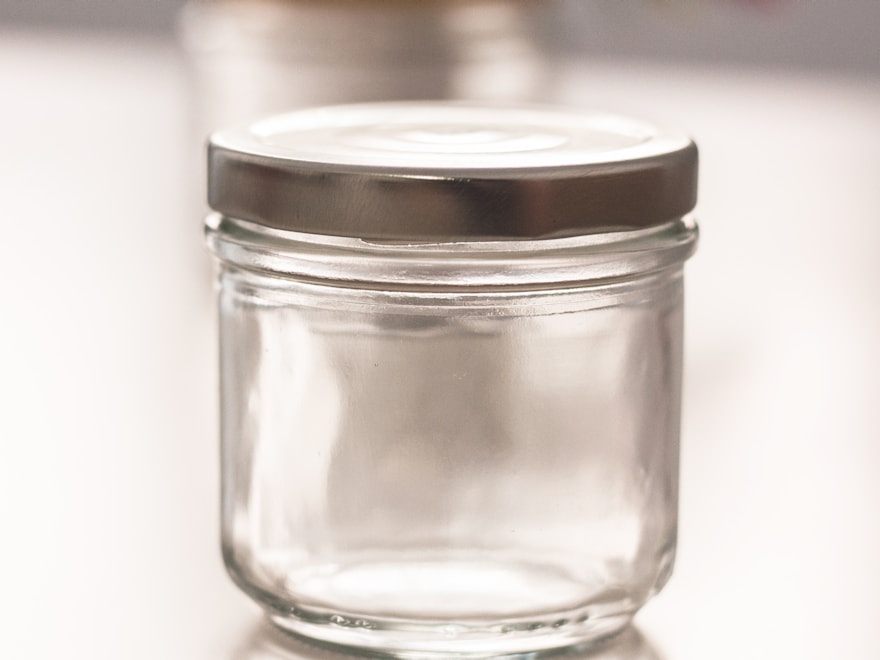
Warehousing and consolidation stay in-house, and we quote transit to your port. Your sauce bottles ride with jam jars or spice jars in one container, which is how most opening orders are built.
≈60,000+ per 40HC
Small formats load hard in your favour: a 5 oz woozy at 147 g runs well past 60,000 pieces per 40HC in export cartons. Your exact 20GP and 40HC counts arrive with your quotation.

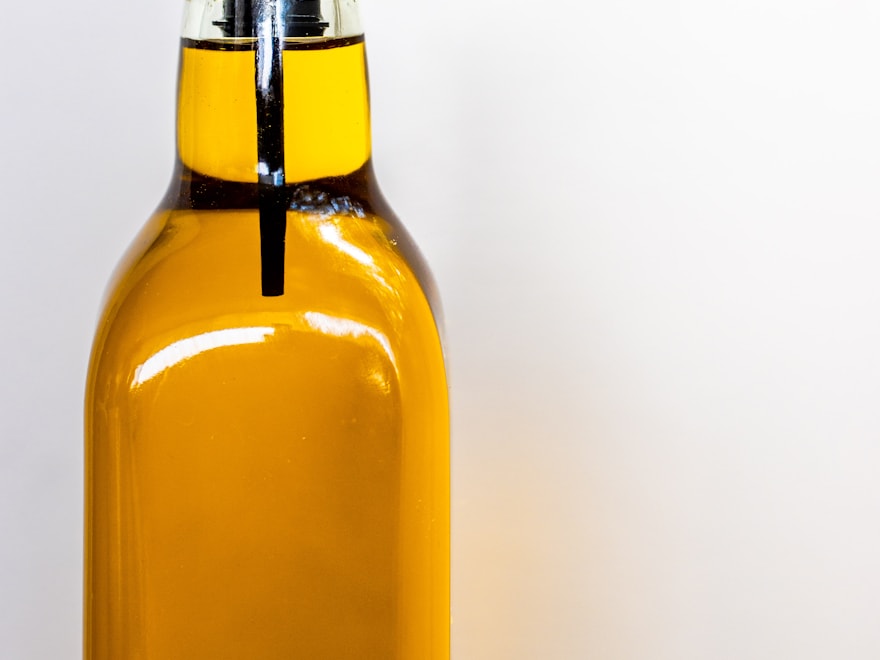
A hot sauce shelf is a wall of near-identical bottles, and your label and your neck band do the separating. Our Shandong plant screen prints, frosts, sprays, hot stamps and labels in-house, so your decorated glass keeps the same 15–20 days as plain.
We quote decoration per design, beside the glass. Decoration and labelling in detail →

A bottle, a cap or a drawing starts the check. Running woozies and ring necks cover almost any brief you bring, because this trade turns on standard reducers and standard bands. When a bottle of your own earns the steel, our mould shop prices it in three stages.
A full-size model of your bottle, so shape, shoulder and label panel are signed off before steel is cut.
Real glass from a sample mould: 5–10 decorated bottles with the reducer and cap fitted, for your line and your retailer to approve.
Your production tooling runs on the flint lines in Shandong. Minimum 12,000 pieces in extra-flint, 50,000 in standard flint.

We form your bottles in Shandong, decorate them on the same site and load them with our own warehouse team, so the glass, the reducer and the cap come from one supplier. Sauce brands in 40+ countries have shipped from these Shandong lines since 2013.
We gauge the bore a reducer presses into on every run. A reducer that drops into your sauce brings a complaint about foreign matter in food, which costs far more than the gauge does.
Weight is checked against the drawing across the run, because it is both the price you agreed and the strength the bottle needs. A bottle running light saves us nothing and costs you breakages.
Controlled lehr curve on every bottle, with residual strain checked under polarised light on every run. Hot-filled sauce goes in warm, so strain matters more to you here than on a cold-fill line.
Your shipment carries an EC 1935/2004 declaration of compliance for the EU and UK, food-contact documentation to FDA requirements for the United States, and ISO 9001. SGS test reports and third-party pre-shipment inspection come on request.
Woozy sizes, orifice fit and shrink bands, with glass weight so you can check a price per gram.
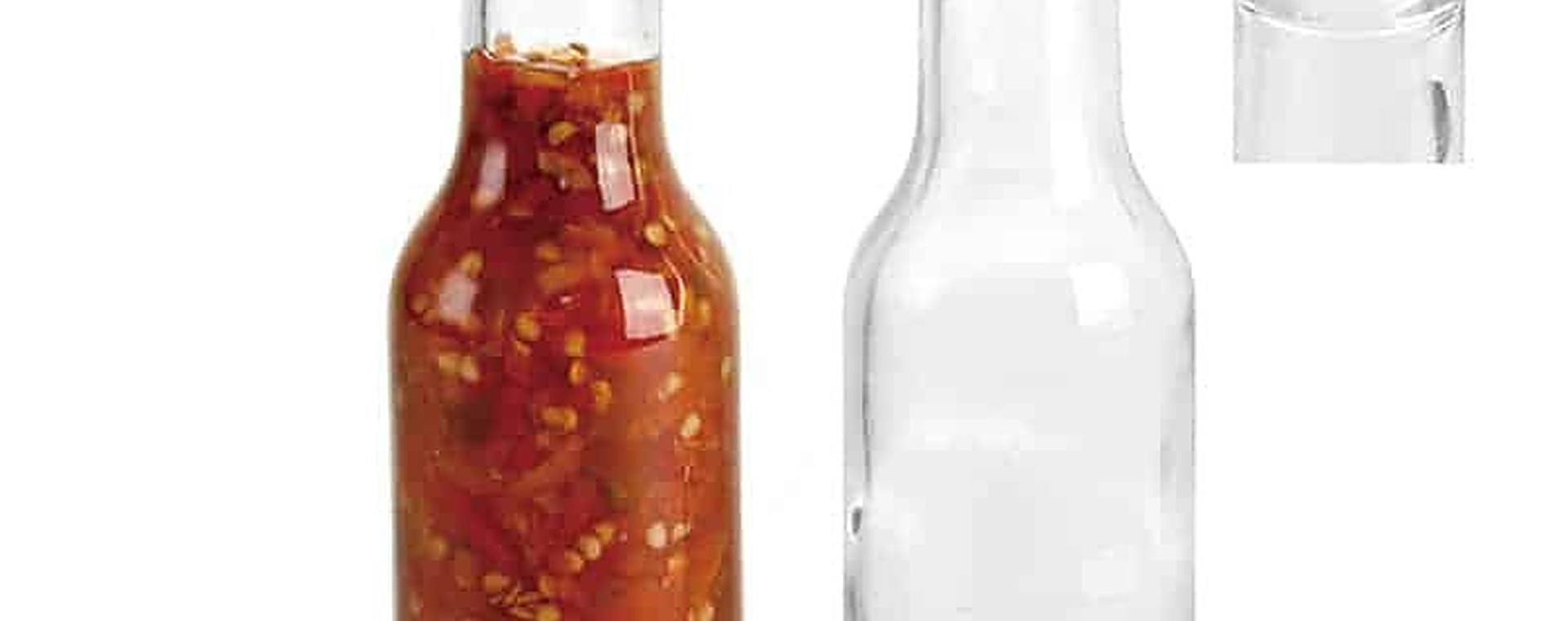
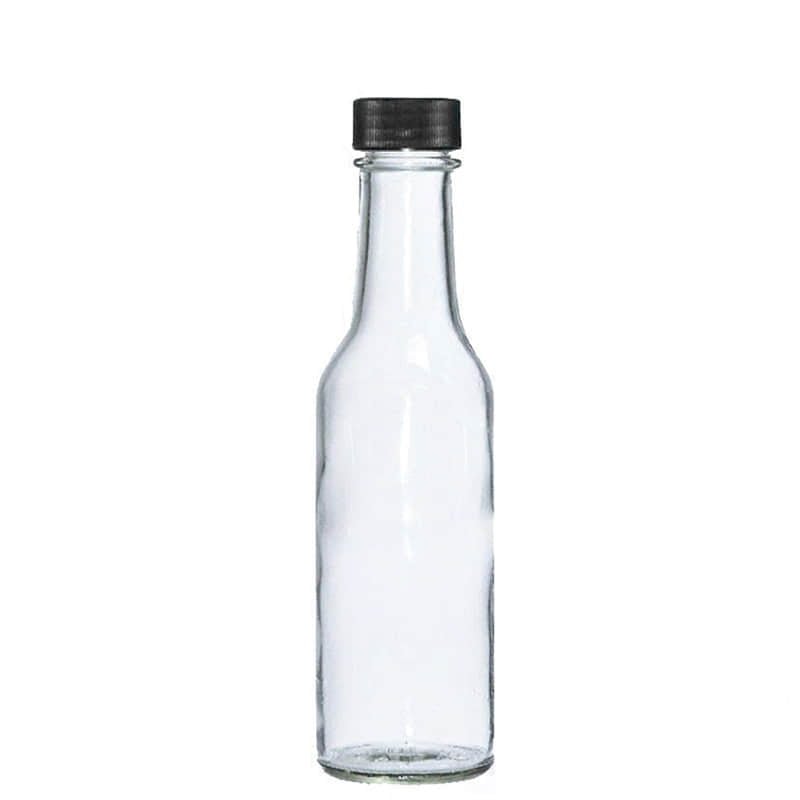
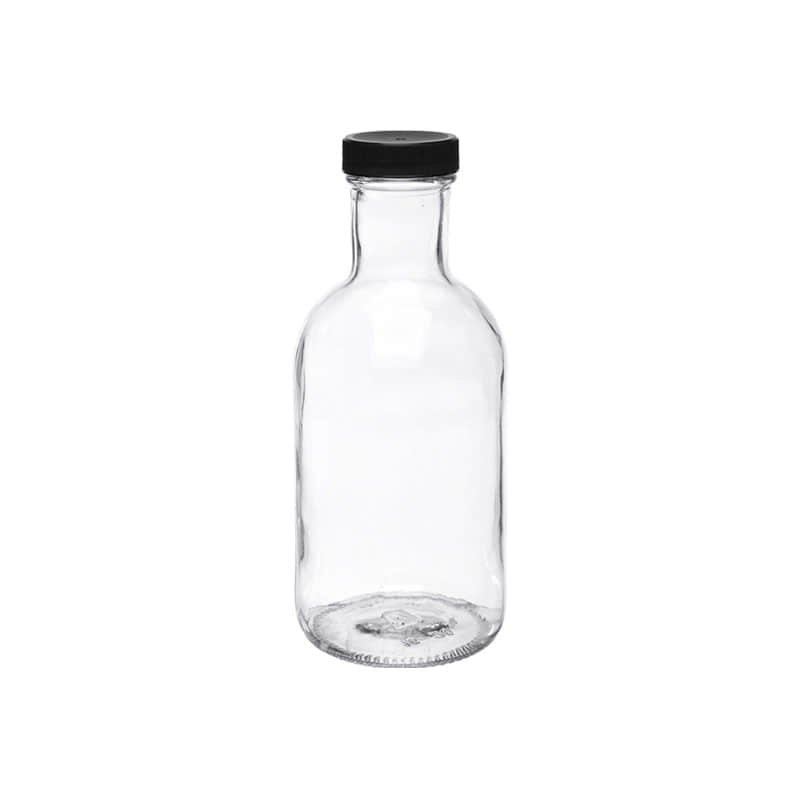
5 oz, about 150 ml, on a woozy body 169 mm tall and 47 mm across. That is the size most hot sauce brands start on. The range here also runs 90 ml and 160 ml woozies, 8 oz and 12 oz sauce bottles and a 12 oz stout.
The woozy neck is finished for an inset reducer, which presses in and stays in your bottle. The bore is chosen against your sauce, because one cut for a thin vinegar sauce will block on a chilli seed and one cut for a chunky sauce pours a thin one far too fast.
Your woozy runs 150 ml at 169 mm tall and 47 mm across, which lands on the US 5 oz bottle. The finish designation comes on the drawing with your quotation, so your cap supplier can check it against their own. Where you already stock 24-414 caps and .230 reducers, post one of each and we confirm the fit before you order.
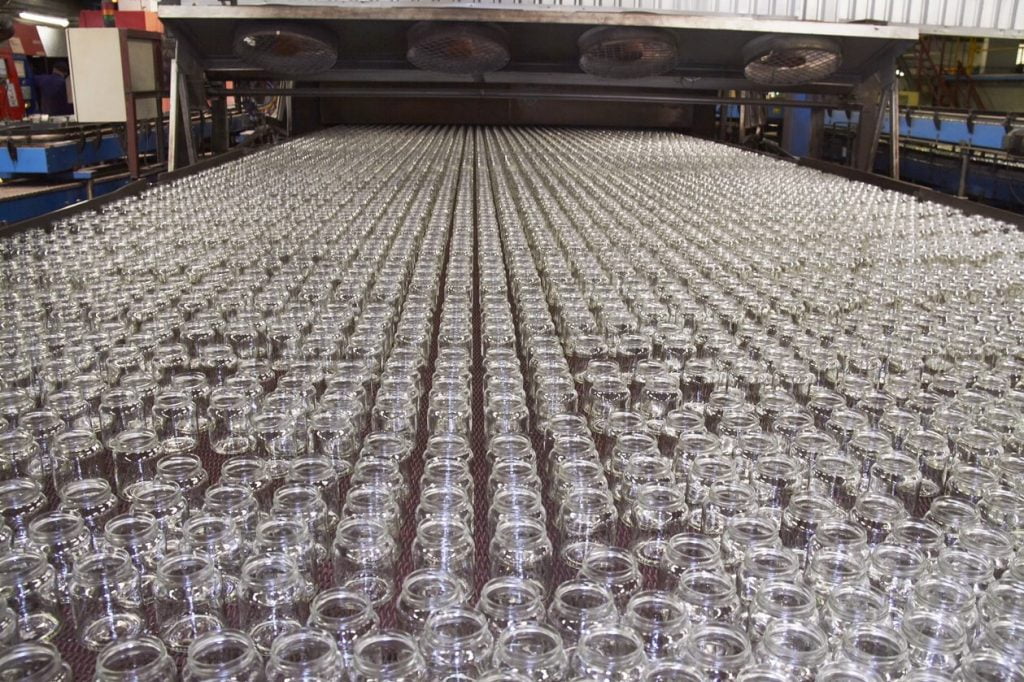
We melt and mould the glass. Your bottles are formed on the flint lines in Shandong, one of MAIDAO INDUSTRY's two production sites. Packaging distributors hold cases for a first 500-bottle run; from a pallet upward, buying from the furnace changes your cost per bottle.
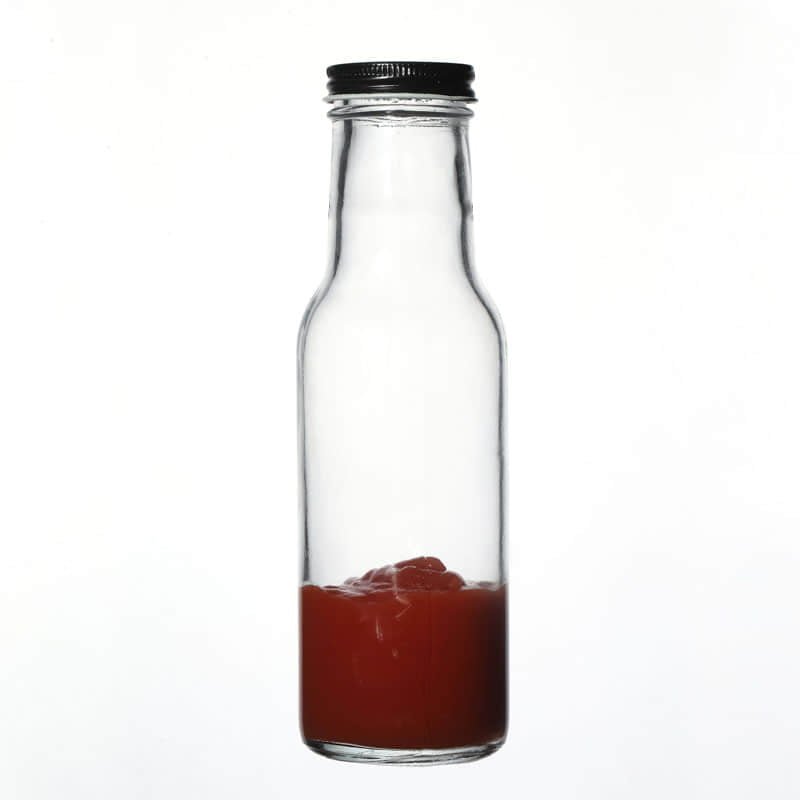
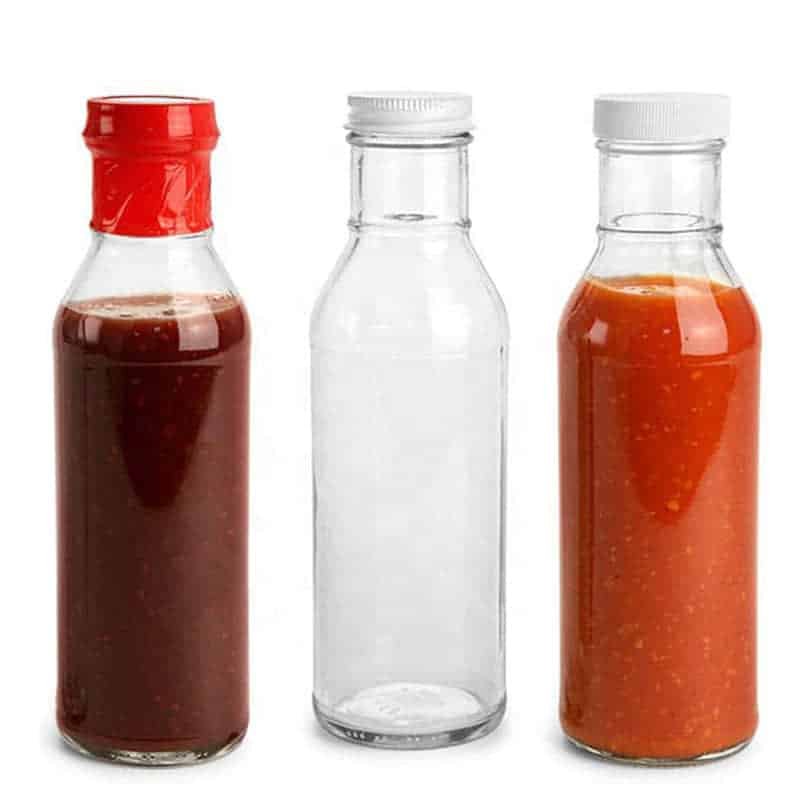
A ring neck carries a raised bead that a tamper-evident shrink band grips. A lug neck takes a tinplate twist-off with a safety button. Both give you tamper evidence, by different routes and on different capping equipment, and both run here at 8 oz and 12 oz.
There is no tooling minimum on the running-mould bottles, so your opening order can be a single pallet, which suits a first production run. Cutting steel of your own starts at 12,000 pieces in extra flint, or 50,000 in standard flint.
147 g of glass at 150 ml, against 126 g at 90 ml and 150 g at 160 ml, so you can price per gram. Glass is priced by the weight of the melt, so that figure predicts your unit cost and your container count more reliably than the capacity does.
Yes. Your bottles are clear glass, shipped with food-contact documentation to FDA requirements for the United States and an EC 1935/2004 declaration of compliance for the EU and UK, and SGS test reports come on request.
Hot filling is normal for sauce and the range is annealed for it. Where your process runs at the top of the range, say so with the enquiry, because the answer changes by design and it costs nothing to settle first.
Yes. We price reducers, screw caps, lug twist-offs, shrink bands and nozzle covers alongside the glass, matched to the finish of each design you list.
A bottle, a cap or a sample of your sauce is enough to start. Our food glass desk answers you with pricing, glass weights and loading data inside 24 hours.
Matching running-mould bottles, pricing and loading data come back within 24 hours.
The running moulds that fit get found before anyone talks about tooling.