
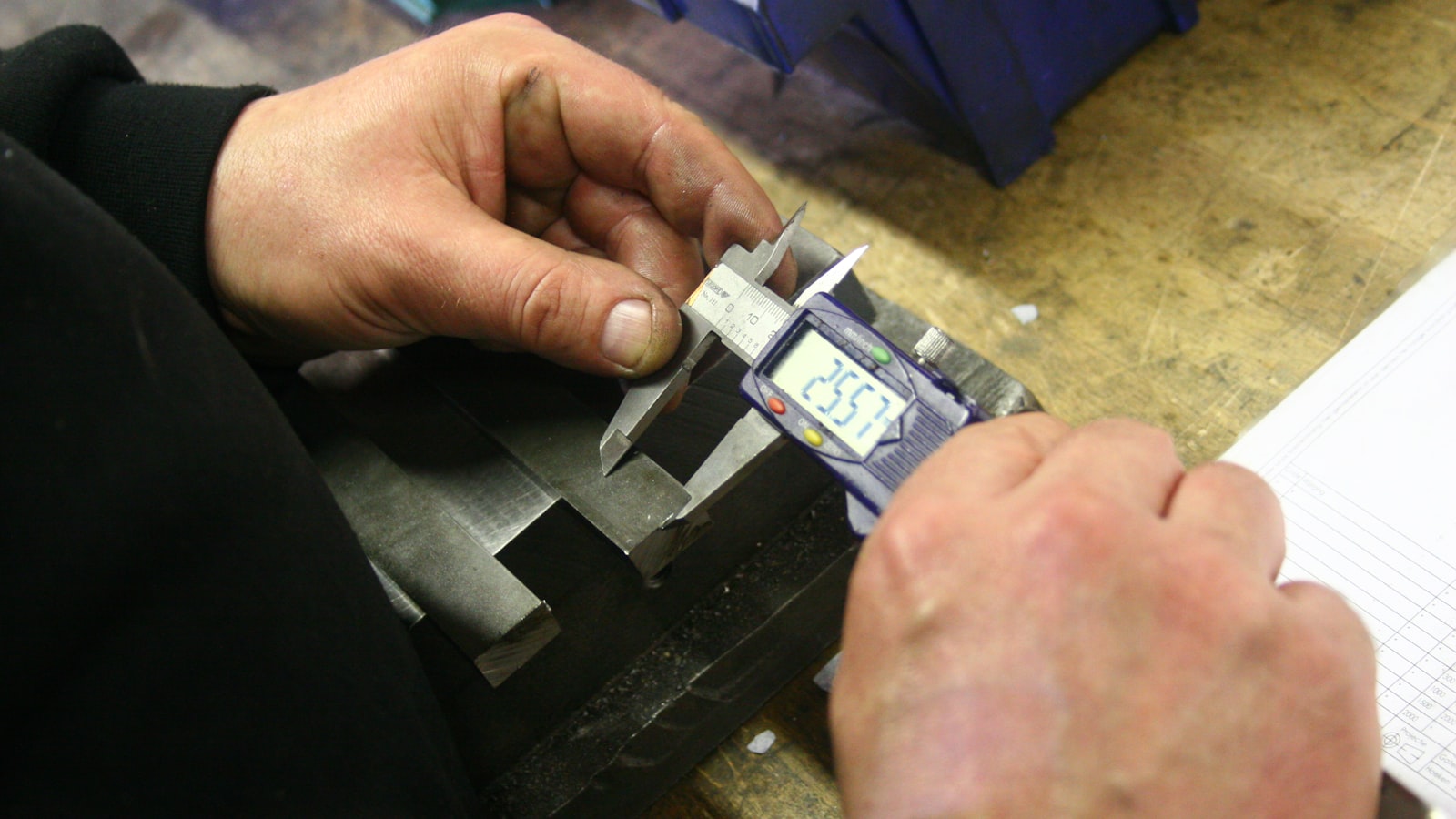
Seven figures on a glass bottle drawing decide whether your filler, your labeller and your case packer run the bottle without adjustment. Capacity in two forms, fill point, weight, wall thickness, height, verticality and the flatness of the sealing surface. Each has a published tolerance standard behind it, and each has a way of going wrong on a line. Reading them in order is how a specification you send to a glass factory comes back quoted the first time.
Nominal, Brimful and Your Fill Point
Three volumes describe the same bottle, and mixing them up costs you a re-label or a short fill.
| Figure | What it measures | Where it bites |
|---|---|---|
| Nominal capacity | The volume your label declares and your filler targets. | Legal metrology in your market, and the number on your artwork. |
| Brimful capacity | The volume to the very top of the finish, with no headspace. | Some customs codes ask for it, and a jam packer sizes headspace from it. |
| Fill point | The height from the base at which the nominal volume sits. | A shelf of your bottles looks equally full only when the fill point holds. |
A 750 ml (25 oz) spirits bottle typically carries 20 to 30 ml (0.7 to 1 oz) of brimful volume over its nominal fill. Your headspace comes out of that gap, and the fill you intend decides how much you need: a hot fill contracts on cooling, a carbonated fill needs room for the gas, and a product that freezes needs room to expand. Name the fill on the enquiry and the gap gets specified rather than discovered.
How a Factory Verifies Capacity: ISO 8106 and Water-Fill Weight
ISO 8106 sets the gravimetric method: fill the container with water, weigh it, and convert weight to volume. It is faster and more repeatable than any volumetric method, and it is what a glass plant runs on the line rather than in a laboratory. SGSBOTTLE verifies capacity by water-fill weight as routine across 14 lines in Shandong and Xuzhou. A capacity on your quotation is therefore a measured figure and never a mould calculation.
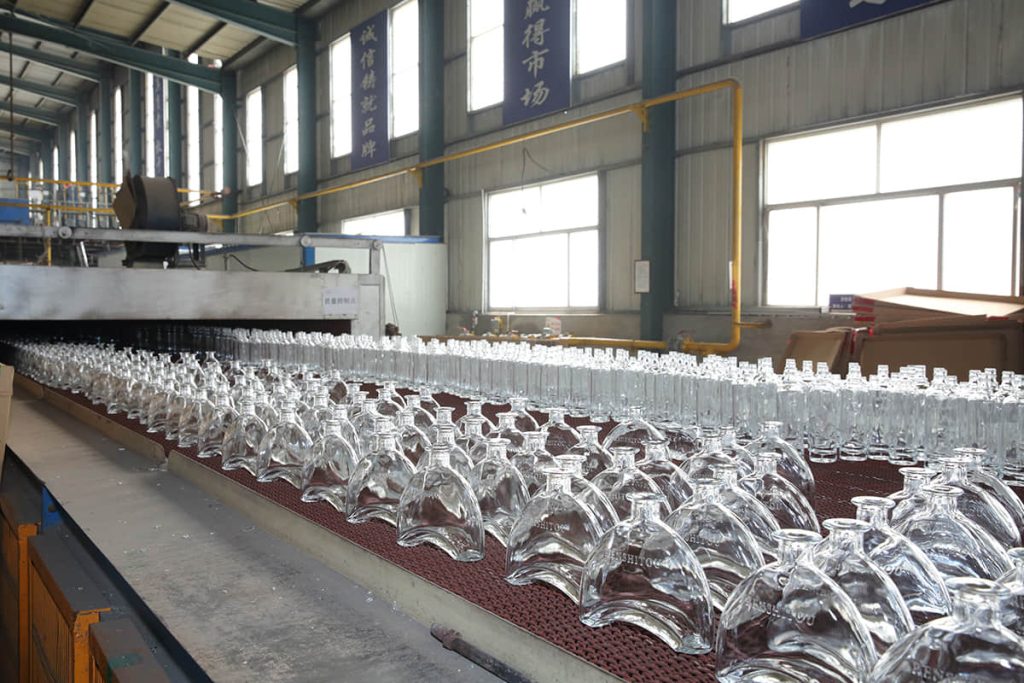 Capacity gets verified by water-fill weight across 14 lines in Shandong and Xuzhou, batch after batch.
The Tolerance Standards Your Drawing Points At
A drawing either adopts a published tolerance or names a tighter one of its own. A glass drawing points at the standards in this list.
| Standard | What it covers |
|---|---|
| ISO 9058 | Standard tolerances for bottles: the default set a drawing adopts unless it says otherwise. |
| ISO 12818 | Standard tolerances for flaconnage, the perfume and cosmetic glass family. |
| ISO 8106 | Determination of capacity by the gravimetric method. |
| ISO 9008 | Verticality of glass bottles: how far the bottle leans off its own axis. |
| ISO 9009 | Height, and non-parallelism of the finish with reference to the container base. |
| ISO 9885 | Deviation from flatness of the top sealing surface, for wide-mouth containers. |
The pattern is worth noticing when you compare two quotations. A supplier working to ISO 9058 and a supplier working to a tighter house standard are quoting two different bottles, and the price difference between them is real. Ask which standard the drawing adopts before you compare a price per thousand.
Weight and Wall Thickness: What They Cost You
Glass weight is set at the feeder, and it drives three of your numbers at once. It sets the glass price, because you buy glass by the tonne. It sets your freight share, because a container fills by volume and your pallets weigh what the glass weighs. And it carries a sensory cue your buyer reads as quality, which is why a premium spirits bottle is heavy on purpose.
Wall-thickness distribution is the figure underneath the weight, and it matters more. Two 500 ml (17 oz) bottles at the same weight behave differently when the glass sits in different places: the one with thin spots fails a pressure test and breaks in transit, and the even one does neither. NNPB forming spreads glass more evenly than blow-and-blow at the same weight. The 7 lines in Shandong run it for lightweight food and beverage bottles.
 Your fill point is what a shelf of bottles shows, and it holds only as far as your tolerance allows.
Verticality, Height and Finish Flatness on Your Line
Three tolerances decide whether your line runs the bottle without a stop.
Verticality, under ISO 9008, measures how far the bottle leans off its own vertical axis. Past the tolerance, a leaning bottle jams a capping head or tips on a conveyor transfer. Height and finish parallelism, under ISO 9009, measure the total height and whether the sealing surface sits square to the base. A finish out of parallel meets the capping head at an angle, and the liner seals on one side. Flatness of the sealing surface, under ISO 9885, applies to wide-mouth jars, where a vacuum lug cap needs a flat ring of glass to press against; a dip in that ring is a slow vacuum loss on your customer's shelf.
None of the three shows on a photograph, and all three show on a line at speed. They belong on the drawing, and a sample run on your own filler is the test that confirms them.
Reading a Capacity Both Ways: ml and oz
| Metric | US fluid ounces | Where you meet it |
|---|---|---|
| 100 ml | 3.4 oz | Miniatures, samplers, dropper bottles. |
| 237 ml | 8 oz | The US 8 oz jar and juice bottle. |
| 355 ml | 12 oz | The North American beer and soda size. |
| 473 ml | 16 oz | The US pint: jars, growler halves, juice. |
| 500 ml | 16.9 oz | The European half-litre. |
| 750 ml | 25.4 oz | Wine and spirits worldwide. |
| 1 L | 33.8 oz | Catering jars, oil, bulk beverage. |
A US fluid ounce is 29.57 ml and an imperial fluid ounce is 28.41 ml, so an 8 oz jar is 237 ml in the United States and 227 ml in the United Kingdom. Your buyer searches in the unit their market uses, and a specification that carries both stops a conversion error becoming a mould.
What to Put on Your Specification
Six entries cover it. The nominal capacity in ml and oz, with the fill and its temperature. The brimful capacity if your headspace calculation needs it. The glass weight and its tolerance. The tolerance standard the drawing adopts, or the tighter figures you need instead. The finish, with its own drawing. And the packing format, because a bottle that passes every tolerance can still arrive scuffed if the pack is wrong for the shape. With those six, a quotation from SGSBOTTLE comes back with a drawing you can hand straight to your closure supplier and your labeller.