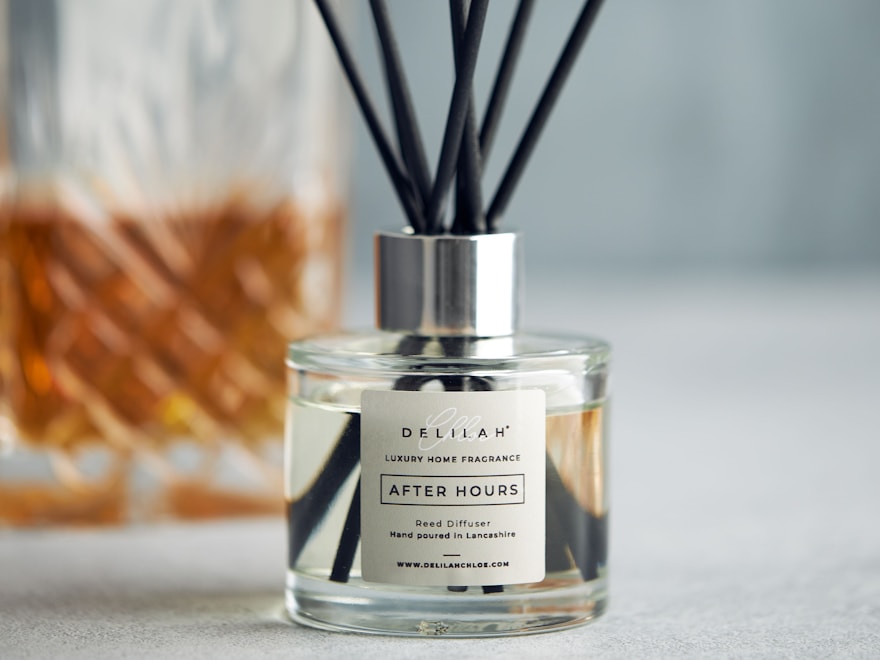
Home & decor glass · Perfume and fragrance bottles
A spray collar crimps on once and never comes off, so your neck goes on the drawing first.
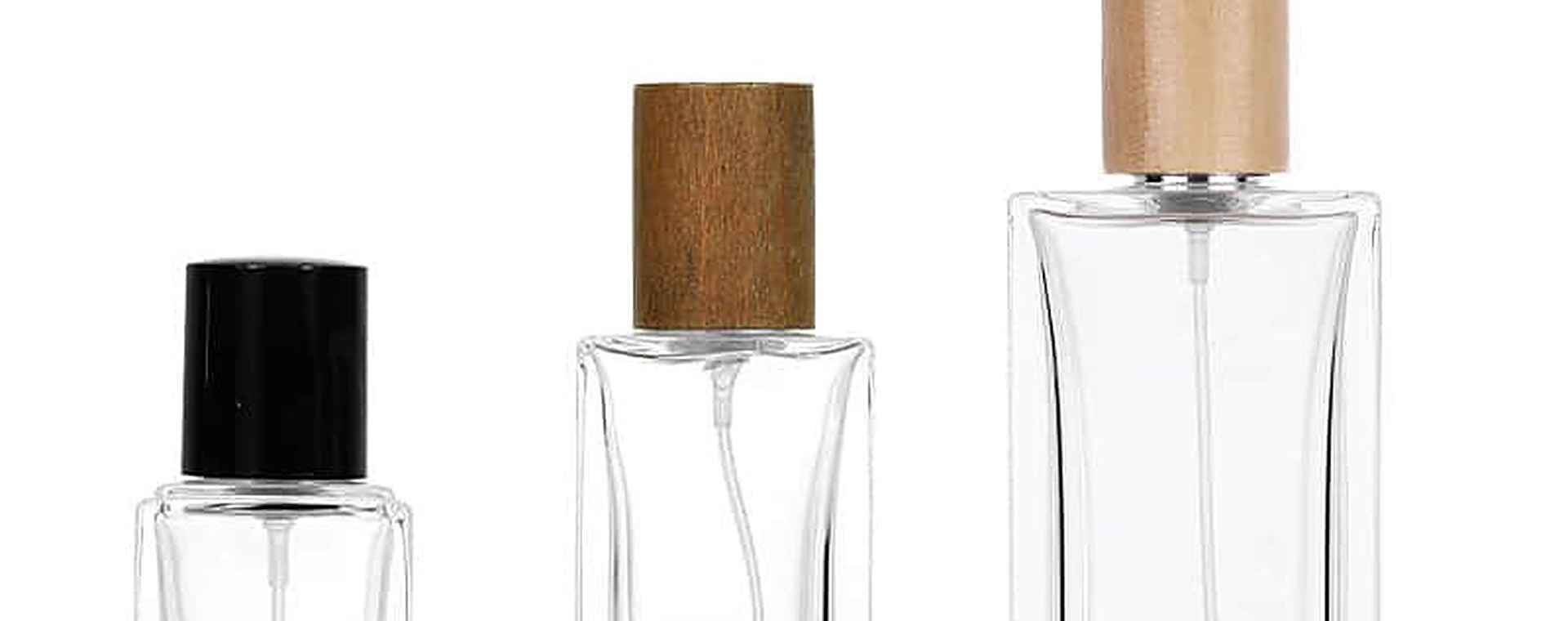
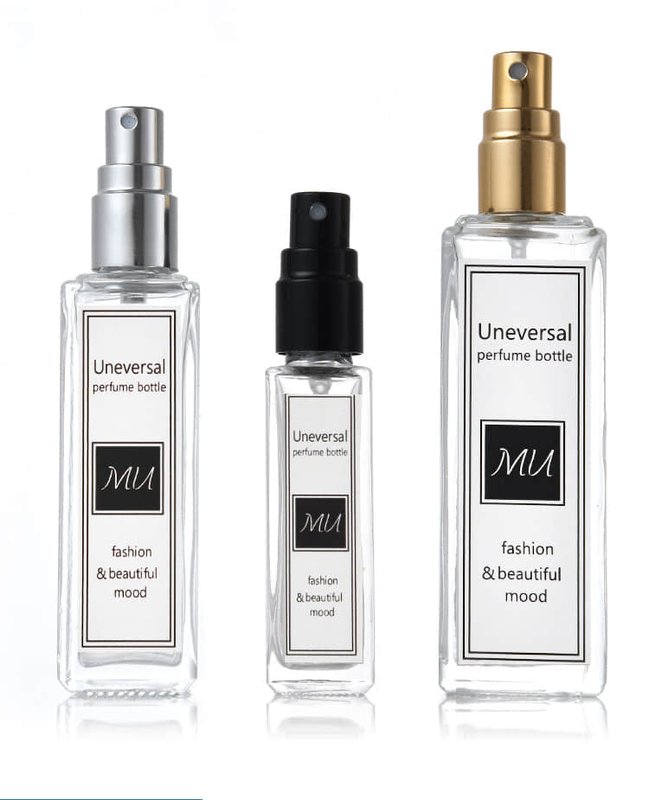
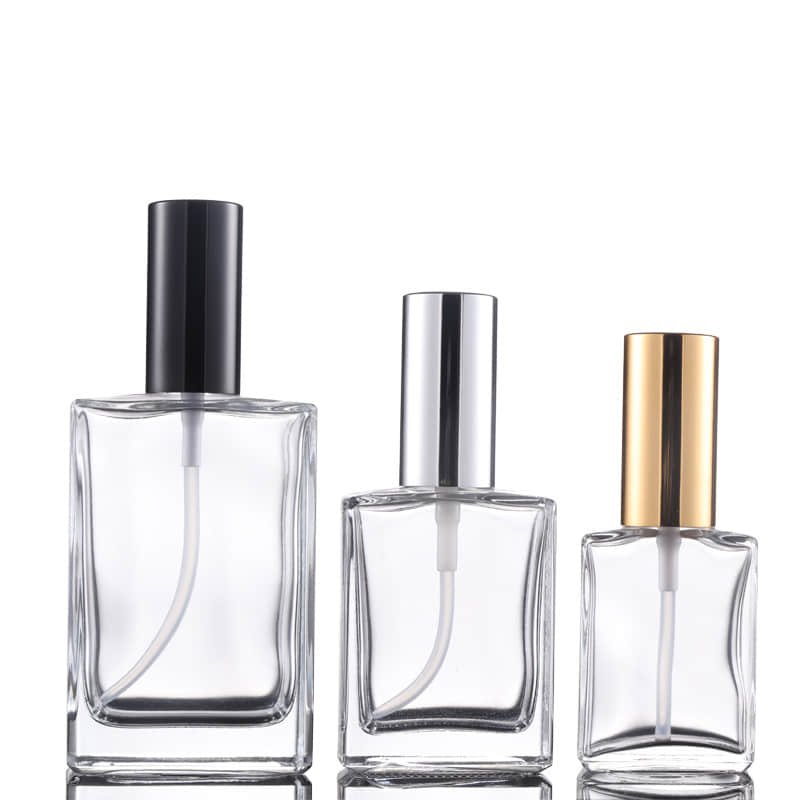
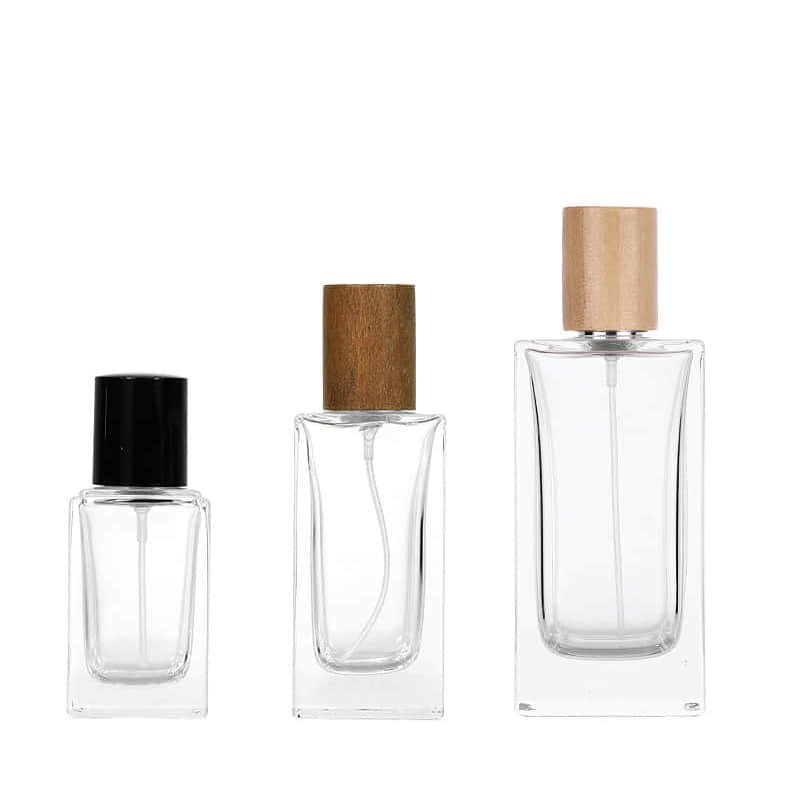
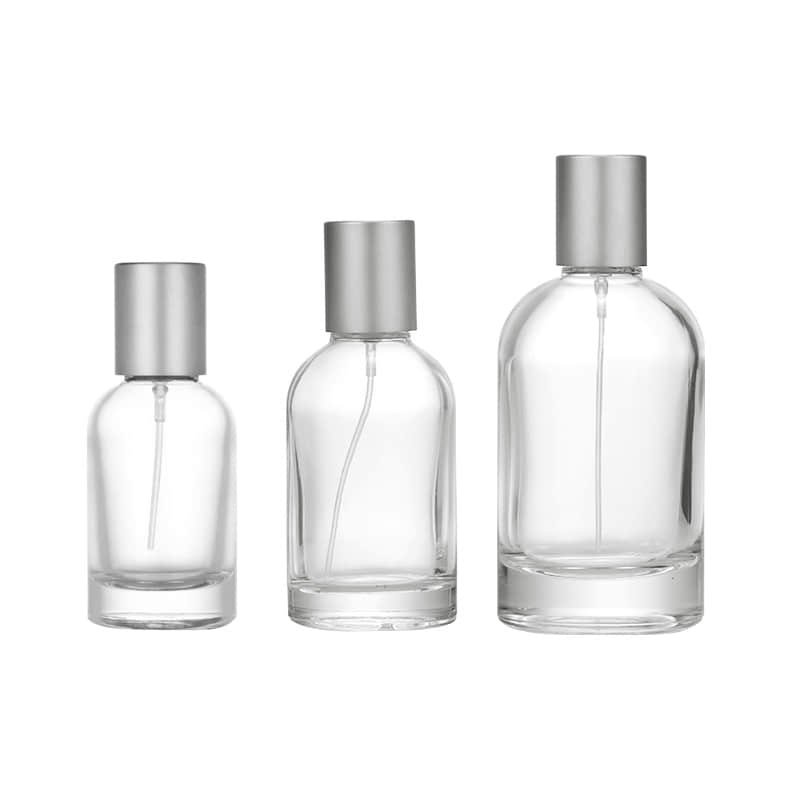
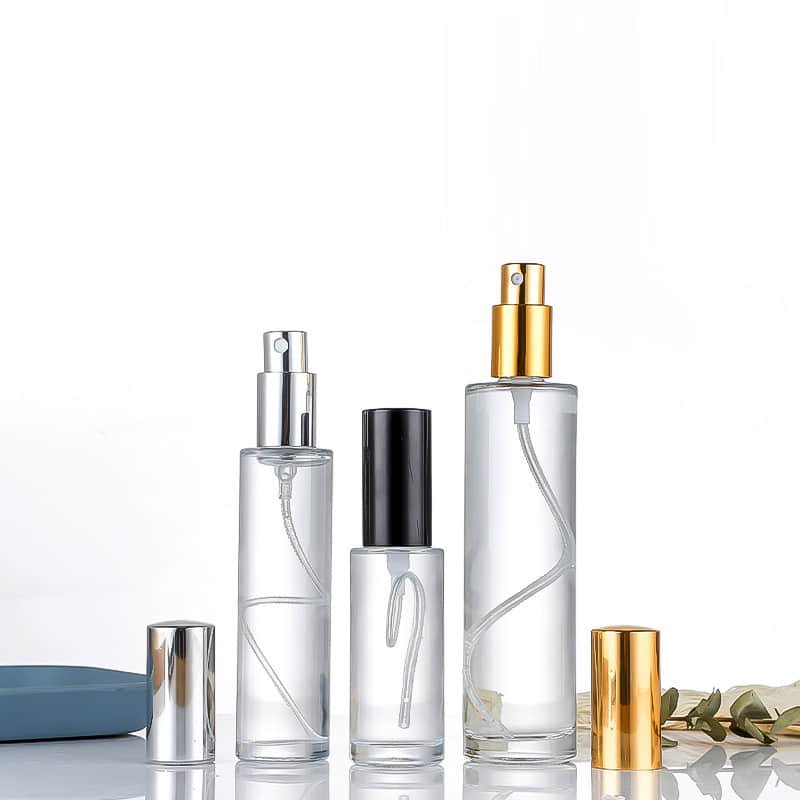
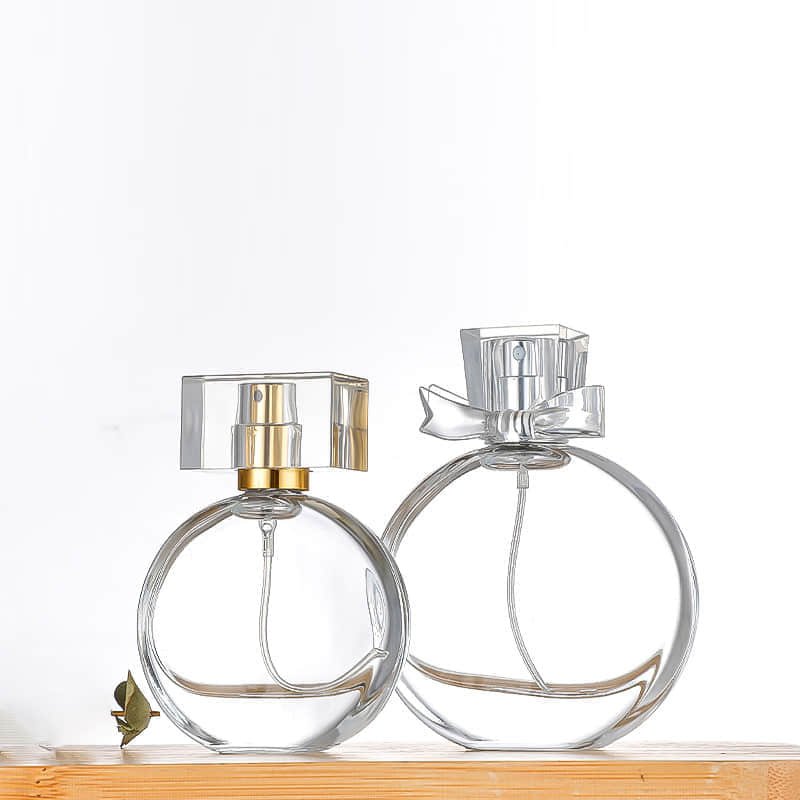
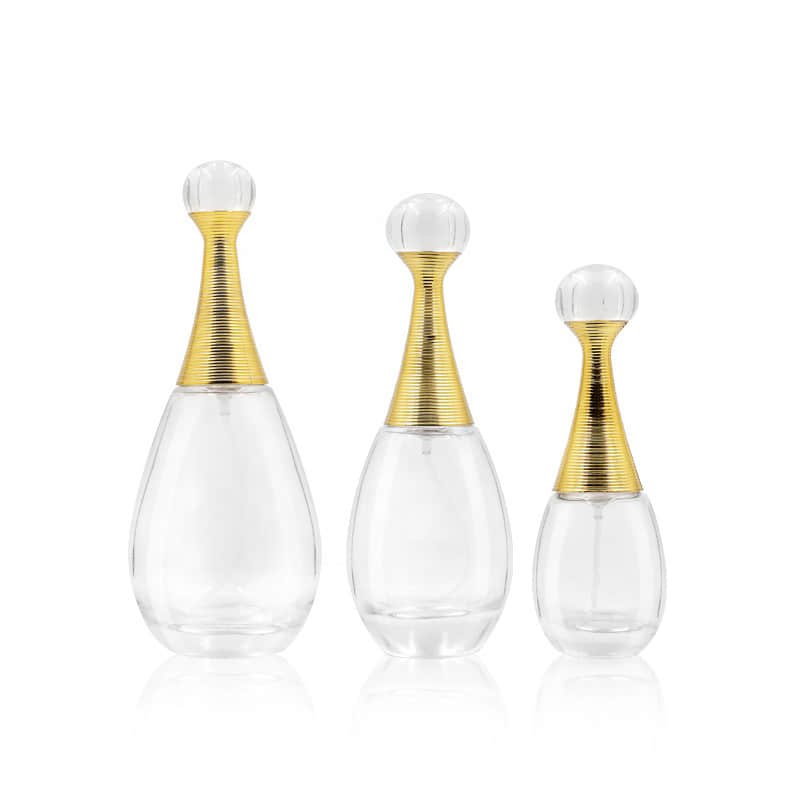
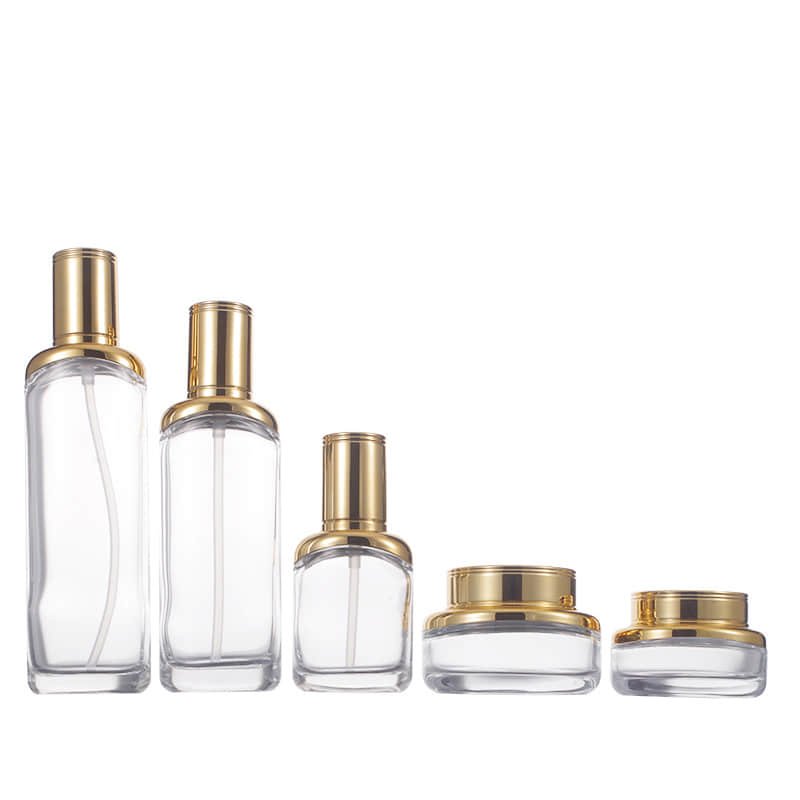
If you are a fragrance house, a private-label beauty brand or a contract filler, you buy this glass on the neck, and we melt the super flint in our own furnaces in Shandong. Your eight bodies run 5 ml to 120 ml (0.2 to 4 fl oz): square, round, flat, cylinder and teardrop. A spray collar crimps on once and never comes off, so your sprayer and our finish drawing get matched before anything runs.
Eight running-mould bodies on a crimp finish, most of them across the 30, 50 and 100 ml steps your range is built on. We quote wholesale per body, with your pump, dip tube and cap priced beside the glass.


No running-mould body carries that shape at that size. Your quotation can still cover it, because the crimp finish repeats across this whole range.

A crimped collar goes on once, at speed, onto a bottle you have already filled. Three things reach you in writing before a deposit.
What is at stake
A fragrance sprayer is not screwed on. Your filling line crimps its collar over the neck ring, and once it is on, it stays. A neck outside tolerance gives you collars that spin, collars that will not seat, or a crimp head fighting every bottle. There is no recovery: the bottle is filled by then.
What we supply
Every design ships its finish drawing with the quotation, so your pump supplier confirms the crimp fit on paper before a single bottle is made. Where you already run a sprayer, send it or its drawing and we identify which bodies take it.
What has to match
A dip tube too short leaves the last few millilitres of a costly fragrance unreachable, and your customer notices it on a 50 ml, 1.7 fl oz bottle sold at premium prices. Too long and it kinks against the base and sprays air. The internal height of the bottle sets your tube length, and nobody thinks about that number until it is wrong.
What we supply
We quote pumps with your glass and cut the tube to the body it goes into, size by size. On a shaped body like the teardrop that matters more to you, because the internal profile is not a straight drop from neck to base.
What is at stake
Fragrance is the one category where your shopper picks up the bottle before deciding. Thin glass and a shallow base read as cheap whatever your fragrance costs, and no label recovers that first impression.
What we supply
Your quotation states the glass weight per design, because it is both what you pay for and what your customer feels. Where your range needs more heft than the running bodies give, you are into a mould, and we quote that path by stage.
The glass is one part of the pack. Your quotation names the collar, the pump, the tube and the cap, and prices them beside it.
Your quotation lists the glass, the collar, the pump, the tube and the cap, so nothing in the assembly is sourced blind.
Bulk terms from the super-flint plant. No tooling on a running body, 15–20 days from confirmation, bottles sampled with the collar crimped, and a container count printed beside your price.
Pallet or container
A running mould carries no tooling minimum, so your first fragrance can be a single pallet, on identical terms for private-label houses and indie brands. A custom mould in extra-flint starts at 12,000 pieces.
15–20 days
From confirmation on running moulds, glass and components together. A custom mould adds 30–45 days to your lead time, counted from drawing approval.
On request
Bottles ship with the collar crimped, the pump in and the cap on, so you test the assembly instead of the glass alone. On the custom path, an acrylic model lands in about 10 days at $500, then a sample mould at 35 days puts 5–10 bottles on your desk.
EXW · FOB
Warehousing and consolidation stay in-house, and we quote transit to your port. Fragrance bottles fill the gaps in a mixed container, which is how most first ranges like yours travel.
Per design, with the quote
A 5 ml purse spray and a 100 ml square differ by more than volume once your cartons and inserts are counted. Your quotation gives carton dimensions and 20GP and 40HC counts per design.

Your customer buys the bottle long before they smell the scent, and nearly all of that look is decoration on tooled glass. Our Shandong plant sprays gradients, frosts, screen prints, hot stamps, electroplates and labels in-house, so your decorated glass keeps the same 15–20 days as plain.
We quote decoration per design, beside the glass. Decoration and labelling in detail →

A drawing, a rival's bottle or a rendering starts the check. Fragrance is where a bottle of your own does the most work, and it is also where the neck cannot be improvised. Our mould shop prices your path in three stages, with a figure on each.
A full-size model of your bottle, so you sign off shape, weight in the hand and neck before steel is cut.
Real glass from a sample mould: 5–10 bottles crimped and assembled, for your filler and your buyer to approve.
Your production tooling runs on the flint lines in Shandong. Minimum 12,000 pieces in extra-flint, 50,000 in standard flint.

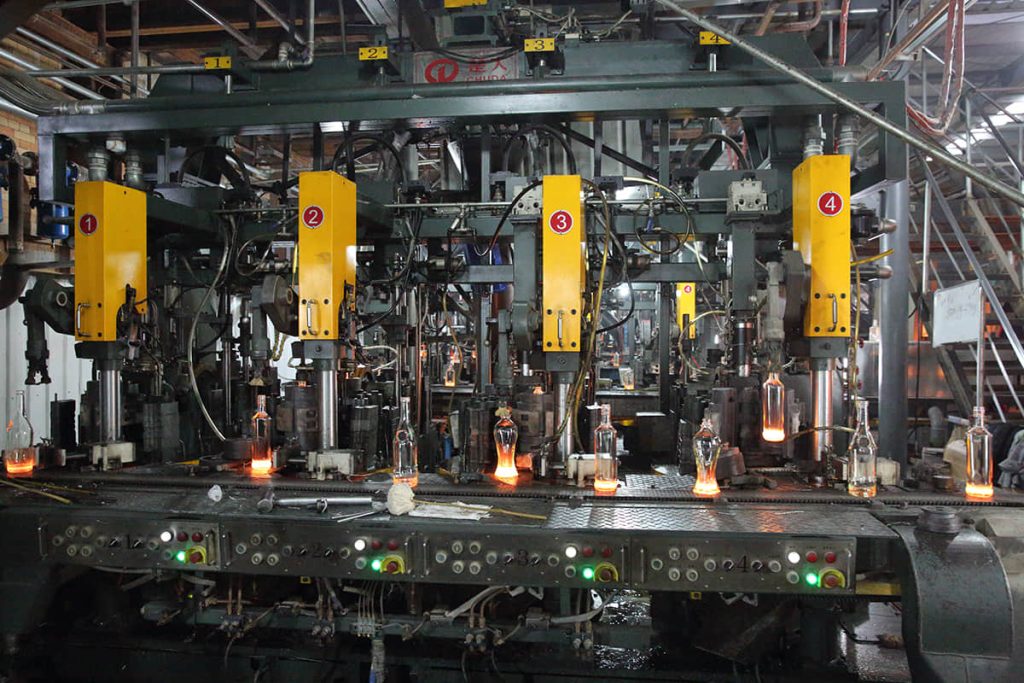
We melt super flint in Shandong, where 7 lines turn out 600,000 pieces a day, and clarity is what those lines are judged on. We form, coat, print and pack your bottles inside the group, and beauty brands in 40+ countries have shipped from these Shandong lines since 2013.
We gauge the neck ring on every run, because a crimped collar has one chance to seat and your bottle is already full when it gets it. This is the tightest tolerance we hold in any category.
We fit collars, pumps, tubes and caps here and spray-test them as a set, so what your QA receives is what your customer will hold.
We check weight against the drawing across the run. In fragrance your customer feels the bottle before they smell anything, so a bottle running light costs more than it saves.
Controlled lehr curve on every bottle, and we check residual strain under polarised light on every run of yours. A heavy base and a thin shoulder cool at different rates, and that is exactly where your fragrance bottle carries strain.
ISO 9001, SGS test reports and third-party pre-shipment inspection on request. Where your market treats a fragrance as a cosmetic product, the relevant declarations travel with the shipment.
Necks, sprayers, OEM and ODM minimums, so your filler signs off the crimp before we commit any glass.
They are finished for crimped collars, and every design ships its finish drawing with the quotation so your pump supplier can confirm the fit exactly. A sprayer crimps once on your filling line and never comes off, so it is the one check worth doing on paper first.
30 ml (1 fl oz), 50 ml (1.7 fl oz) and 100 ml (3.4 fl oz) are your retail sizes, and all three run here. You also have 5, 10, 15 and 18 ml (0.2 to 0.6 fl oz) for purse sprays and samples, and 120 ml (4 fl oz) on the cosmetic set, so your launch covers the full ladder from one supplier.
Every body here is finished for a crimped spray collar. Which collar it takes depends on the sprayer your filler already runs, so send us the sprayer or its drawing and we confirm the bodies that fit it. The finish drawing goes on your quotation, and your sprayer supplier signs it off before we commit any glass.
Both. OEM puts your name on our running bodies through coating, printing, foil and plating in Shandong. ODM is a bottle drawn for you, quoted in three priced stages, at a 12,000-piece minimum in extra flint. Most first launches start on OEM, and you tool a bottle once the scent has found its market.
Yes. We quote collars, pumps, actuators, dip tubes and overcaps with the glass and assemble them here, so your bottles arrive crimped, spray-tested and capped instead of arriving as five separate purchases.
The internal height of each body sets it, so we cut your tube per size instead of per design. Too short and the last millilitres of your expensive fragrance never come out; too long and it kinks against the base and sprays air.
There is no tooling minimum on the eight running-mould bodies, so your first fragrance can be a single pallet. A mould of your own in extra flint starts at 12,000 pieces, which fragrance reaches quickly because the bottle carries the brand.
Yes, and in fragrance that is where most of the design happens. Spray coating, frosting, electroplating, hot stamping and printing all run in-house on running bodies, so one shape becomes your whole range without new steel.
Yes, and it is the usual path once a fragrance finds its market. Your acrylic model takes about 10 days at $500, a sample mould 35 days at around $1,200, and production tooling $1,200 to $2,200 against a 12,000-piece minimum.
ISO 9001, SGS test reports and third-party pre-shipment inspection on request. Where your market treats the finished fragrance as a cosmetic product, the relevant declarations travel with the shipment.

A size, a shape or the sprayer you already run is enough to start. Our fragrance desk answers you with pricing, finish drawings and loading data inside 24 hours.
Matching running-mould bodies, component pricing and loading data come back within 24 hours.
The running moulds that fit get found before anyone talks about tooling.