
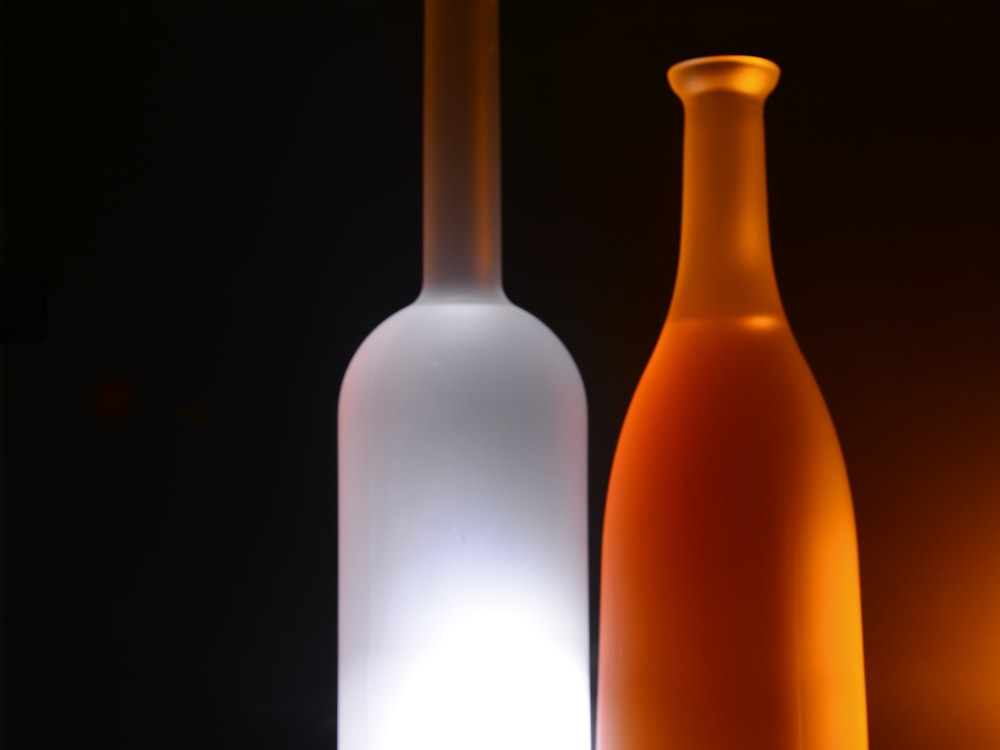
A stock bottle from SGSBOTTLE becomes your bottle in Shandong, where the deep-processing plant opened in 2020 frosts, sprays, screen prints, applies decals, hot stamps, electroplates and labels glass under the same roof that forms it. Seven processes, and each one changes something different: how the bottle feels, how it reads on shelf, what it survives, and what it costs you per pass. The comparison sets them side by side; the sections after it carry what each process asks of your artwork.
The 7 Glass Decoration Processes at a Glance
| Process | What it does | What it survives | What it asks of you |
|---|---|---|---|
| Frosting | Turns the surface matte and translucent, full-body, banded or gradient. | Permanent; the etch is in the glass. | A decision on where the band stops, because masking costs more than a full body. |
| Spray coating | Lays a colour lacquer on the outside: opaque, translucent or gradient, matte or gloss, any Pantone. | Scratch-resistant once cured; a deep chip shows flint underneath. | A Pantone reference and a sample sign-off, because film thickness moves the colour. |
| Screen printing | Pushes ceramic ink through a screen onto the glass and fires it on, one colour per pass. | Permanent; dishwasher, filler and ice bucket. | Vector artwork, one screen per colour, lines and text that hold at 0.3 mm. |
| Decals | Transfers a printed image onto the glass and fires it. | Permanent once fired. | Photographic or many-colour artwork that a screen cannot carry. |
| Hot stamping | Presses metallic or pigment foil onto the glass with a heated die. | Good under normal handling; abrasion wears it before a fired print. | A flat or gently curved panel and a logo that reads in one colour. |
| Electroplating | Deposits a metallic finish, gold, silver, gunmetal or a gradient, over the whole body. | Good once sealed; the most process-sensitive of the seven. | A body shape the plating jig can hold, and a sample before you commit the run. |
| Labelling | Applies your pressure-sensitive, wet-glue or shrink label in-house. | As good as the label stock and adhesive you choose. | Label panel height and circumference from the drawing, and adhesive matched to a frosted or coated surface. |
Embossing belongs on the list as well, although it happens in the mould: a logo cut into the blow mould prints itself on every bottle at no cost per piece, and it combines with any of the seven. It is the one branding decision that has to be made before the mould is cut.
Frosting: Matte Glass That Changes How Your Bottle Feels
Frosting is an acid or sand treatment that scatters light at the surface. A full-body frost gives you the soft, satin bottle that craft spirits, candle jars and skincare sell on; a band or a gradient keeps a clear window for the fill. Frost also hides small variations in fill level and takes a screen print on top, which is the standard pairing on a premium spirits bottle. Your masking decisions drive the cost: a full body is one operation, a clean band or a sharp gradient line is masking and a second handling step, so the quotation prices them apart.
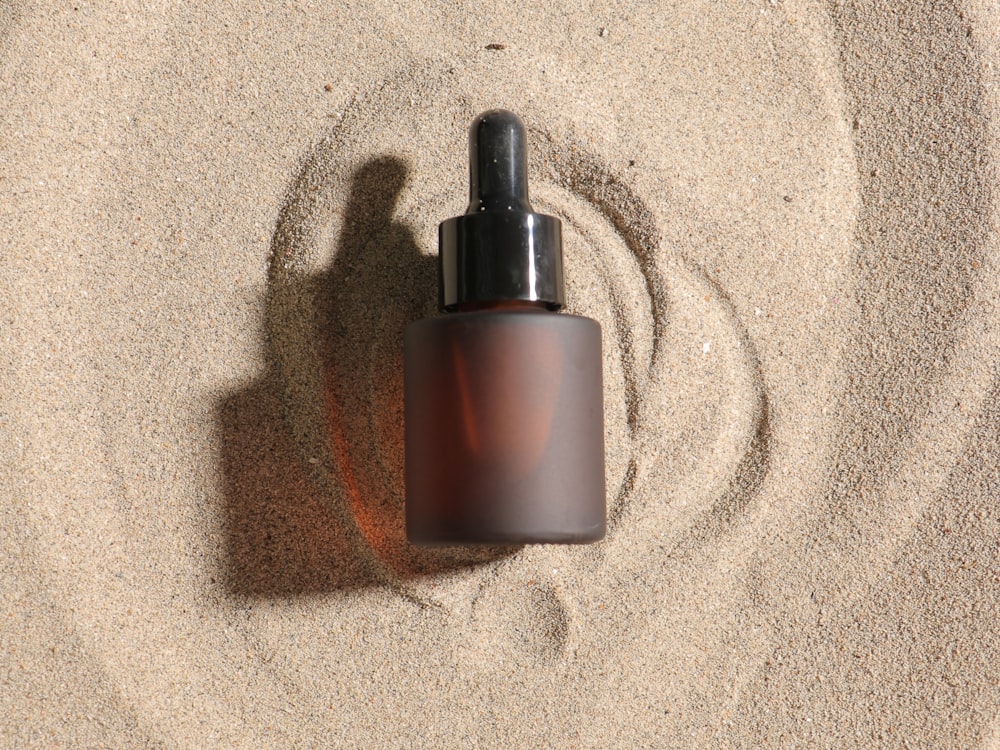 Frosting is in the glass, so it survives everything your fill, your dishwasher and your shelf can do to it.
Spray Coating: Any Pantone on Stock Glass, With No Furnace Campaign
A spray coat is a lacquer applied to the outside of the bottle and cured. It gives you opaque colour, translucent tints, gradients from clear to solid, and matte or gloss finishes, on flint that already exists in stock. That is the practical value: a furnace melts one colour at a time, so a coloured melt is a campaign with a minimum, while a coating turns a pallet of clear stock into black, pink or forest green with a decoration minimum instead of a glass one.
Three limits go on your brief. A coat stops light according to its thickness: a full opaque coat can block it completely, a thin one that only looks amber stops far less, so a light-sensitive fill is safest in amber glass. The coat can also scuff in transit, so coated bottles ship in cartons. And film thickness moves the shade: the same lacquer reads lighter on extra-flint than on flint and darker where the coat builds up at the heel, so your Pantone reference is proofed on a physical sample from Shandong before the run, and that sample is the colour standard.
Screen Printing: Permanent Artwork, One Colour per Pass
Screen printing pushes ceramic ink through a fine mesh onto the glass and fires it in a lehr, so the ink fuses to the surface. Your logo, botanicals, a measure scale or a lot code becomes part of the bottle, and it survives dishwashers, condensation and a filling line in a way a paper label never does. Each colour is a separate screen and a separate pass, so a two-colour print costs roughly two single passes, and registration between colours is tighter on a round body than on a square one with corners.
Artwork rules keep the print clean: vector files, solid colours with no photographic gradients, lines and text at or over 0.3 mm, and a design that stays clear of the mould seam and the curve into the shoulder. Opaque white, metallic golds and silvers and matte inks are all screenable; a print over frosting is the combination that gives a stock spirits bottle its custom-mould look at a fraction of the tooling.
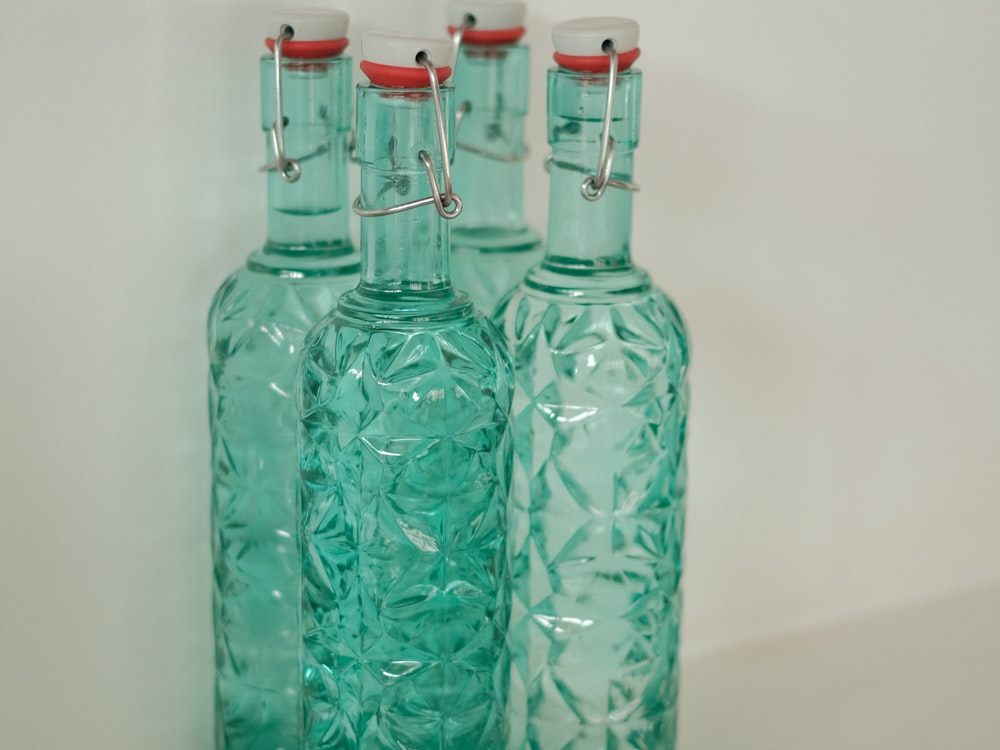 Embossing is cut into your mould once and printed on every bottle after that, at no cost per piece.
Decals: When Your Artwork Has More Colours Than Screens Can Carry
A decal is a printed transfer applied to the bottle and fired, so the image ends up as permanent as a screen print. Decals carry photographic images, fine gradients and many-colour artwork that a screen-by-screen process cannot register, and they suit small runs and seasonal editions where cutting six screens does not pay. The trade is a per-piece cost over screen printing on long runs, so a decal earns its place on artwork complexity and short runs, and a screen print on volume.
Hot Stamping: Metallic Foil for Logos, Crests and Batch Numbers
Hot stamping presses a foil onto the glass with a heated die: gold, silver, copper, holographic or pigment foils, in a single colour per die. It is how a crest, a signature or a limited-release number gets its metallic reading on spirits, perfume and gift ranges, and it is quick to set up for a small run. It needs a flat or gently curved panel, because the die has to sit flush, and foil resists less abrasion than a fired print, so a hot-stamped bottle that ships loose in a returnable crate loses its foil sooner than one that ships in a carton. On a gift edition that lives in a box, that trade rarely matters.
Electroplating: A Metallic Body for Duty-Free and Gift Editions
Electroplating, and the vacuum metallising that often goes with it, deposits a metallic layer over the whole body: full gold or silver, gunmetal, or a gradient from metallic to clear when it is combined with spray coating. It is the finish behind most duty-free and gift-edition spirits and perfume bottles, and the most process-sensitive of the seven, because adhesion depends on the surface, the jig and the sealing coat. Shandong, where SGSBOTTLE forms 600,000 super flint pieces a day, runs it in-house, so your plated sample and your plated production come off the same line, and the sample you approve is the one the run is checked against.
Labelling and Secondary Packaging: Shelf-Ready Off the Line
Labels are applied in Shandong after decoration: pressure-sensitive labels, wet-glue labels and shrink sleeves, front and back, with the label panel taken from the bottle drawing so the printer works to the real height and circumference. Applying in-house means your bottles arrive shelf-ready and skip a handling step at your filler or your warehouse, and it means adhesive is matched to the surface: a frosted or coated body takes a different adhesive from bare glass, and a label that lifts at the edge on a coated bottle is usually the adhesive and never the label.
Secondary packaging goes on at the same stage: cartons printed to your artwork, dividers, and retail-ready trays, so the pallet that leaves Shandong is the pallet your customer puts on shelf, in any of the 40+ countries SGSBOTTLE ships to.
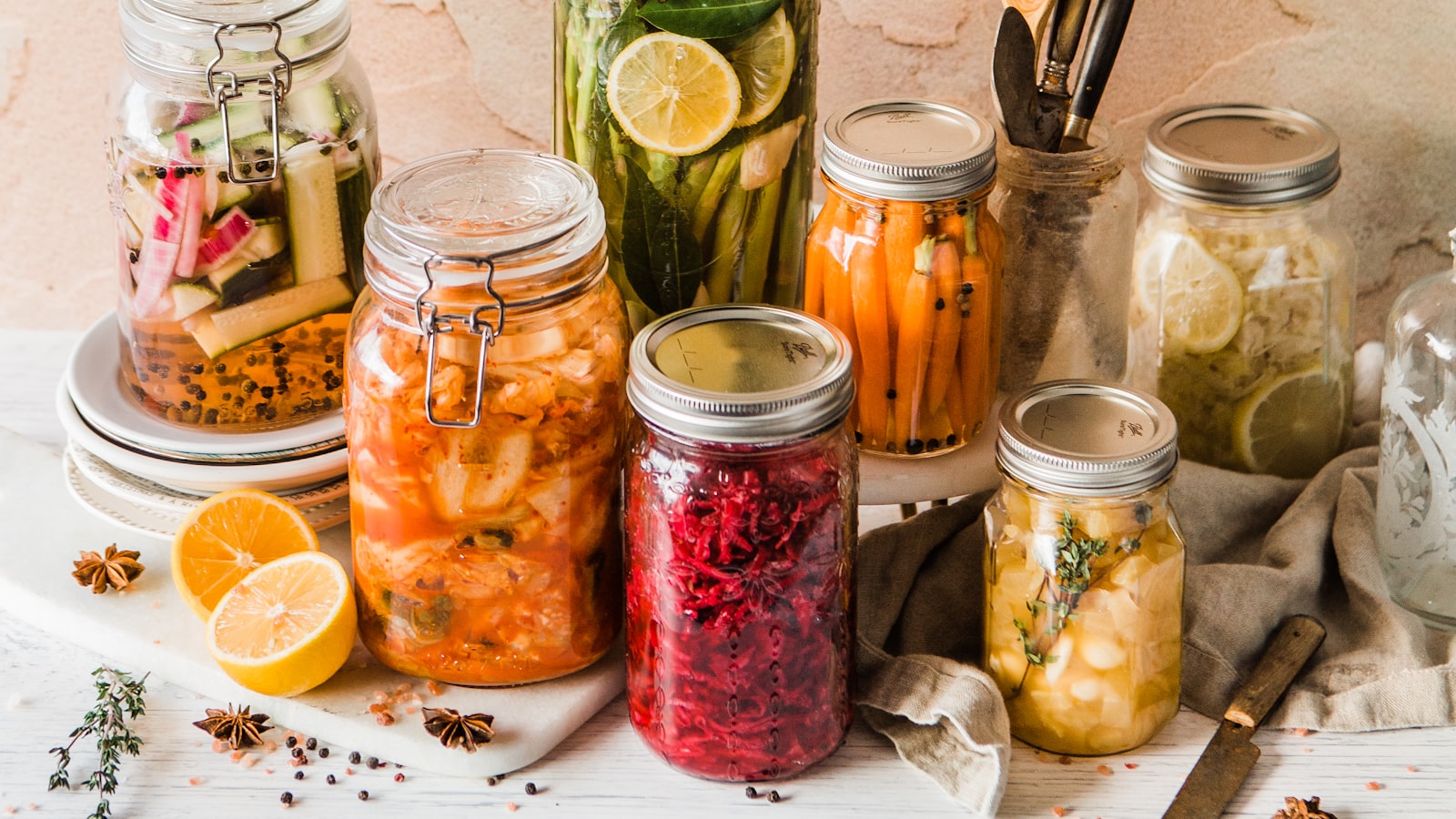 Labels applied in Shandong arrive shelf-ready, and skip a handling step at your filler.
What Decoration Costs You: Set-Up, Passes and Minimums
Decoration is priced beside the glass, per design. Three things move it. Set-up is the screens, dies, jigs and colour matching for your artwork, paid once per design and spread across the run, so a small first order carries a higher decoration cost per bottle than the reorder. Passes are what the process costs per bottle: one pass for a full-body frost, one per colour for a screen print, one for a foil stamp, and plating counts as its own operation. Minimums come from set-up: each process has a run size under which the set-up cost per bottle stops making sense, and that figure is quoted with your artwork.
On stock glass the minimum stays a pallet-scale order and the decorated minimum sits on top of it. On a custom mould your decorated samples come off the sample mould at the $1,200 stage, 5 to 10 pieces in the decoration you sign off, so the production run of 12,000 pieces in extra-flint or 50,000 in standard flint starts from an approved decorated bottle and never from a drawing.
Artwork Your Decorator Can Use
The artwork that goes through Shandong first time carries the same five things. Vector files, so a logo scales without a jagged edge. Pantone references for every colour, with the substrate named, because a colour over frost and the same colour over clear glass are two samples. The printable area from the bottle drawing, so the design stays off the seam, off the shoulder curve and clear of the finish. Line weights and text at or over 0.3 mm for screen printing, heavier for hot stamping. And a note on the fill and the market: a bottle that goes through a dishwasher, an ice bucket or a returnable crate needs fired decoration, and a bottle that lives in a box can carry foil.
Which Decoration Fits Which Product
| Product | Processes that usually carry the shelf | The pairing that reads as premium |
|---|---|---|
| Spirits and liqueurs | Frosting, screen printing, hot stamping, electroplating. | Full-body frost with a two-colour screen print and a foil crest. |
| Perfume and beauty | Spray coating, electroplating, hot stamping, screen printing. | Gradient spray with an electroplated collar area and a one-colour print. |
| Candle jars and diffusers | Frosting, spray coating, screen printing, labelling. | Matte spray in your brand colour with a screen-printed logo. |
| Beer, water and juice | Screen printing, labelling. | A fired one- or two-colour print that survives the ice bucket and the returnable crate. |
| Jam, honey and sauce jars | Labelling, screen printing, frosting. | A wrap label applied in-house, with a printed lot code on the base. |
| Dropper, roller and soap bottles | Spray coating, screen printing, labelling. | Opaque spray in the range colour with a one-colour print, matched across the sizes. |
Every pairing in the table is a stock bottle plus decoration, with no new mould behind it. The decision you make first is which surface the bottle will meet, dishwasher, crate, box or shelf, because that decides fired against applied; the look follows from there, and the sample from Shandong settles it before you commit a run.