Every quote answered within 24 hours  ·  Mon–Sat 8:30–18:00 (GMT+8)  ·  sales@sgsbottle.com
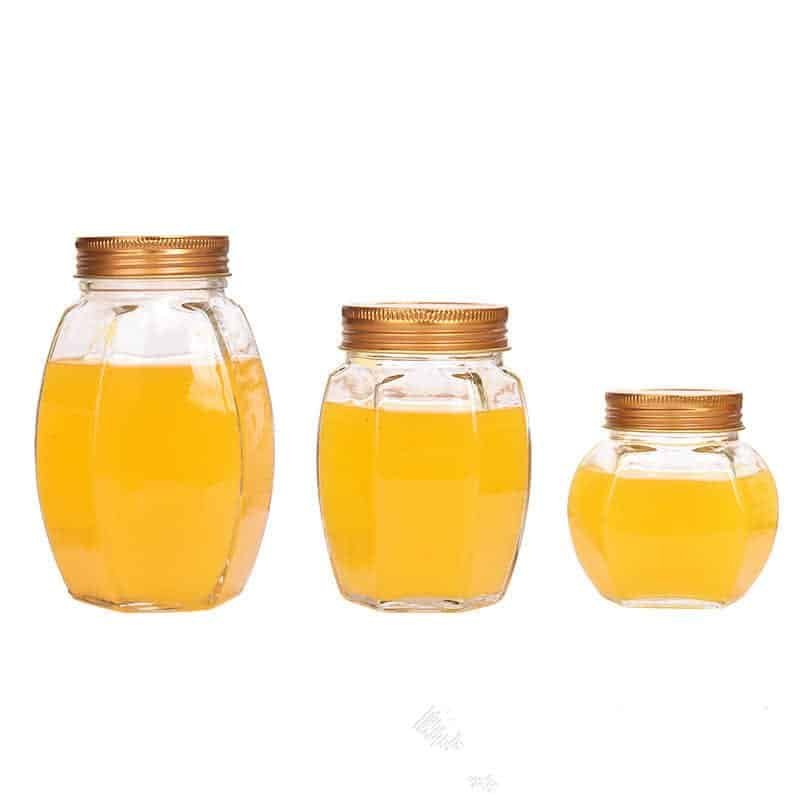
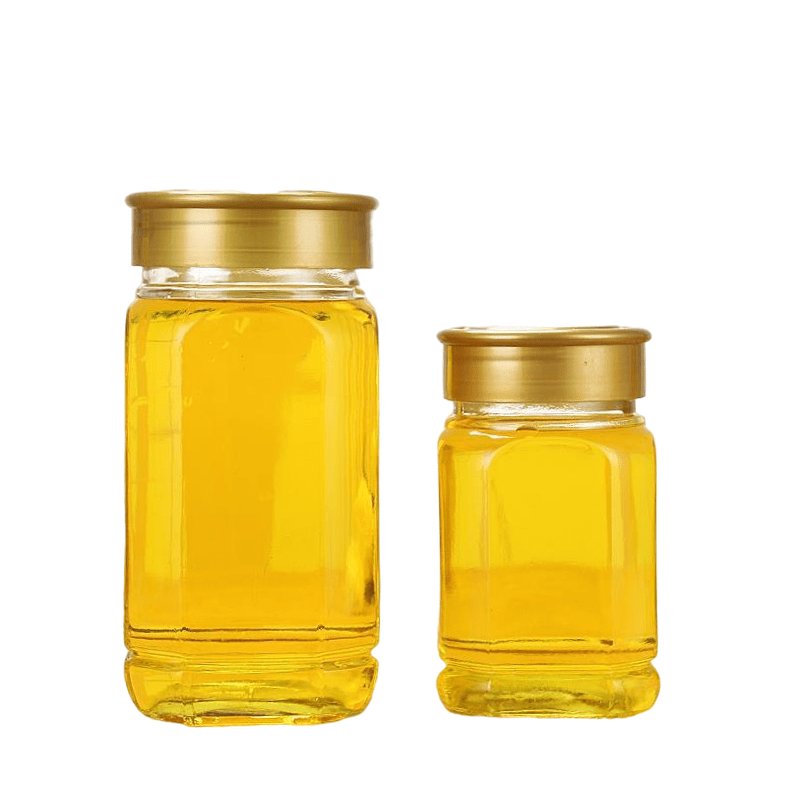
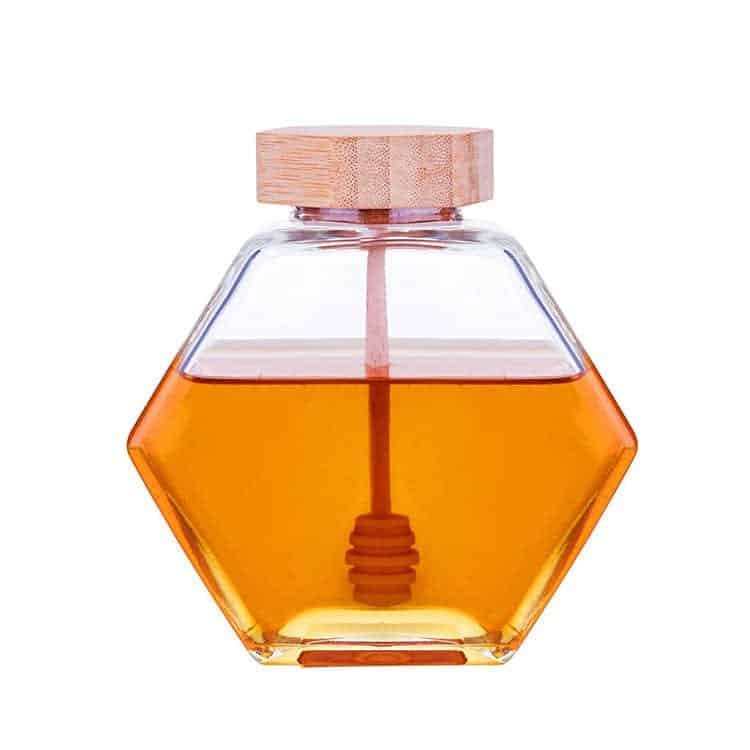
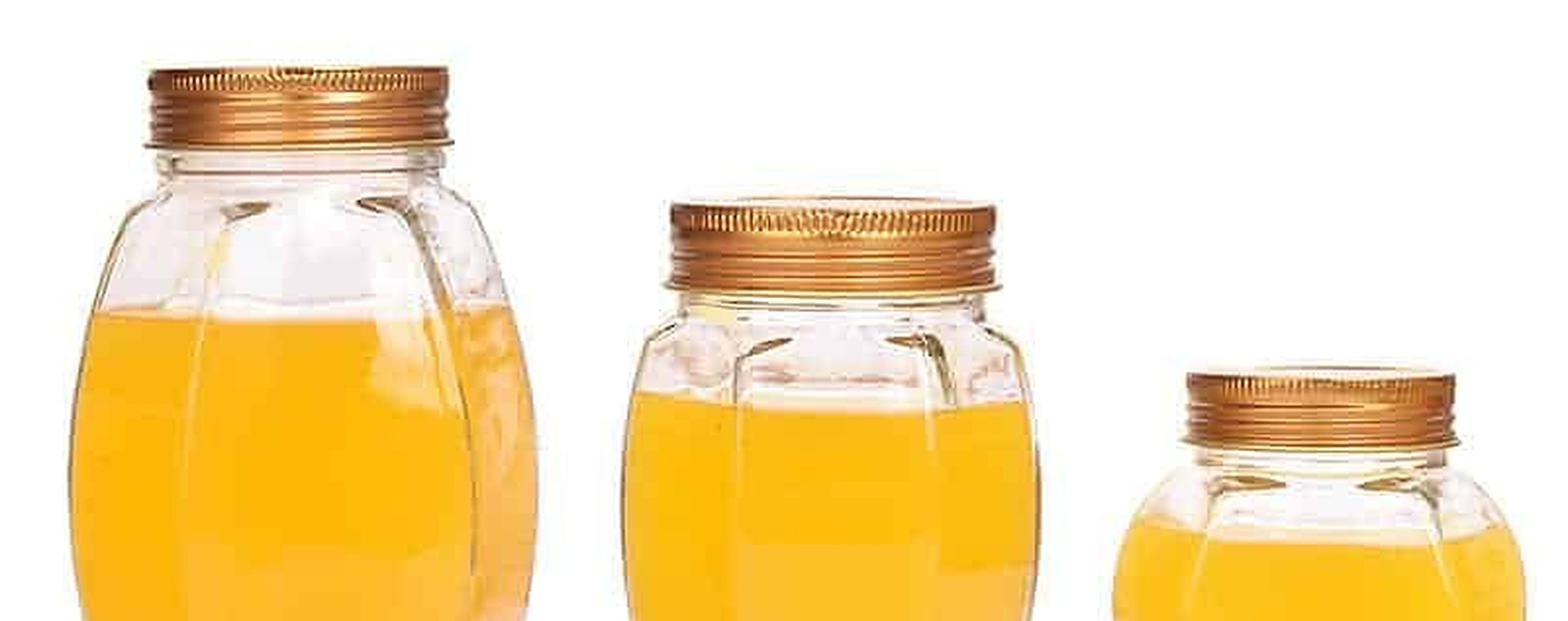
Pot-belly hexagonal glass honey jars with gold lids, filled with honey

Food glass · Honey and syrup jars

Wholesale Honey Jars, Sized to the Weight on Your Label

Sized by the weight on your label. Mouths a spoon fits. Lids that seal, and lids that sell.

If you keep bees, pack honey or run a co-op, you buy jars by the fill weight on your label, and every body from 45 ml to 1 litre comes off our own furnaces in Shandong. Honey runs about 1.4 times the density of water, so your 500 g (1.1 lb) takes roughly 375 ml of jar and your 1 kg (2.2 lb) takes roughly 730 ml. Seven running-mould designs carry those weights across hexagon, ribbed, pot-belly and square bodies.

Honey Jars in Stock: Hexagon, Ribbed, Pot-Belly and Square

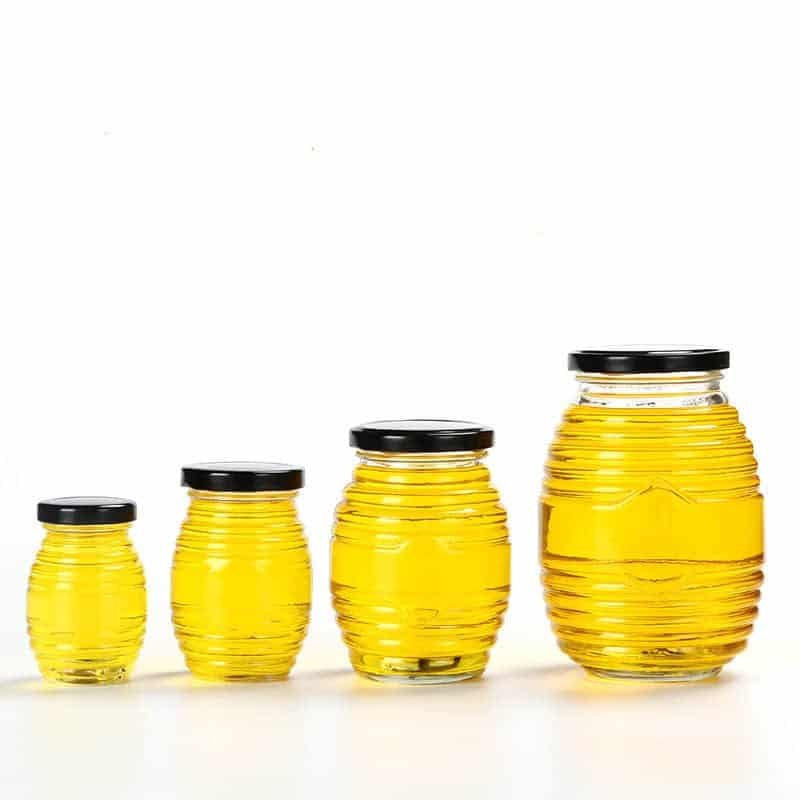
Seven running-mould designs, filtered by the lid family that decides how your jar sells. The pot-belly ladder carries its fill weights, because your label is printed in grams and in pounds. We quote wholesale per design and per quantity.

Capacities in production, ml (375 ml ≈ 500 g · 730 ml ≈ 1 kg)
  • 45
  • 60
  • 85
  • 100
  • 180
  • 200
  • 250
  • 280
  • 360
  • 375
  • 380
  • 500
  • 730
  • 750
  • 1000
  • ml
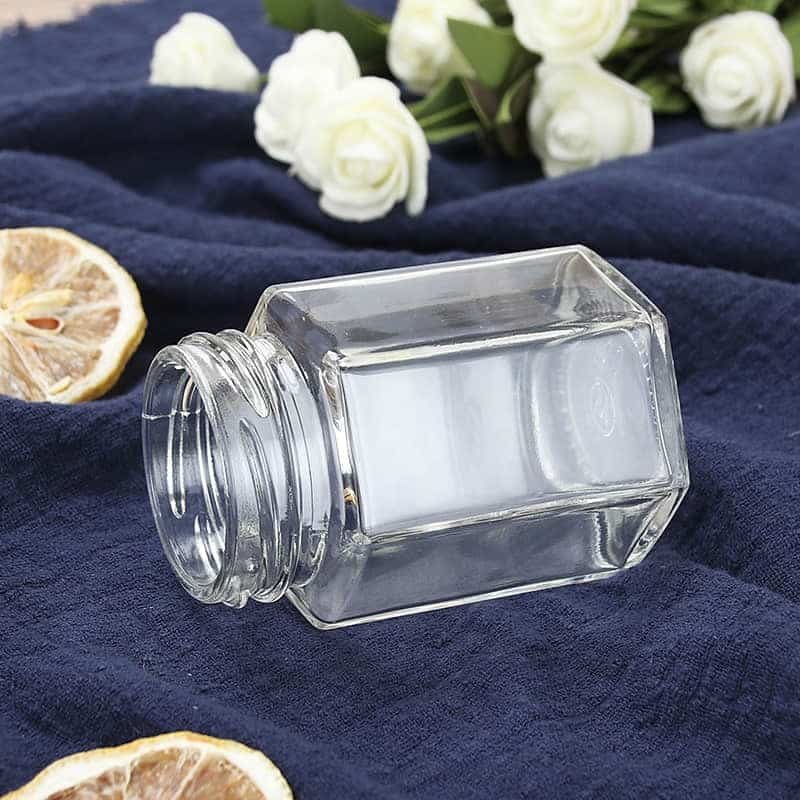
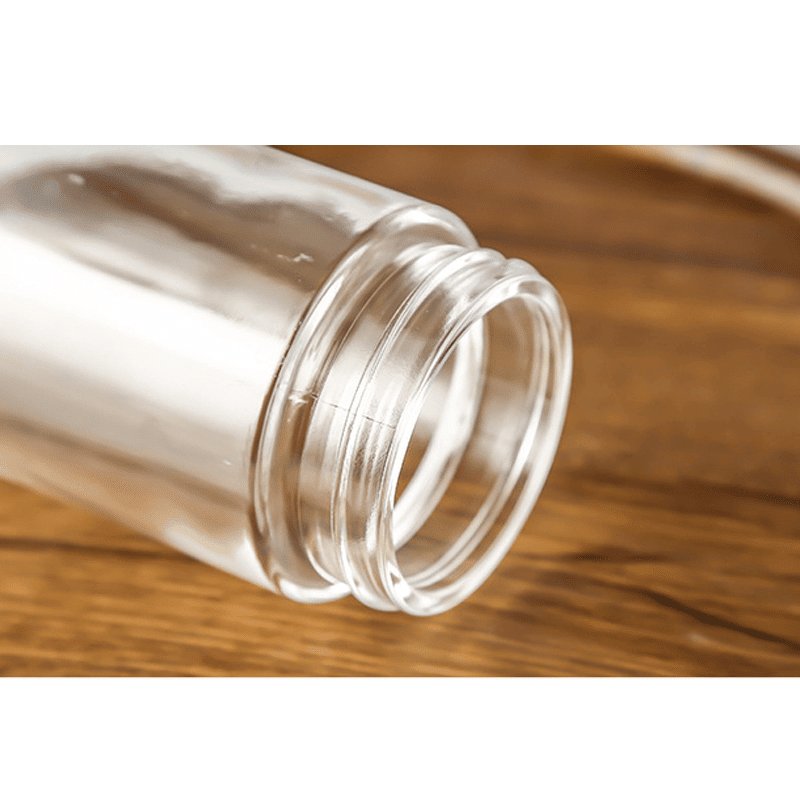
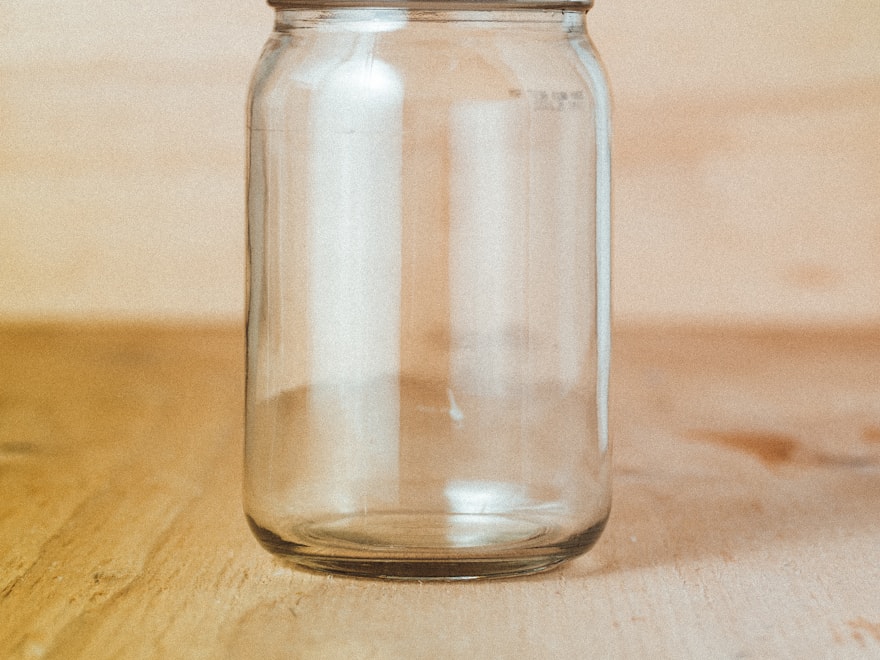
Close-up of the wide threaded mouth of a glass honey jar lying on a wooden surface
The mouth. It decides how fast your line fills a viscous product, and whether your customer can reach the last of it.

What Your Honey Packing Line Confirms With Us

Honey behaves like nothing else that goes into a jar. It sells by weight, it moves slowly, and it crystallises on a shelf. Three things follow from that, and all three reach you in writing before a deposit.

01

Fill weight against jar volume

What is at stake

Your label says 500 g. Honey is about 1.4 times the density of water, so your 500 g fill occupies roughly 375 ml of jar. Order a 500 ml jar for a 500 g fill and your customer sees a jar that looks a quarter empty on the shelf, next to a competitor whose jar looks full.

What we supply

We tooled the pot-belly ladder to fill weight and quote it that way for you: 375 ml for 500 g, 730 ml for 1 kg. For every other design, your quotation gives brimful volume and the fill weight it lands at, so you choose against the number that goes on your label.

02

The mouth, for filling and for eating

What has to match

A viscous product fills slowly through a narrow mouth, and your filling line is paid by the hour. On the shelf side, honey crystallises, and a jar your customer cannot get a spoon into gets thrown away half full. Both problems are the same measurement.

What we supply

The hexagon and pot-belly bodies run wide mouths, and all three sizes in the pot-belly ladder share one 6.5 cm mouth, so your 500 g and your 1 kg take the same lid and the same capping head. Every design ships its finish drawing with your quotation.

03

A lid that seals, or a lid that sells

What is at stake

Wood and dipper lids move honey at a farm shop and a gift counter, and they are why your jar gets picked up. They are also not a hermetic twist-off. Put a wooden lid on a supermarket SKU and you buy returns instead of margin.

What we supply

Four lid families run against these bodies for you: tinplate twist-off for retail and export, alumina for a premium finish, food-grade plastic for the 1 kg catering sizes, and wood or wood-dipper for gift and farm-shop lines. Your quotation states which of them seals and which of them presents.

Honey Jar Lids We Supply: Twist-Off, Alumina, Wood, Dipper

Four lid families come with the jars, each matched to the finish on the design you shortlist.

Tinplate twist-offThe export standard. A quarter turn onto the lugs, holding through your warm fill and a long sea leg. Printed or plain, and the only lid here your supermarket buyer will accept without a question.
Alumina lidA pressed aluminium closure with a liner, on the same finishes. Reads more premium than tinplate at a small step in cost, which is where most private-label honey lands.
Food-grade plasticOn the 500 ml and 1 litre square jars, where your pack is refilled at home or portioned in a kitchen. Lighter in your carton, and it survives being opened every day for a month.
Wood and wood-dipperA wooden lid, or a wooden lid carrying a dipper down into your jar. Why your gift or farm-shop jar gets picked up, and a presentation closure before it is a sealing one.

Your quotation states the lid, the liner and the finish it seals against, so your closure supplier or ours signs off before any stock is committed.

Give us the fill weight. We give back the jar.

The grams on your label and the shelf you sell on are enough. Your quotation comes back within 24 hours with the running-mould jars that fill to that weight, their lids and their loading data.

Match My Fill Weight

Honey Jar MOQ, Wholesale Terms and Lead Time

Bulk terms from the glassworks. No tooling on a running mould, 15–20 days from confirmation, jars sampled with the lid fitted, and a pallet count printed beside your price.

MOQ

Pallet or container

A running mould carries no tooling minimum, so your opening order can be one pallet, on identical terms for private-label honey packers and beekeeping co-operatives. Cutting steel of your own starts at 12,000 pieces in extra flint, 50,000 in standard flint.

Lead time

15–20 days

From confirmation on running moulds, glass and lids together. A custom mould adds 30–45 days to your lead time, counted from drawing approval.

Samples

On request

Samples go out with the lid fitted so you can fill one to your label weight and see how it sits on a shelf. On the custom path, an acrylic model lands in about 10 days at $500, then a sample mould at 35 days puts 5–10 decorated jars on your desk.

Shipping terms

EXW · FOB

Warehousing and consolidation stay in-house, and we quote transit to your port. Your honey jars ride with jam jars or spice jars in one container, which is how most opening orders are built.

Container loading

≈22,000–60,000 per 40HC

By design and export pack: around 22,000 of your 1 kg jars, up to about 60,000 at the small gift sizes. Your exact 20GP and 40HC counts arrive with your quotation.

Three ribbed glass honey jars in a row on a dark wooden board, filled with honey
A ribbed body catches light on a shelf. Decoration reaches the same effect on a plain jar, without new steel.

Branded Honey Jars: Printing, Frosting and Labelling

You win a honey shelf on the jar, because the product inside every jar on it looks much the same. Our Shandong plant frosts, sprays, screen prints, hot stamps, electroplates and labels in-house, which keeps your branded jar on the same 15–20 days as a plain one.

Screen printingYour name, your apiary and your grams straight onto the glass. It survives the sticky hands and the wiped shelf that lift your paper label.
FrostingFull-body or a band around the shoulder, matte or satin. Turns a stock hexagon into a gift jar at the same glass cost.
Hot stampingMetallic foil for a crest, a year or a shoulder band. Harvest editions and hamper packs.
Spray coatingOpaque or translucent colour on clear glass, matched to your brief, with a window left open where the honey colour still has to show.
ElectroplatingMetallic and gradient finishes down the body, for gift ranges and duty-free packs.
LabellingApplied in-house, so the jars arrive shelf-ready and your warehouse skips a second handling.

We quote decoration per design, beside the glass. Decoration and labelling in detail →

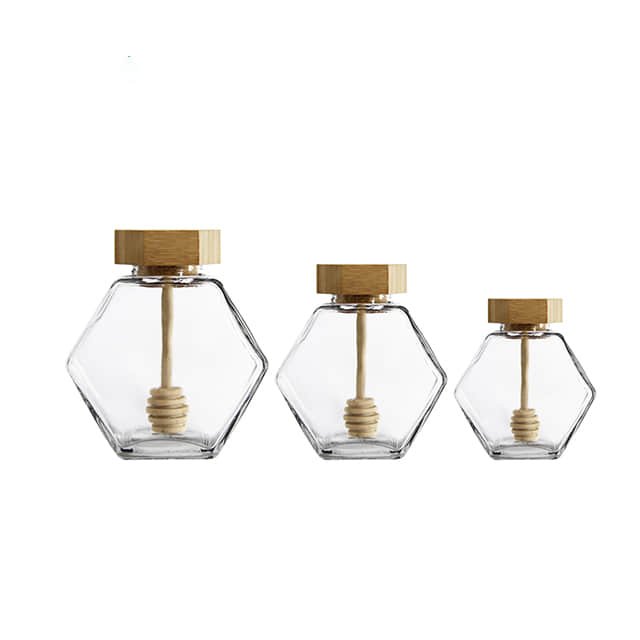
Empty hexagonal glass honey pots with wooden dipper lids in several sizes
One hexagon body across a size ladder. Tooling only earns its cost when no ladder here reaches your fill weight.

Custom Honey Jar Moulds and the 12,000-Piece Minimum

A drawing, a rival's jar or a photograph starts the check. Seven running bodies cover the fill weights honey actually sells in, so you are unlikely to need steel of your own. When a jar of your own is the point, our mould shop prices it in three stages.

Stage 1Acrylic model~10 days · $500

A full-size model of your jar, so shape, shoulder and label panel are signed off before steel is cut.

Stage 2Sample mould35 days · ≈$1,200

Real glass from a sample mould: 5–10 decorated jars with lids fitted, for your filling line and your retailer to approve.

Stage 3Production mould$1,200–2,200

Your production tooling runs on the flint lines in Shandong. Minimum 12,000 pieces in extra-flint, 50,000 in standard flint.

The custom process, priced by stage →

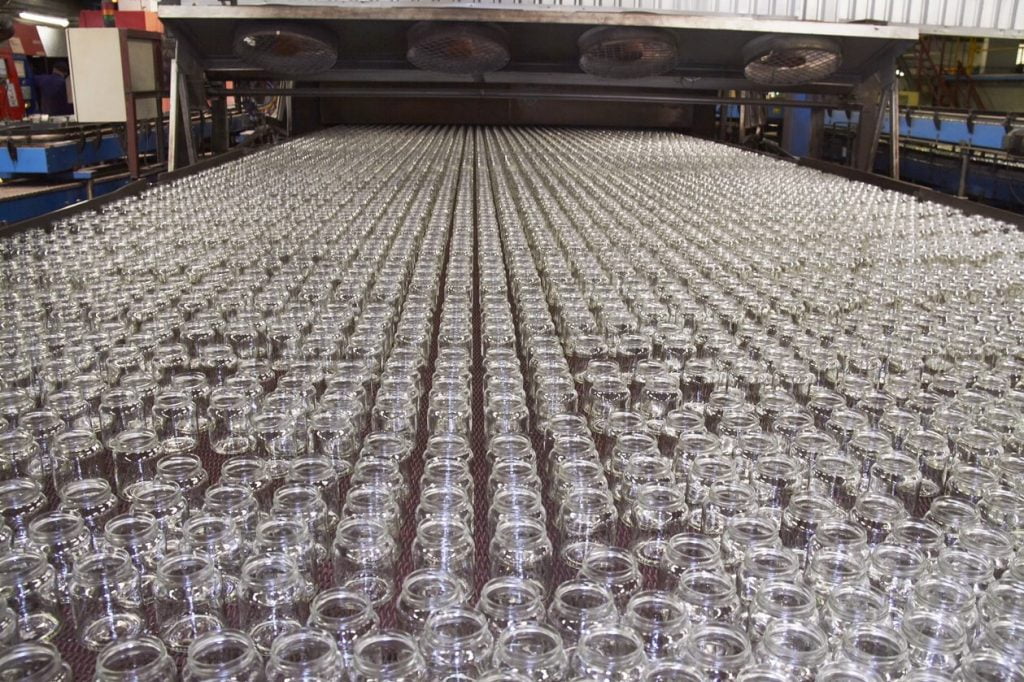
Rows of empty clear glass jars moving along the cold-end conveyor after the annealing lehr
Leaving the annealing lehr on the cold end, where we gauge every finish before your pallet is built.

Food-Grade Honey Jar Manufacturing in Shandong

We form your jars in Shandong, decorate them on the same site and pack them with our own warehouse team, so one company answers for the glass, the lid and the carton. Honey packers in 40+ countries have shipped from these Shandong lines since 2013.

Finish

We inspect the neck and sealing surface on every jar. You fill honey warm and it sits for months, so a finish that seals on day one has to still seal after a season in your warehouse.

Capacity

Brimful capacity verified by water-fill weight on every run, and your quotation converts it to the fill weight your label carries. The mould number in the base traces any drift on your pallet back to the cavity that caused it.

Annealing

Controlled lehr curve on every jar, and we check residual strain under polarised light on every run of yours. Faceted and ribbed bodies hold strain unevenly, so we watch yours harder than a plain body.

Documentation

Your shipment carries an EC 1935/2004 declaration of compliance for the EU and UK, food-contact documentation to FDA requirements for the United States, and ISO 9001. SGS test reports and third-party pre-shipment inspection come on request.

Before You Order Glass Honey Jars

Fill Weights, Mouths and Honey Jar Minimums

The shapes your buyers name, the weights your label prints, and the smallest order we can start you on.

What size jar do I need for 500 g of honey?

About 375 ml. Honey runs roughly 1.4 times the density of water, so your 500 g fill takes far less jar than the number on the label suggests, and 1 kg lands around 730 ml. The pot-belly hexagon ladder here is tooled to exactly those two weights.

What is the minimum order for glass honey jars?

There is no tooling minimum on the seven running-mould designs, so your opening order can be a single pallet across a few sizes. Cutting steel of your own starts at 12,000 pieces in extra flint, or 50,000 in standard flint.

Why are honey jars hexagonal?

Two reasons that both still hold. A hexagon reads as honey before your customer has read the label, and flat panels take your label cleanly and pack tighter on a pallet than a round body of the same volume. Every hexagon in this range also runs a wide mouth.

Do you make queenline or Muth jars?

The ribbed round body is the closest we run to the queenline profile you may know from North America, at 100 to 730 ml (3.4 to 25 oz) with a tinplate twist-off. A Muth jar, tall and straight with a cork, sits on no running mould here; the nearest bodies are in our swing-top and liquor ranges, or it becomes a mould of your own at 12,000 pieces in extra flint.

Are you a jar manufacturer or a beekeeping supply dealer?

A manufacturer. Your jars come off our own lines in Shandong, and MAIDAO INDUSTRY runs 14 lines in Shandong and Xuzhou. Beekeeping dealers hold cases locally and sell by the dozen, which suits a small apiary; a pallet is the point where buying from the furnace is worth the freight to you.

Can you supply honey jars with wooden dipper lids?

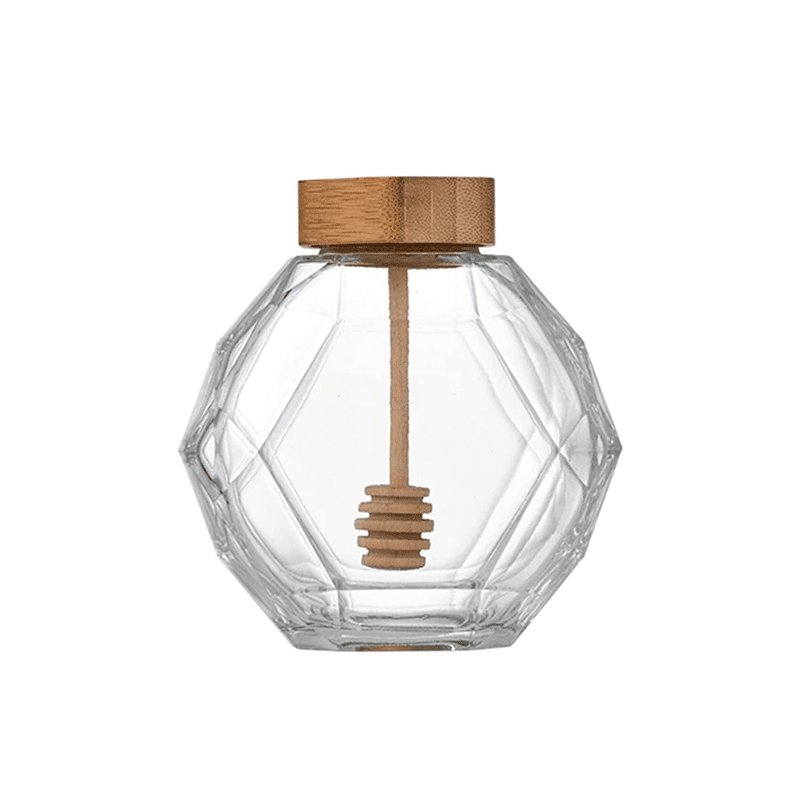
Yes, on the hexagon pot and the faceted round. The dipper hangs from the lid into your jar, and we quote and ship the pair together. Both suit your gift and farm-shop lines; for a supermarket or export listing your buyer will ask for the twist-off or the alumina lid.

How wide is the mouth on your honey jars?

The pot-belly hexagon ladder runs one 6.5 cm mouth across 500 g and 1 kg, so both of your sizes take the same lid and the same capping head. Mouth dimensions for every other design come with the finish drawing on your quotation.

Are your honey jars food-grade?

Yes. Your order ships with food-contact documentation to FDA requirements for the United States and an EC 1935/2004 declaration of compliance for the EU and UK, and SGS test reports come on request.

Do you supply the jars with lids?

Yes. We price tinplate twist-off, alumina, food-grade plastic, wooden and wood-dipper lids with the glass, matched to the finish of each design you list.

Can honey be hot-filled into these jars?

Warm filling is normal for honey and the range is made for it. Where your process runs hotter than a creaming temperature, say so with the enquiry, because the answer changes by design and it is cheaper to know before the first container.

Ask for Honey Jar Wholesale Pricing

A fill weight, a lid or a photo of the jar you use today is enough to start. Our food glass desk answers you with pricing, mouth diameters and loading data inside 24 hours.

I know the fill weight and the lid I want

Matching running-mould jars, pricing and loading data come back within 24 hours.

  • Fill weight in grams, and the shape you want
  • Lid family: twist-off, alumina, plastic or wood
  • Quantity or container count, and destination port
Request Pricing

I am matching a jar already on shelf

The running moulds that fit get found before anyone talks about tooling.

  • A photo of the jar and lid, with a ruler in frame
  • The grams printed on the label
  • Whether the jar is hot-filled, and by what line
Match My Jar
sales@sgsbottle.com · Mon–Sat 8:30–18:00 (GMT+8) — every quote answered within 24 hours