

Three published tests measure what a glass bottle survives: internal pressure, thermal shock and vertical load. Each has an ISO method with a fixed procedure, and the trade quotes figures against them. Every number here belongs to a standard or to a national specification, so treat them as the industry's benchmarks. SGSBOTTLE formed 700 million bottles over the past year at 14 lines in Shandong and Xuzhou, and the figure for a design you shortlist still comes from a test on that design, which we book for you on request.
What Your Bottle Has to Survive
Four different loads break glass, and each one has its own test. Carbonation pushes outward from inside: beer sits at roughly 0.3 MPa (3 bar, 44 psi) at ambient temperature, and pasteurisation raises it. Hot filling and cooling put the outside and the inside of the wall at different temperatures. Your capping head pushes down on the finish, and a stacked pallet does the same for weeks. Impact and abrasion in transit take strength out of your bottle's surface. Shandong runs hot-end and cold-end coating on its 7 lines, and both put back the strength your inspector measured.
Internal Pressure Resistance: How ISO 7458 Runs the Test
ISO 7458 sets two methods, and both suspend your bottle by the finish, fill it with water at ambient temperature and seal the finish against a pressure head.
- Method A, uniform pressure. The rig raises pressure to a set level and holds it constant for 60 ± 2 s. A pass test asks whether your sample survives an agreed figure.
- Method B, constant rate. The rig raises pressure at a fixed rate until your bottle fails or reaches a set level. The mirror standard IS 10516 names 1.0 ± 0.2 MPa/s.
A progressive test carries either method further, stepping the pressure up until half your sample, or all of it, breaks. That gives you a distribution instead of a verdict, and it is the version to book when you qualify a new design for a carbonated fill.
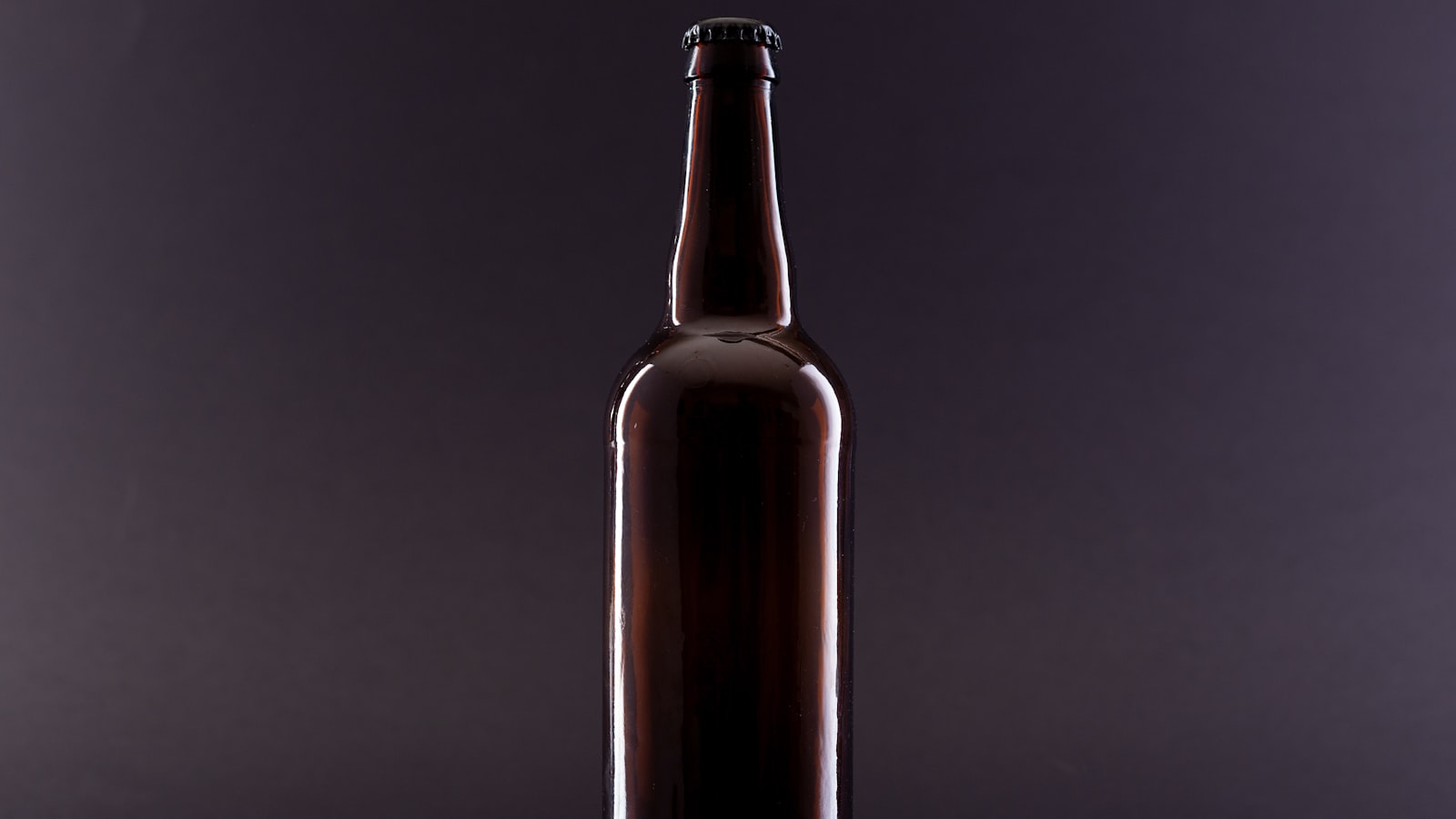 Beer sits at about 3 bar (44 psi) at ambient temperature, and a 12 bar benchmark gives your bottle four times that.
The Pressure Figures the Trade Quotes
| Product | Pressure in service | The benchmark the trade quotes |
|---|---|---|
| Beer, ambient | ≈ 0.3 MPa (3 bar, 44 psi), higher through pasteurisation. | GB 4544:1996 graded bottles at 1.2 MPa (12 bar, 174 psi) qualified, 1.4 MPa (14 bar, 203 psi) first class, 1.6 MPa (16 bar, 232 psi) superior. |
| Sparkling wine | 5 to 6 bar (73 to 87 psi) at cellar temperature. | Sparkling-wine bottle specifications commonly sit at 16 bar (232 psi), with burst around 20 bar (290 psi). |
| Kombucha, kefir, second fermentation | 2 to 3 bar (29 to 44 psi) at a typical carbonation target. | No dedicated standard; ask for the ISO 7458 figure for the design. |
| Still water, juice, oil, sauce, spirits | None. | No pressure requirement; thermal shock and vertical load govern. |
China's beer-bottle standard moved on in 2020: the current GB 4544 drops the three grades, splits its requirements between one-way bottles, new returnable bottles and used returnable bottles, and adds a vertical-load requirement. The 1996 grades stay in the table because the trade still quotes them to you, and because they show the shape of your margin: a bottle held to 12 bar carries four times the pressure beer actually reaches.
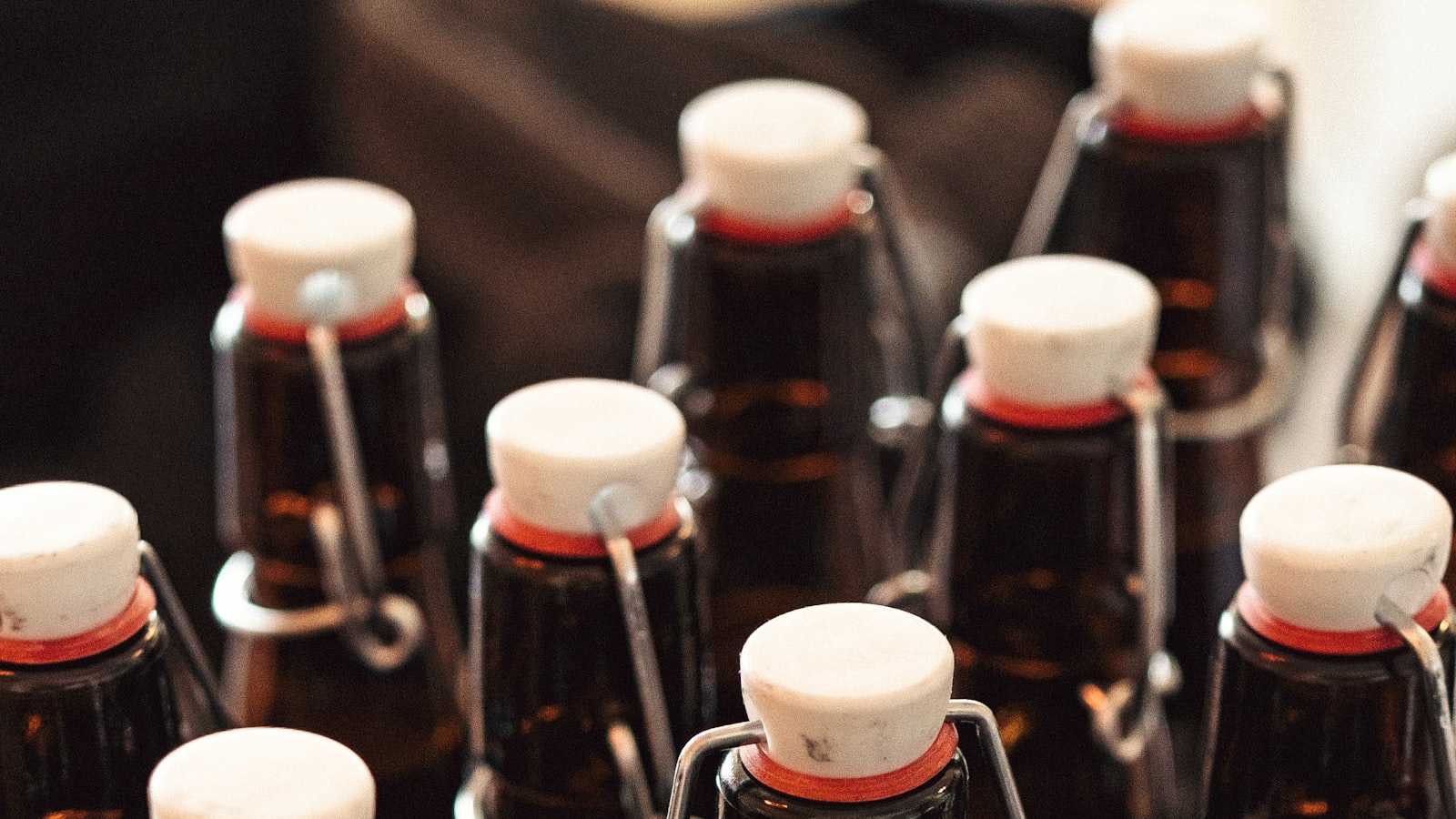 On a swing-top, your glass carries the hoop stress and your gasket carries the seal.
Swing-Top Bottles: Two Parts Carry the Pressure
A swing-top has no thread and no published pressure class. Two things decide what it holds. The glass carries the hoop stress, exactly as a crown-finish bottle does, and the test is the same ISO 7458. The bail and the gasket carry the seal, and a tired gasket vents before the glass ever reaches its limit.
That splits the swing-top range in two, and the split matters to you. A swing-top built as a pressure bottle for beer, cider or a second fermentation is tested and quoted like a beer bottle. A decorative swing-top for oil, syrup or still water is a closure style on a bottle nobody pressure-tested. Ask which one you are looking at, name the carbonation your fill reaches, and get the figure for that design in writing before a container goes anywhere near a fermentation.
Thermal Shock Resistance: ISO 7459 and Your Hot Fill
ISO 7459 measures the temperature difference your bottle takes without cracking. The procedure is fixed. Empty containers stand upright and separate in a basket, immersed in a hot bath at the upper temperature for at least 5 minutes. The basket moves to the cold bath in 16 seconds at most, where the containers stay fully immersed for 30 seconds. An inspector then checks every one for cracks. The cold bath sits at 22 ± 5 °C, and a progressive test raises the difference in 5 °C steps until the agreed share of the sample fails. Thermal shock endurance names the difference at which half of them would fail.
ASTM C149 is the North American method for the same property. A temperature difference of 42 °C is the figure most hot-fill and pasteurisation specifications name, and it is the one to quote when your process moves glass between a filler and a cooling tunnel. Where your design lands depends on wall thickness, on how evenly the glass sits around the bottle, and on annealing. All 14 SGSBOTTLE lines in Shandong and Xuzhou run a polariscope strain check as routine, and your batch gets the written report on request.
Vertical Load: ISO 8113 and What Your Capping Head Does
ISO 8113 measures resistance to force along the vertical axis. The rig presses down on the finish at a constant rate, 500 N/min in the EN version of the method, until the container crushes, and the load at that moment is the result. Your capping head applies part of that load every time it seats a cap, and a stacked pallet applies the rest for as long as the goods sit in a warehouse. Your lightweight bottles feel it first, and your tall slender shapes feel it more than squat ones. A lightweighting project and a vertical-load figure belong in the same conversation. GB 4544's 2020 edition added a vertical-load requirement to the Chinese beer-bottle standard for the same reason.
How to Write a Strength Requirement Into Your Order
Six entries make a strength requirement testable rather than decorative.
| Entry | What you write |
|---|---|
| Property | Internal pressure, thermal shock or vertical load. |
| Method | ISO 7458 Method A or B, ISO 7459, ISO 8113, or the ASTM equivalent. |
| Value | The pressure with its hold time, the temperature difference, or the load. |
| Sample | Pieces per shift or per lot, and how they are drawn. |
| Who tests | The base's laboratory, a CNAS-accredited laboratory, or your own inspector. |
| Reporting | Whether the report travels with the shipment or stays on file. |
A requirement written that way survives a change of buyer, a change of season and a change of inspector. Every party reads the same method and the same number. Written any other way, it is a preference, and a preference is what gets dropped when a line runs behind.