

Breakage almost never starts at the container wall. It starts inside the carton, where one bottle touches another, and the specification you write is what keeps them apart.
The 5 Items Your Specification Needs
| Item | What it does | What happens without it |
|---|---|---|
| Partitions | Keeps every bottle from touching its neighbour. | Glass rubbing glass, then chipping, then breaking. |
| Top and bottom pads | Absorbs vertical shock and protects the sites. | Bottle bases wearing through board under load. |
| Board grade | Sets the strength of the carton wall and its stack. | Cartons crushing in the middle layers of your pallet. |
| Pieces per carton | Fixes carton weight and how your team handles it. | Cartons too heavy to lift safely, or too light to stack. |
| Carton marking | Identifies contents, count, lot and handling. | Goods you cannot trace and customs delays. |
Why Partitions Matter More Than Anything Else
Two bottles touching in a carton will abrade each other over thousands of kilometres of vibration. That abrasion removes the coating, then scratches the glass, and a scratched bottle fails at a load it should have survived.
A partition removes the contact entirely. SGSBOTTLE specifies partitions per design for glass from the 14 lines in Shandong and Xuzhou, since the right grid depends on your bottle shape rather than on a standard.
What Board Grade Actually Protects
Your carton holds up the ones on top of it. Single wall handles light goods and short stacks; double wall carries heavy glass and tall pallets, and the difference shows in the bottom layer after a humid crossing.
Humidity is the part buyers miss. Board loses strength as it absorbs moisture, so a carton rated for your stack in a dry warehouse may not hold the same stack inside a container crossing the tropics.
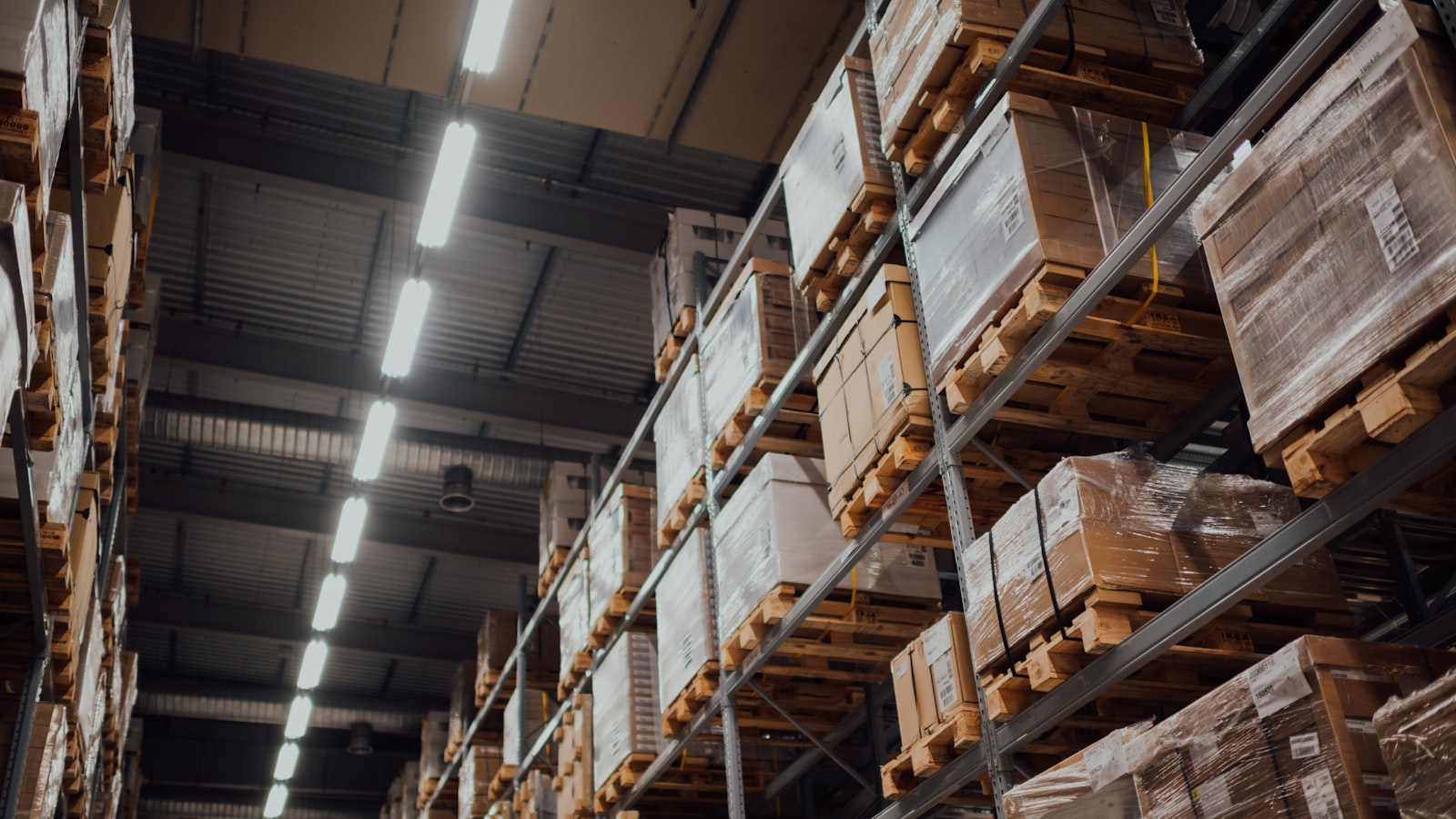 The bottom carton carries the stack. SGSBOTTLE packs glass from 14 lines in Shandong and Xuzhou.
Choosing Pieces per Carton
Weight decides it. A carton your staff can lift comfortably gets handled properly, and one that cannot gets dragged, dropped and stacked badly.
Retail matters too. If your cartons go to a shelf-ready display, the count and orientation follow your merchandising rather than your warehouse, so a 330 ml (11 oz) pack may be fixed before logistics gets a say.
Trays, Shrink and Shelf-Ready Options
A tray with shrink film costs less than a full carton and gives you less protection, which suits short lanes and heavy retail turnover. Full cartons suit long sea legs.
Shelf-ready packs sit between the two. They save your customer labour at the shelf and demand a tighter specification, since the pack has to survive transit and still look presentable when opened.
What Goes on Your Enquiry
Your format in ml and oz, the pieces per carton you want, your stacking height, the lane the goods travel, and whether packs go shelf-ready. SGSBOTTLE comes back with the pack specification, the carton dimensions and the packed weight for your order.