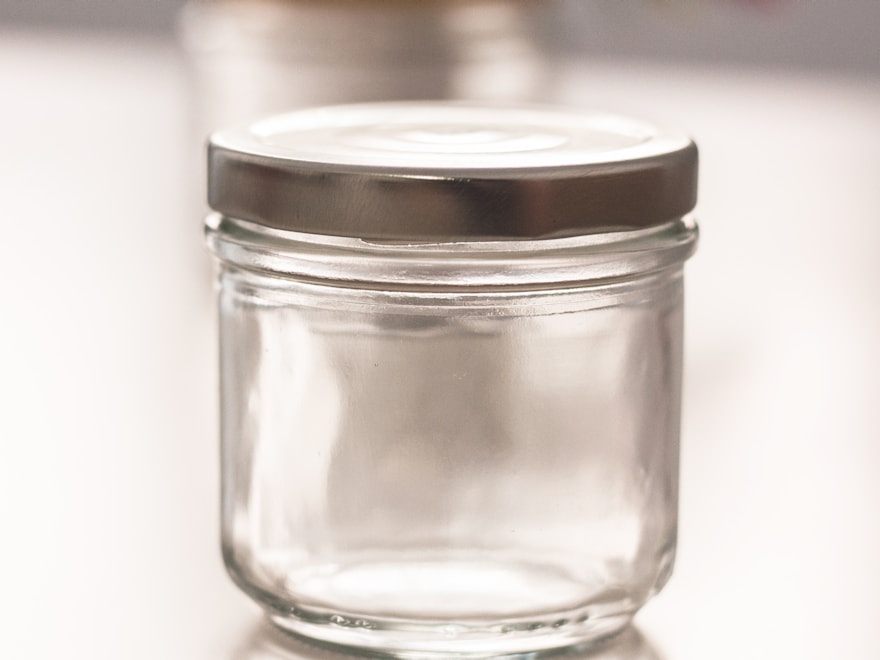
Food glass · Drinking and canning jars
Two families under one word. Handles that hold. Lids your accessories already fit.
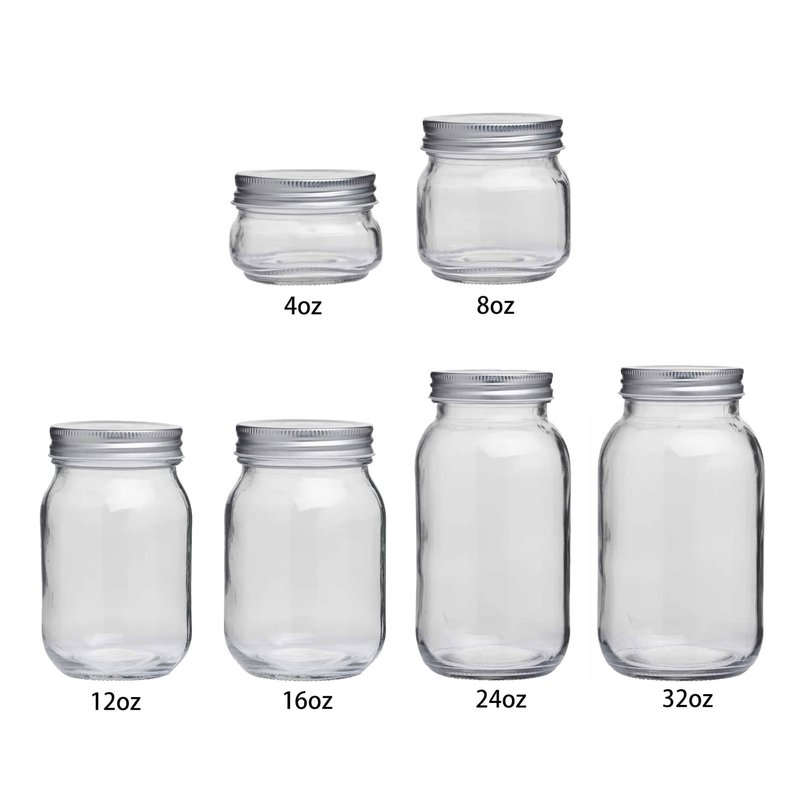
Housewares importers, canning brands and event suppliers all say mason and mean different jars, so the first thing you settle is which one you mean. All of them come off our own lines in Shandong: handled drinking mugs, moulded novelty sippers and a square and round canning set in regular and wide mouth, 4 oz to 32 oz (118 to 946 ml), plus 4 L and 8 L beverage dispensers. Which family you mean settles the lid, and the lid settles what your customer can buy to go with it.
Two families under one word, filtered apart at the top of the grid. Handles and straw lids on one side, regular and wide-mouth canning finishes on the other, so your filter is the first decision. We quote wholesale per jar and per lid, on the same sheet.


No running-mould design carries that format at that size. Your quotation can still cover it, because the lid finishes are shared across the range.

Two products share this word, and the accessories your customer already owns decide which one you are buying. Three things reach you in writing before a deposit.
What is at stake
A canning jar and a drinking jar share a silhouette and a name. One sells to a food packer who cares about the seal and the two-piece lid; the other sells to a homeware buyer who cares about the handle, the straw hole and how it looks full. Enquiries that leave the family unstated cost a sample round.
What we supply
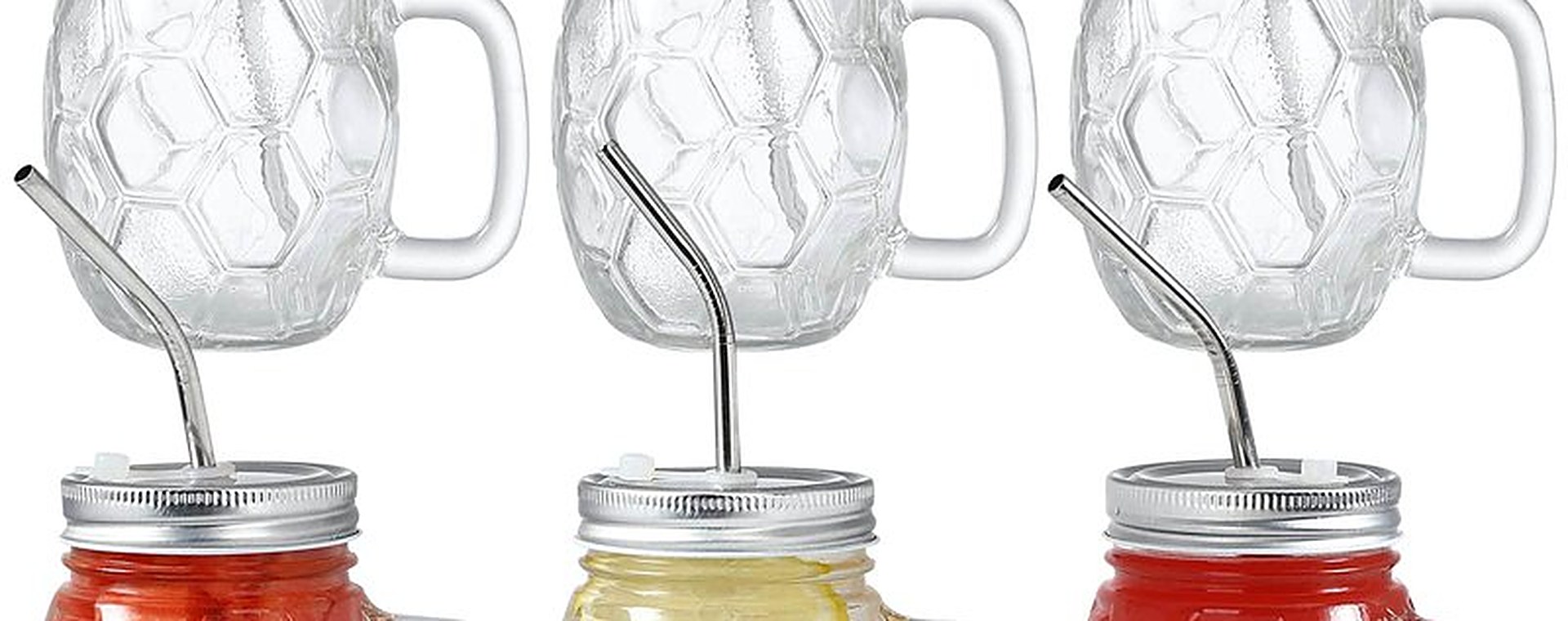
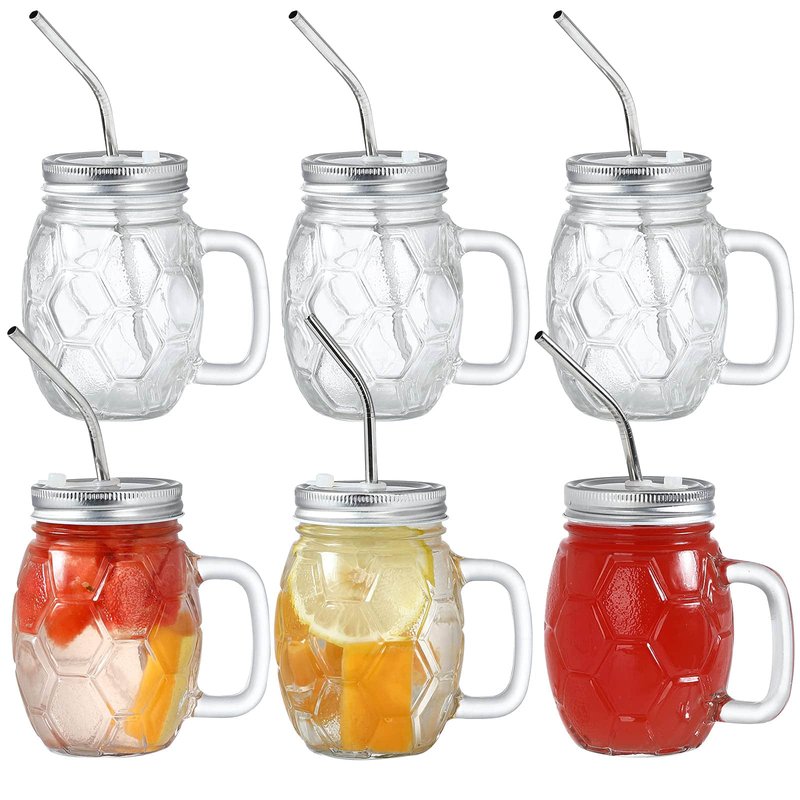
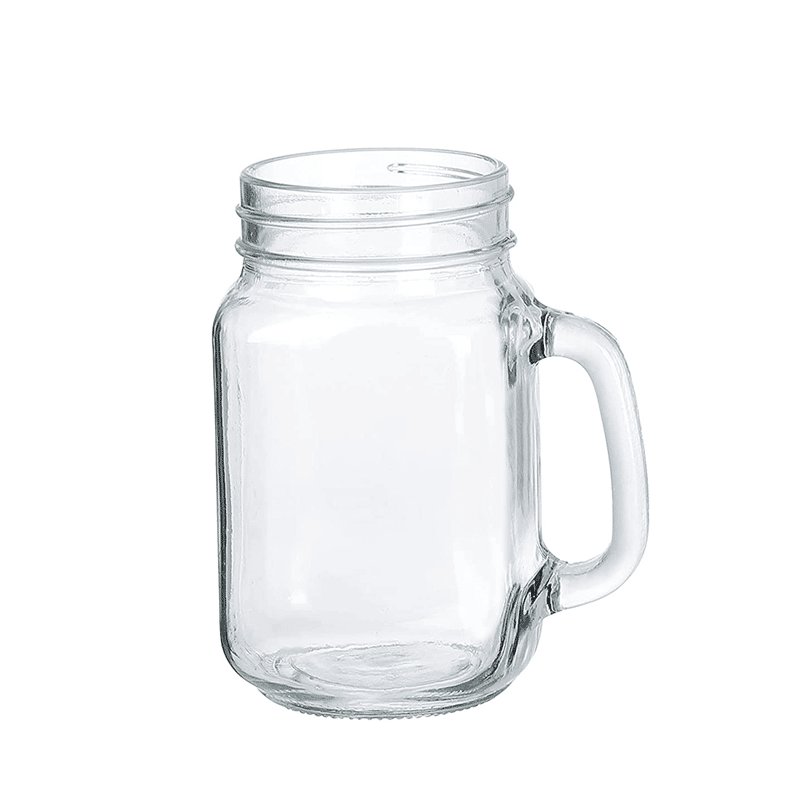
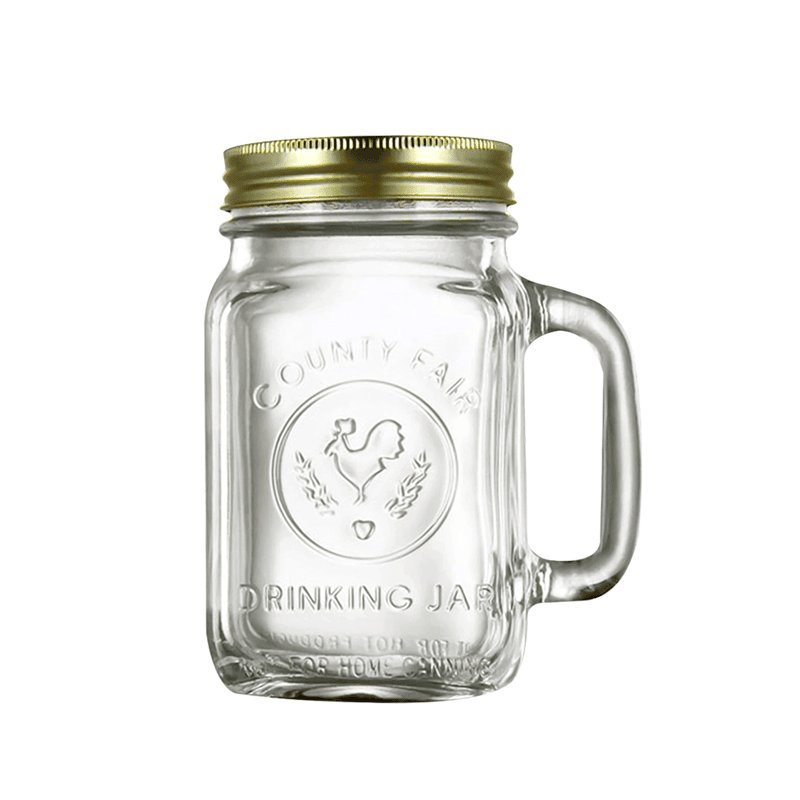
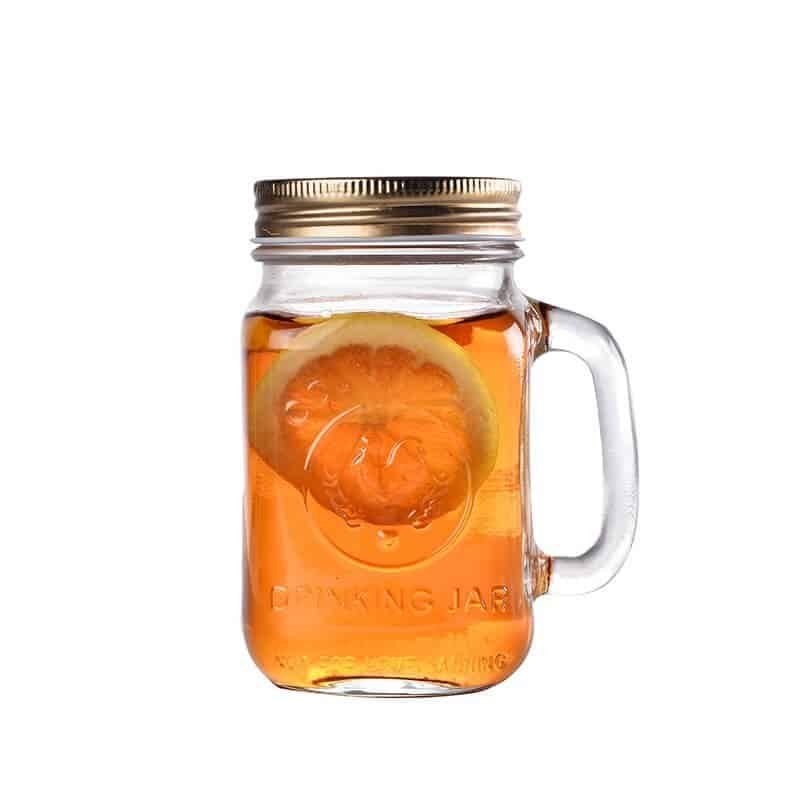
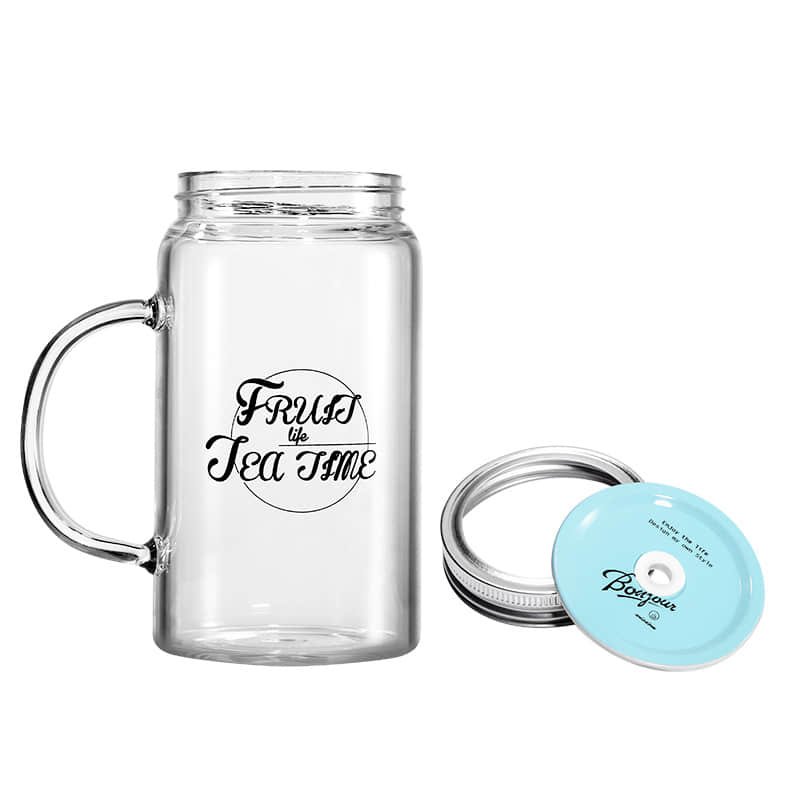
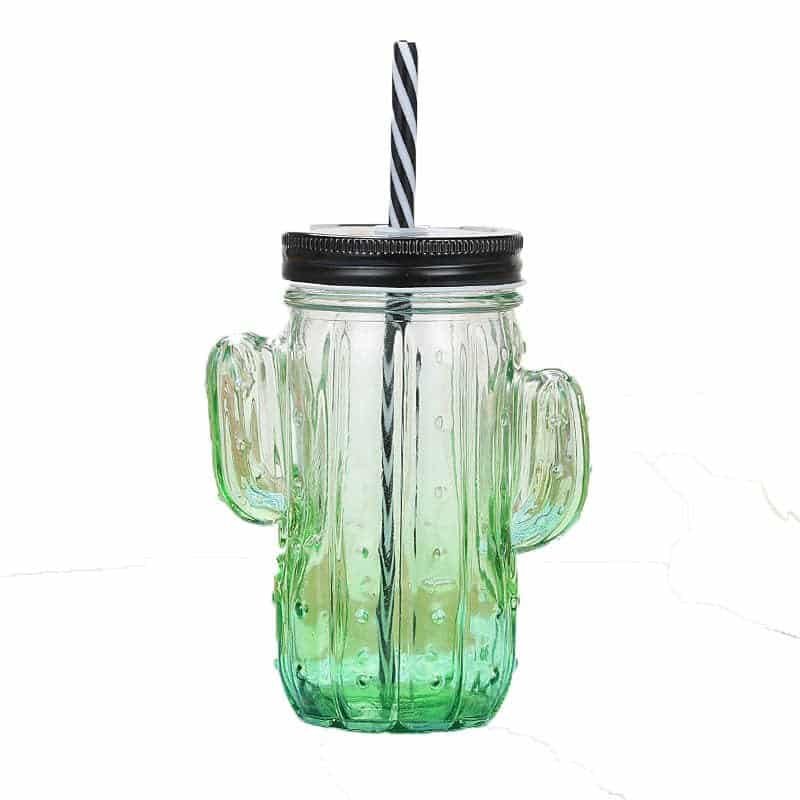
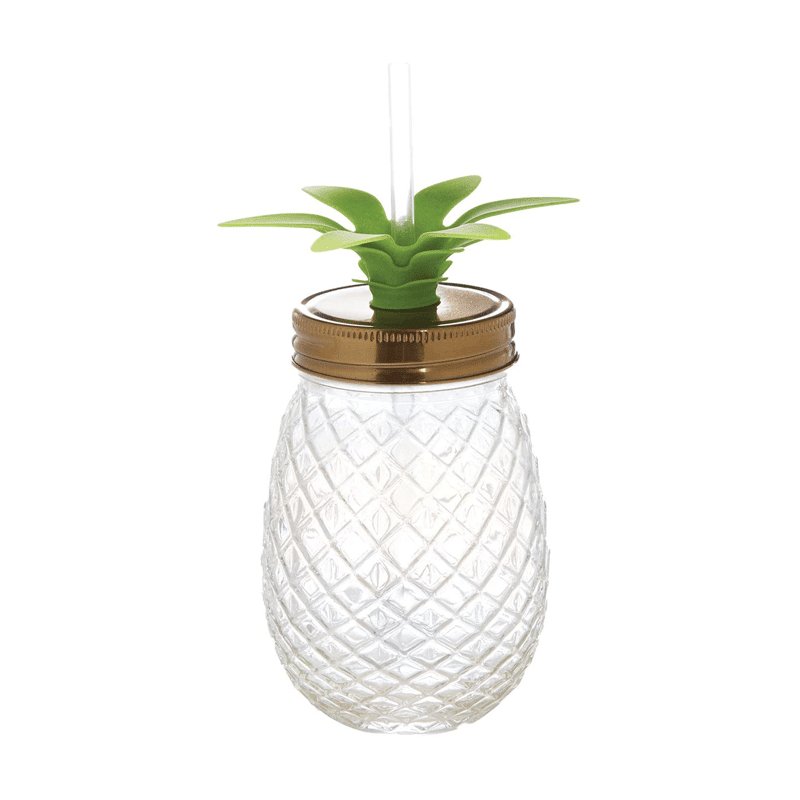
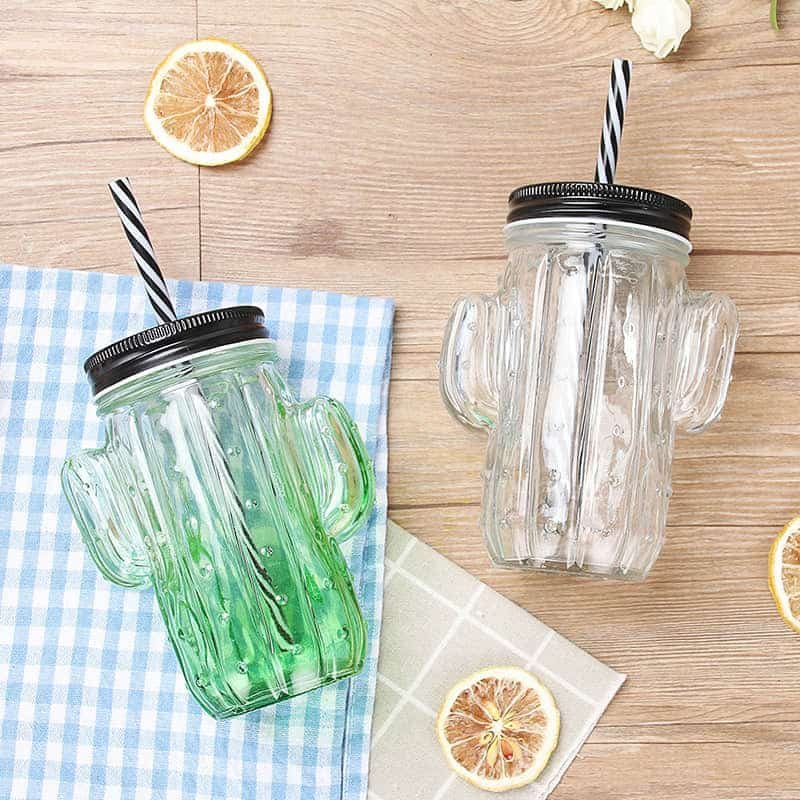
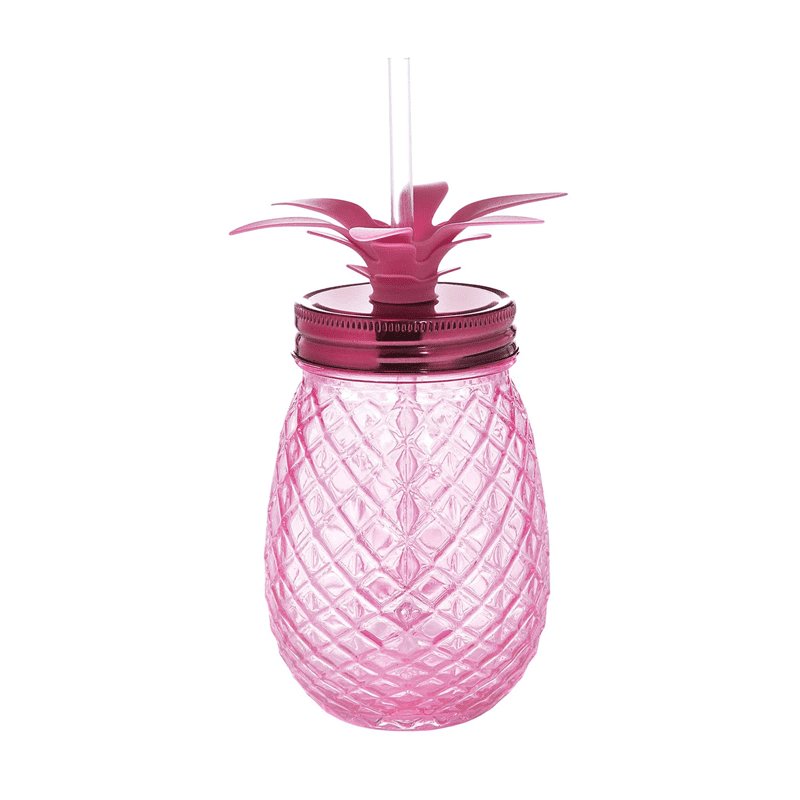
Your choice splits three ways: handled mugs and sleeved tumblers for drinking, moulded cactus and pineapple sippers for novelty and gift, and a square and round set from 4 oz to 32 oz for canning and packing. Your quotation prices the family you name, and carries the lid system that belongs to it.
What has to match
On a handled mason jar the glass almost never fails first. The join does, under a knock against a sink or a jump from iced drink to hot water in your customer's kitchen. A handle that looks identical in a photograph can be applied two different ways, and only one of them survives your returns policy.
What we supply
Your samples go out assembled, so your QA loads the handle before you list the jar. Where your market runs hot drinks through the same mug, that belongs in your first message, because it changes which bodies in this range are suitable at all.
What is at stake
Every accessory your customer already owns keys off the mouth: straw lids, pump lids, sleeves, sprouting screens, two-piece canning lids. Order the wrong one and your whole accessory range stops fitting, long after the glass has shipped.
What we supply
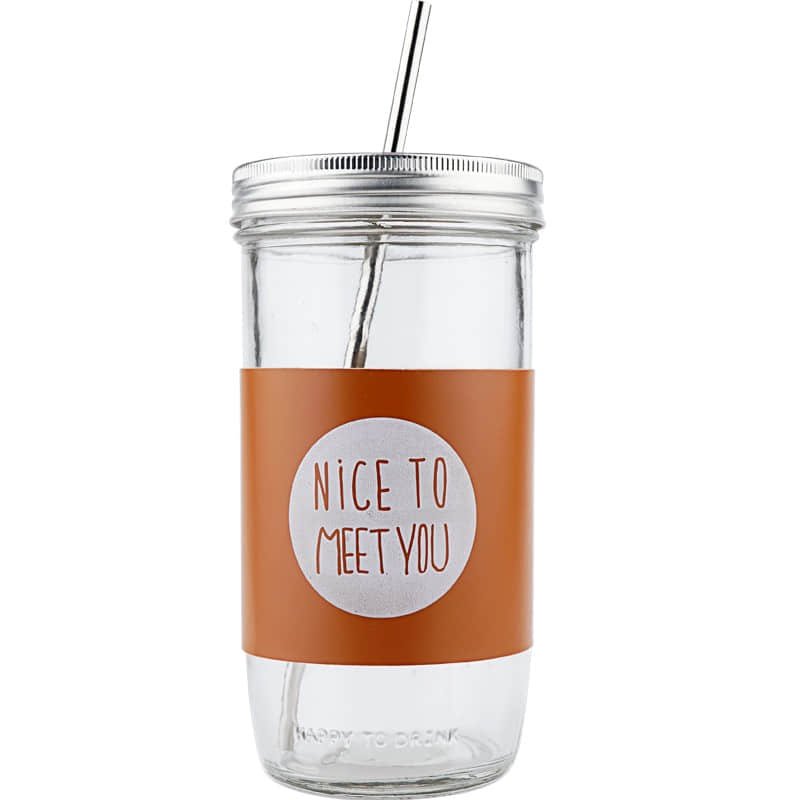
The canning set runs in both regular and wide mouth, and each design sends its finish drawing with your quotation, so your lid and accessory suppliers confirm the fit on paper. The leather-sleeve tumbler uses the wide-mouth pint, the format most sleeves and straw lids your customer buys are cut for.

Four lid families run against these jars, and which ones fit depends on the mouth your jar carries.
Your quotation states the lid, the liner and the mouth it seals against, so your closure supplier or ours signs off before any stock is committed.
Bulk terms from the factory. No tooling on a running mould, 15–20 days from confirmation, jars sampled with the lid fitted, and a container count printed beside your price.
Pallet or container
A running mould carries no tooling minimum, so your opening order can be a single pallet, on identical terms for private-label homeware brands and own-brand packers. Cutting steel of your own starts at 12,000 pieces in extra flint, 50,000 in standard flint.
15–20 days
From confirmation on running moulds, glass and lids together. A custom mould adds 30–45 days to your lead time, counted from drawing approval.
On request
Your drinking jars ship with the handle and the lid fitted, so your QA tests the assembly instead of the glass alone. On the custom path, an acrylic model lands in about 10 days at $500, then a sample mould at 35 days puts 5–10 decorated jars on your desk.
EXW · FOB
Warehousing and consolidation stay in-house, and we quote transit to your port. Handled jars need more carton per piece than plain ones, so a mixed load with small jars pays you back here.
Per design, with the quote
A handle and a novelty shape both cost carton volume, so one anchor across this range would mislead you. Your quotation gives carton dimensions and the 20GP and 40HC counts for each design you asked about.

Your mason jar sells on colour and on the mark pressed into it, and both can happen without new steel. Our Shandong plant sprays colour, frosts, screen prints, hot stamps and labels in-house, so your decorated glass keeps the same 15–20 days as plain.
We quote decoration per design, beside the glass. Decoration and labelling in detail →

A jar, a lid or a drawing starts the check. Running moulds cover most mason briefs, because your customer buys the jar for the accessories that fit it. When an embossed jar of your own is the point, our mould shop prices it in three stages.
A full-size model of your jar, so shape, handle position and lid seat are signed off before steel is cut.
Real glass from a sample mould: 5–10 decorated jars with handles and lids fitted, for your buyer and your QA to approve.
Your production tooling runs on the flint lines in Shandong. Minimum 12,000 pieces in extra-flint, 50,000 in standard flint.

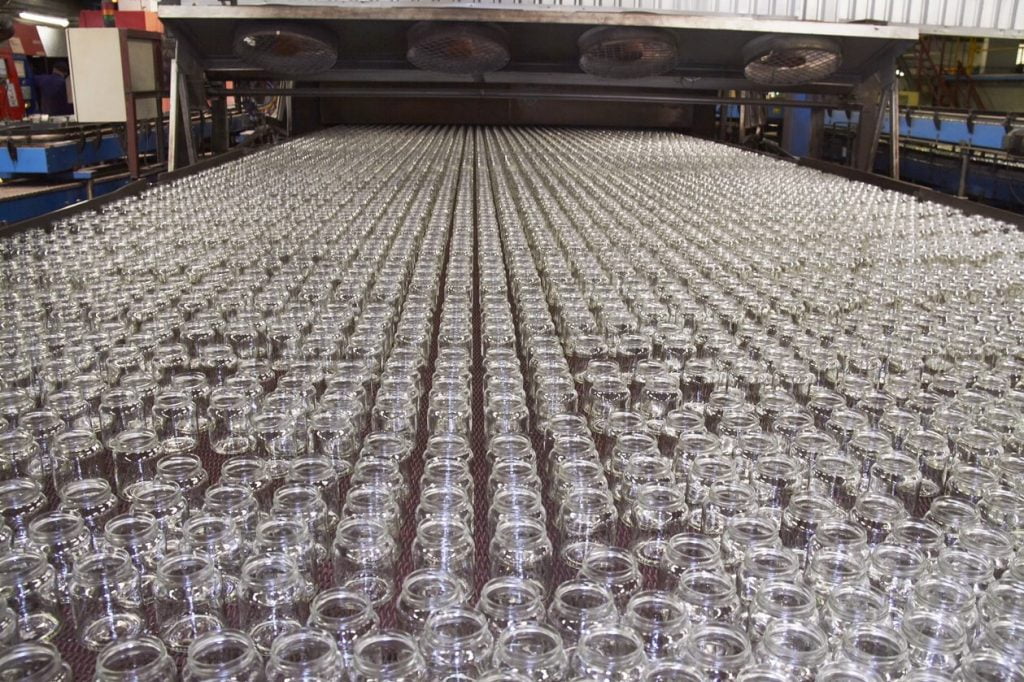
We form your jars in Shandong, decorate them on the same site and load them with our own warehouse team, so the jar, the lid and the carton come from one supplier. Housewares buyers in 40+ countries have shipped from these Shandong lines since 2013.
A drinking jar goes to your customer's mouth, so we inspect the rim on every piece. A sharp edge on a tumbler becomes your safety complaint, and a photograph never shows it.
We check applied handles at the join across the run, and load samples to failure, so the joint carries a measured number when you ask for one.
Controlled lehr curve on every jar, and we check residual strain under polarised light on every run of yours. Handled and moulded shapes hold strain unevenly, so we watch yours harder than a plain body.
Your shipment carries an EC 1935/2004 declaration of compliance for the EU and UK, food-contact documentation to FDA requirements for the United States, and ISO 9001. SGS test reports and third-party pre-shipment inspection come on request.
Mouths, lids, pints and quarts, and which family your customer's accessories already fit.
A canning jar is built around a two-piece lid and a seal that has to hold through your processing. A drinking jar is built around a handle, a rim your customer puts to their mouth and usually a straw-hole lid. They share a silhouette and a name, and almost nothing else, so the family belongs in your first message.
There is no tooling minimum on the 10 running-mould designs, so your opening order can be a single pallet. Steel of your own starts at 12,000 pieces in extra flint or 50,000 in standard flint, which is the route a novelty shape takes.
473 ml, the wide-mouth pint most sleeves, straw lids and accessories are cut for. Your canning set also runs 4 oz (118 ml), 8 oz (237 ml), 12 oz (355 ml), 24 oz (710 ml) and 32 oz (946 ml).
The canning set runs both a regular and a wide mouth, and the finish drawing for each comes with your quotation so your lid supplier can check it against their own. Where you already stock 70 mm or 86 mm two-piece lids, post one over and we confirm the fit before you order anything.
A manufacturer. Your jars are formed on our own lines in Shandong, one of MAIDAO INDUSTRY's two production sites, and coloured in Shandong. Importers buy from plants like ours and hold cases in-market; from a pallet upward the freight maths turns in your favour at the furnace.
Yes, on the square and round canning set. The mouth decides every accessory that follows, from two-piece lids to straw lids and sleeves, so each design ships its finish drawing with the quotation for your lid supplier to confirm.
Yes. Handled mugs run from 100 ml to 650 ml, and we price straw-hole lids in tinplate or aluminium with them. The leather-sleeve tumbler is built on the wide-mouth pint and reaches you as a set with the sleeve and the metal straw.
Yes. Your order ships with food-contact documentation to FDA requirements for the United States and an EC 1935/2004 declaration of compliance for the EU and UK, and SGS test reports come on request.
Not every body in this range suits hot liquid, and the difference shows up in your returns rate before it shows up anywhere else. Where your mug will see coffee or tea, say so with the enquiry, and the answer comes back per design alongside the sample.
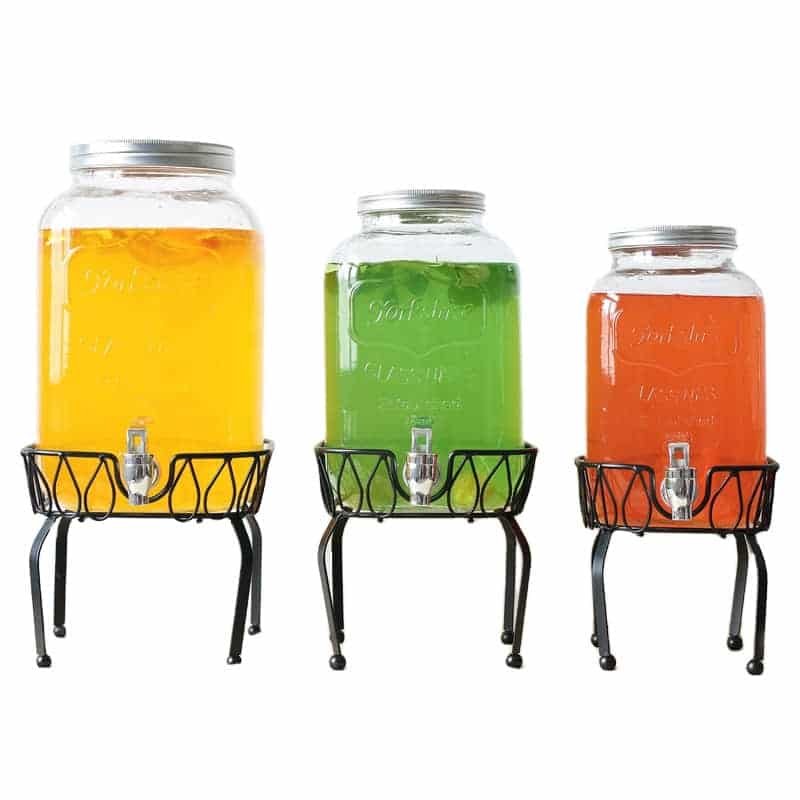
Yes. Your quotation covers the 4 L and 8 L dispensers as an assembly: jar, tinplate or aluminium lid, tap and metal stand. The tap seat and its washer decide whether your unit drips on a counter, so we supply and test the parts together.
A size, a mouth or the lid your customer already owns is enough to start. Our housewares desk answers with pricing, finishes and loading data inside 24 hours.
Matching running-mould designs, pricing and loading data come back within 24 hours.
The running moulds that fit get found before anyone talks about tooling.