
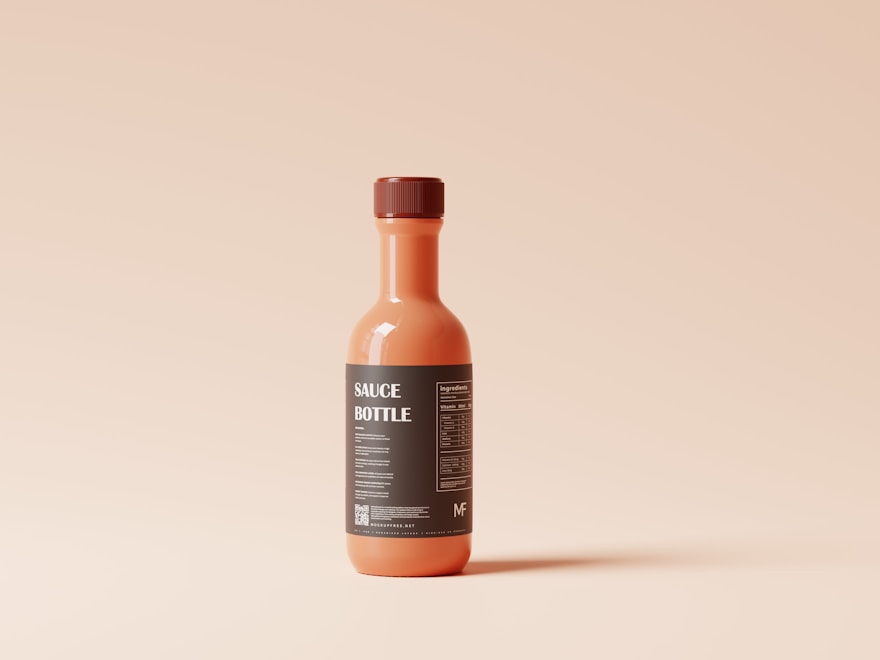
If one neck size deserves to be called the workhorse of food and beverage glass, 38 mm is it. Wide enough for your line to fill quickly and pour cleanly, narrow enough to cap on a standard head, and stocked by every closure supplier in your market. Three different 38 mm finishes exist, and only the full designation tells them apart for you.
What 38-400 Is
The 38 is the thread diameter of your neck in millimetres, measured across the outside of the thread. The 400 is the GPI series: one full thread turn on a short finish, the shallowest of the continuous-thread family. A cap in the same designation carries a matching thread and a skirt cut for that height.
The shallow series lets your cap seat quickly, which suits your high-speed filling. Because it is only one turn, the cap relies on its liner rather than on thread engagement, so your liner choice carries more weight here than on a taller finish.
 One turn of thread and a liner. Your fill and its temperature decide which liner goes inside the cap.
The Three 38 mm Finishes, and Why the Suffix Matters
| Finish | Closure it takes | Where you meet it |
|---|---|---|
| 38-400 | Continuous-thread screw cap, dispensing cap, child-resistant cap. | Packer bottles, sauces, syrups, honey bears, dressings. |
| 38 mm lug | Metal twist-off vacuum cap, quarter turn. | Hot-filled sauces and syrups holding a vacuum. |
| 38 mm DBJ | Tamper-evident snap-and-screw cap for dairy, beverage and juice. | Juice and milk bottles in North America. |
All three measure 38 mm across and none of their caps interchange. Your purchase order carries the suffix, and the finish drawing on your SGSBOTTLE quotation carries the T, E, I, S and H figures your closure supplier checks against.
The 6 Packs Where You Meet It
Your packer bottles and cylinder rounds for tablets, powders and dry goods. Honey bears and squeeze bottles, where the wide neck lets a thick fill move. Your syrup and sauce bottles, often under a flip-top. Salad dressing bottles with a pourer insert. Larger dropper packs over 60 ml (2 oz), where an 18 mm neck is too narrow for your dip tube. And industrial jugs outside food, where your same finish appears in plastic at much larger volumes.
In the SGSBOTTLE range the size runs from about 100 ml to 1 L (3.4 to 34 oz), across sauce, oil, storage and juice shapes formed at 14 lines in Shandong and Xuzhou.
What Decides Your Liner
One thread turn means the seal happens almost entirely at the liner, so the fill and the temperature come before anything else. A hot fill at 85 °C needs a compound that stays sealed as the headspace contracts. A cold-filled oil wants a liner that resists the oil rather than absorbing it. Your carbonated fill does not belong on a 400 finish at all, because one turn cannot hold pressure.
Torque follows from the same place. Your closure supplier publishes an application and removal range for 38 mm, and the number to check is removal torque on a bottle that has been through your own process, because that is the figure your consumer meets.
What Goes on Your Enquiry
The suffix, the fill and its temperature, the cap you run today, and the capping head. SGSBOTTLE engineers return the stock bottles whose finish drawing that cap fits, with the drawing attached, so nothing about your line changes when the glass does.