

A twist-off cap holds a jar shut with four or six short lugs and a vacuum, and the whole system is standardised: ISO 9100 in a dozen parts, the Cetie GME 20 data sheets in Europe, and the GPI 2030 series in North America. That standardisation is worth money to you, because your cap and your jar can come from different continents and still mate.
How a Lug Finish Works, and Why Your Hot Fill Needs It
The finish carries short thread segments rather than a continuous spiral. The cap carries matching lugs pressed into its skirt. A quarter turn engages them, and a gasket inside the cap seals against the glass. The vacuum holds your jar shut afterwards, and the turn only engages the lugs: your product goes in hot, the headspace steam condenses as it cools, and atmospheric pressure clamps the cap down. Your jar holds that vacuum rather than the quarter turn.
A lug jar therefore sounds when it opens, and a jar that has lost its vacuum is a jar your retailer sends back. Your sealing surface has to be perfect for it. All 14 SGSBOTTLE lines in Shandong and Xuzhou inspect the finish and sealing surface of every jar before packing, because a chip a millimetre wide is a slow leak on your shelf.
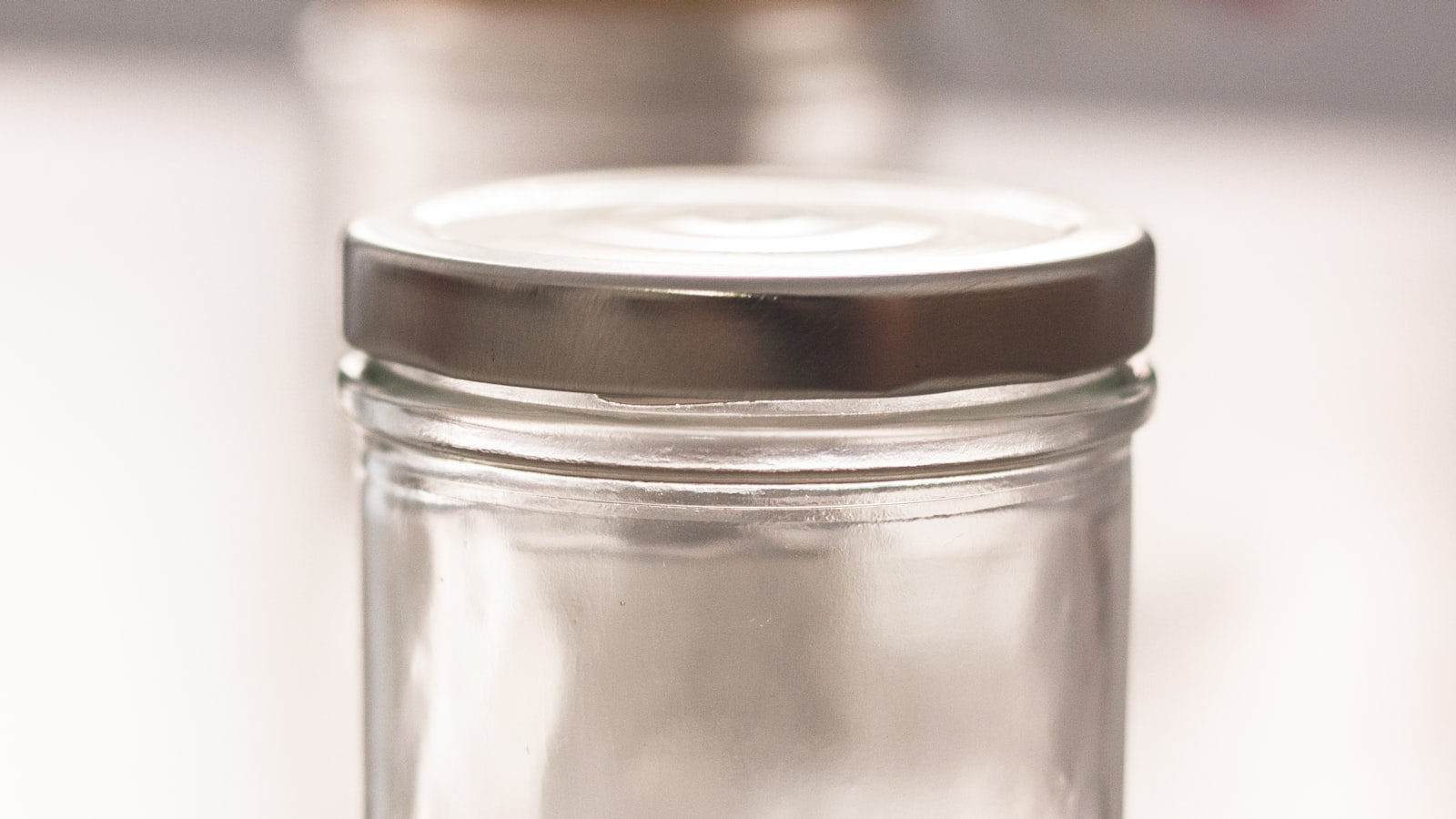 A quarter turn engages the lugs. The vacuum underneath keeps your jar shut for two years, and SGSBOTTLE forms lug jars on 14 lines in Shandong and Xuzhou.
The Sizes, and What Each One Carries
| Nominal size | Depth classes published | Where you meet it |
|---|---|---|
| 27, 30, 33 mm | Regular, medium. | Small sauce and dressing bottles. |
| 38 mm | Regular, medium. | Hot-sauce and syrup bottles, small honey jars. |
| 43, 48 mm | Regular. | Sauce and condiment jars, small spice and honey jars. |
| 53, 58 mm | Regular; 58 also deep. | Honey, jam and mustard jars, and the deep 58 for a high-vacuum hot fill. |
| 63, 66, 70 mm | Regular and deep. | The core preserve, sauce and pickle sizes for your line. |
| 77, 82 mm | Regular. | Wide-mouth pickle, chutney and large preserve jars. |
| 89, 100, 110 mm | Regular. | Catering and food-service jars. |
ISO 9100 splits into a part per size group, so 63, 66 and 70 regular sit in one document and the deep versions of the same three in another. Your quotation names the size and the depth class together, and your cap order repeats both.
Regular or Deep: What Changes for Your Line
Depth is finish height, and height is thread engagement. A deep finish gives the cap more to grip and holds a stronger vacuum, which matters when your fill goes in over 80 °C and cools in a tunnel. A regular finish is shorter, cheaper in glass and more widely stocked in caps.
Two things follow. Your capping head has to suit the depth, because the chuck reaches a set distance down the finish. And your cap supply narrows as depth goes up: 70 deep is a real product, and it is not on every distributor's shelf. Cap availability in your own market is worth checking before you specify it.
Lug Count, and the Detail That Catches People
Four lugs is the common count and six appears on larger sizes. The two are not interchangeable even at the same diameter, so a 70 mm four-lug cap does not run on a 70 mm six-lug jar. The drawing settles it, and so does a physical cap on a physical jar.
The other detail is the gasket compound inside the cap. A plastisol gasket for a hot fill, a different compound for a cold fill, and another again for a product with oil in it. Your closure supplier picks from the product and the temperature, so name both on the enquiry alongside the finish.
What Goes on Your Enquiry
The lug size and depth class, the fill and its temperature, the cap you run today if you have one, and the capping head. With those four, SGSBOTTLE engineers return the stock jars whose finish drawing your cap fits, with the drawing attached, so your closure supplier confirms the match before a container is committed. SGSBOTTLE runs food jars from 45 ml to 8 L (1.5 oz to 270 oz) at 14 lines in Shandong and Xuzhou, and the finish decides which of them are open to you. A 12 oz (355 ml) jar and a 32 oz (946 ml) jar can share one 70 TO cap.