
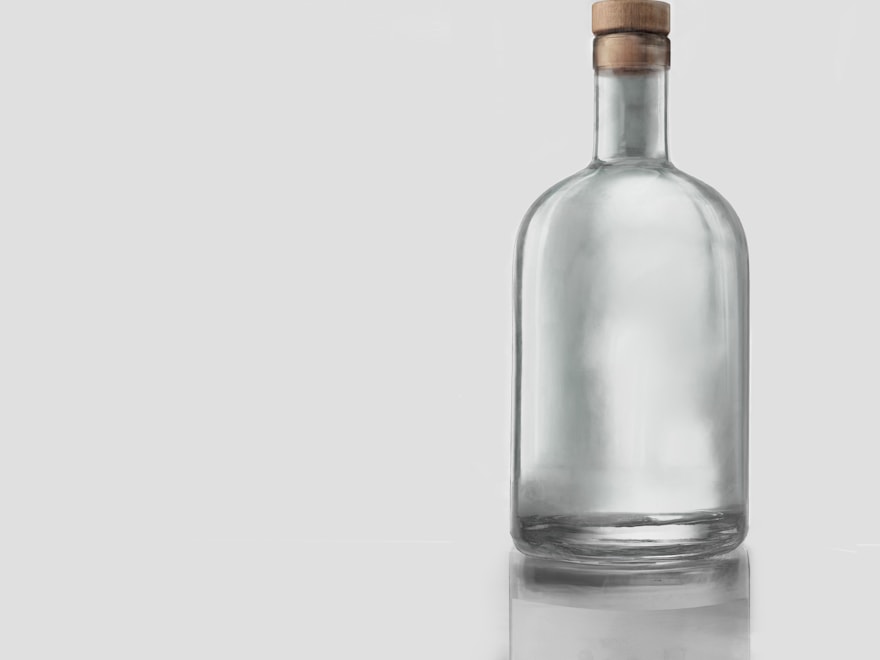
A threaded finish is a mechanism. Your cork mouth is a hole. That sounds simpler, and it explains why spirits necks go wrong more often than screw necks: nothing about a plain bore forgives a tolerance drifting.
The 2 Bar-Top and Cork Families
| Family | What closes it | Standard | Where you meet it |
|---|---|---|---|
| Bar-top | T-shaped stopper: cork or synthetic shank under a head. | Cetie GME 51.00, for 27, 29 and 34 mm necks. | Spirits, liqueurs, fortified wines and musts. |
| Cork mouth | A driven cork under a tamper-evident capsule. | EN 12726, 18.5 mm bore; Cetie GME 50.02 for a 17.5 mm entry. | Still wine, and spirits sold under a capsule. |
The GME 51.00 sheet covers all three parts at once: the glass finish, the stopper and the overcap. That matters to you because you buy the three from different suppliers and they have to agree on the same millimetre.
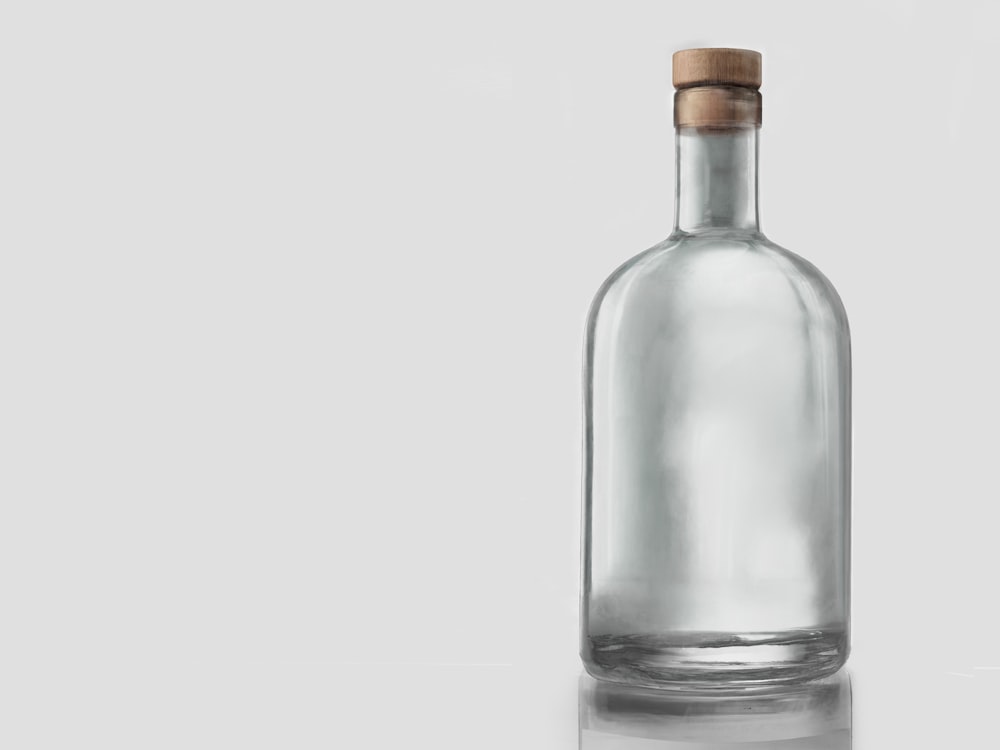 The shank sits in the bore under compression, and the tolerance on that bore is what sets your pull force.
Why the Bore Is the Whole Specification
Your cork or synthetic shank seals by compression: it goes in oversize and pushes back against your glass. Everything you care about follows from how much oversize there is.
Too little and your stopper creeps out under temperature swings, or lifts when a pallet is jolted. Too much and your consumer cannot open the bottle, or the head shears off the shank at the glue line. Neither failure shows on a photograph, and both show in your returns report.
So a bar-top enquiry carries three numbers rather than one: the nominal bore, its tolerance, and the depth of parallel bore before it opens out. Your stopper supplier reads all three, and a physical sample of the stopper in a physical bottle is the test that ends the conversation.
Neck Sizes in mm, and What They Signal to Your Buyer
27 mm is the common spirits neck across most of the trade, 29 mm gives your stopper a more substantial head and a slightly larger pour, and 34 mm turns up on heavier presentations and some liqueurs. Your choice reads on shelf as much as it functions: a wide head on a heavy bottle is part of how a premium spirit communicates before anyone lifts it.
Your capsules and shrink sleeves follow from the same figures. An overcap sized for a 29 mm neck does not sit on your 27 mm one, and GME 51.00 covers the overcap alongside the finish for that reason.
The Grade That Travels With Your Cork Finish
Your bar-top bottles are clear far more often than not, and a heavy base is part of the format. Standard flint shows a green cast through thick glass, so extra-flint is the usual specification, and a custom mould in it starts at 12,000 pieces against 50,000 in standard flint. SGSBOTTLE forms super flint spirits glass on 7 lines in Shandong, which is where a bar-top project of yours would run.
Formats follow the trade: 200 ml, 500 ml, 700 ml and 750 ml (6.8, 17, 24 and 25 oz) cover most of it, with 1 L (34 oz) for travel retail. Shandong runs all of them on 7 lines.
What Goes on Your Enquiry
The stopper you have chosen or its drawing, the neck diameter, the format in ml and oz, and whether a capsule goes over the top. SGSBOTTLE engineers return the bottles whose bore that stopper suits, with the drawing attached, and decorated samples come off the sample mould when the shape is yours alone.