
Buyers specify the bottle, then the cap, and treat what sits inside the cap as a detail. That liner is the only part of the package touching both your product and your glass, and most leak complaints end there.
What Your Liner Is Actually Doing
A glass sealing surface is flat but never perfect. It carries the faint texture of the mould, a parting line, and tolerance from one cavity to the next.
The liner absorbs all of that. Clamping force from your cap presses it against the finish until it deforms into every low spot, and the seal is complete only when the last one closes. A liner too hard to deform leaves a channel, and a liner too soft flows out of the way under the same torque.
The 5 Materials Compared
| Material | Where it fits | What limits it |
|---|---|---|
| Pulp with poly facing | Dry goods, tablets, powders, spices. | Absorbs moisture at the cut edge, so it suits dry fills only. |
| Foamed polyethylene | Water, juice, general liquids at ambient temperature. | Oils and solvents creep into it, and hot fill softens it. |
| Plastisol | Twist-off lugs and vacuum jars, applied as a fluid and cured. | Needs heat to cure and a metal cap, so it rules out plastic closures. |
| Foil laminate for induction | Sauces, oils, supplements, anything needing a visible seal. | Requires an induction head on your line and a foil-compatible cap. |
| Expanded polyethylene | General purpose, thicker and more forgiving than foam. | Adds height inside the cap, which changes your torque window. |
Why Your Fill Decides the Choice
Match the liner to what the product does chemically, not to what it looks like. Oils creep, alcohols dissolve, acids attack, and hot fills soften anything thermoplastic while the headspace is still moving.
Carbonated products add pressure that tries to lift the closure, so those need a liner that recovers rather than takes a set. SGSBOTTLE quality engineers in Shandong run seal trials with your own fill before a first order, because a liner that passes on water can fail on a 330 ml (11 oz) hot-sauce bottle.
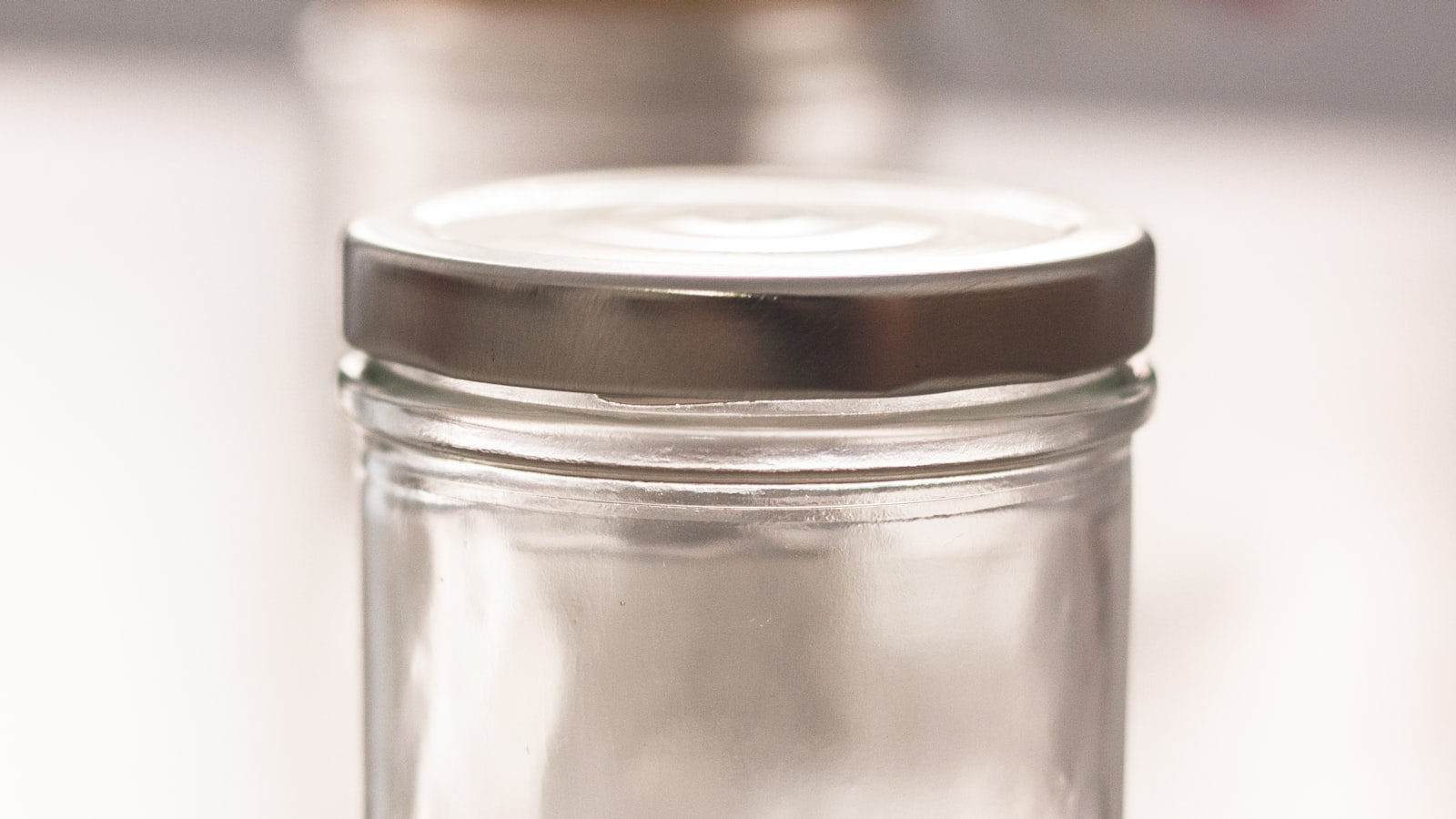 Plastisol is flowed into the lid and cured. SGSBOTTLE supplies matching glass from 14 lines in Shandong and Xuzhou.
How the Liner Changes Your Torque
Liner thickness and hardness move the numbers your capping head needs. A thicker or softer liner compresses further, so the cap turns more before the seal completes, and your removal torque decays differently over the first days.
That is why a liner change is never only a purchasing decision. Retest torque whenever the liner changes, even if the cap, the finish and the glass are identical, and record the result against the new material.
What to Put on Your Specification
Name the liner material, its thickness, its facing, and the food-contact declaration that covers it. Add the fill it was tested against and the torque window that came out of that test.
That short block turns an assumption into a term. It also gives your next supplier something to match, so a 750 ml (25 oz) bottle you re-source elsewhere seals the same way it did before.
What Goes on Your Enquiry
Your fill and its temperature, the format in ml and oz, the closure you use or want, and whether the product is carbonated or hot filled. SGSBOTTLE comes back with the liner recommendation, the seal-trial result and the torque window for your order.