

A dispensing closure carries more engineering than the bottle under it. It has valves, a spring, a chamber and a tube, and every one of those parts assumes something about your glass.
The 4 Mechanisms and What They Deliver
| Mechanism | How product leaves | What it suits |
|---|---|---|
| Lotion pump | A measured slug through a wide nozzle. | Creams, serums and soaps, on your 250 ml (8 oz) and larger bottles. |
| Fine-mist sprayer | An atomised cone through a swirl chamber. | Toners, fragrances and anything applied over a wide area. |
| Dropper | Counted drops from a pipette with a bulb or a screw plunger. | Oils, tinctures and dosed products where volume must be visible. |
| Trigger sprayer | A stream or spray under finger leverage. | Household products in larger formats that need range and force. |
What Your Bottle Has to Give the Mechanism
Three dimensions decide whether a dispenser works. The finish designation, which sets the thread the closure screws onto. The neck height, which positions the seal. And the internal depth of your bottle, which sets the dip tube length.
Internal depth is the one buyers forget. It is not the external height, since the base thickness and any punt take room away, and SGSBOTTLE puts the internal figure on the drawing for glass from 14 lines in Shandong and Xuzhou.
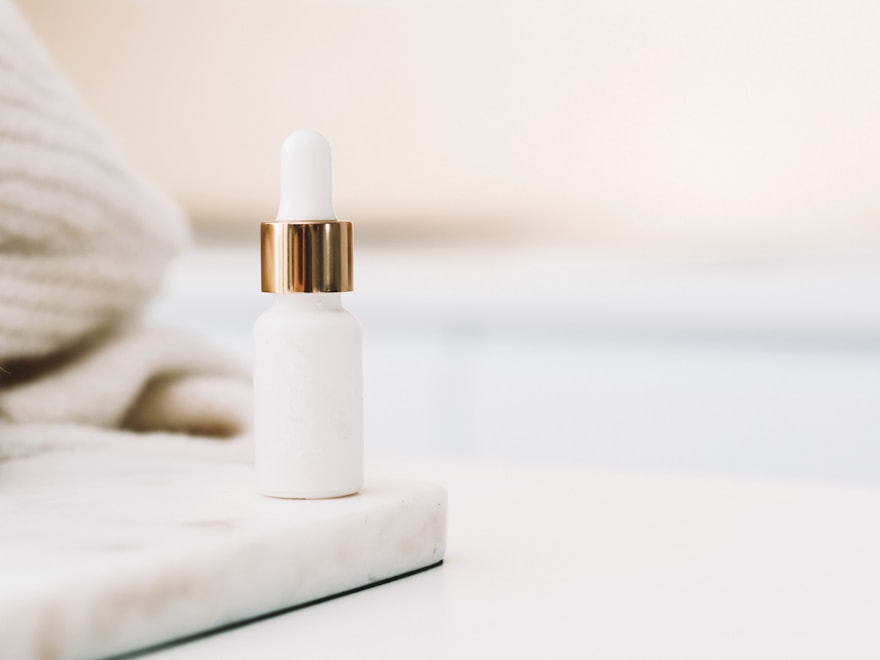 Thread, neck height and internal depth all belong on the drawing. SGSBOTTLE gauges them on 14 lines.
Why Compatibility Testing Uses Your Real Product
A mechanism is rated for viscosity, and viscosity changes everything. A pump that moves a light toner will stall in a thick cream, and a sprayer tuned for water gives a coarse spatter with an oil.
Chemistry matters too. Essential oils attack some gasket materials, alcohol swells others, and a dip tube can craze after weeks in contact. Send your real formulation for the trial, and hold a filled sample rather than judging the first stroke.
Priming, Lock-Down and Everything Your Customer Meets
A pump needs several strokes to prime, and a customer who gets nothing on the first press assumes the pack is faulty. A lock-down actuator prevents leaks in transit but frustrates anyone who does not realise it twists.
Both belong in your decision, not in your instructions. Choose a mechanism your customer can operate without reading anything, and test it on a filled 100 ml (3.4 oz) bottle the way it will arrive.
What Goes on Your Enquiry
Your formulation and its viscosity, the format in ml and oz, the finish you have or want, and the dose your product needs. SGSBOTTLE comes back with the matching bottle, the internal depth for your dip tube and samples for a dispensing trial.