
An induction head does its work in under a second, without touching your bottle and without heating it. The result is a membrane welded across the finish that has to be torn to open, and the whole process depends on a surface that costs nothing to get right.
What Happens Inside Your Cap
The cap is applied with a foil laminate liner sitting against the glass. As your bottle passes the coil, an alternating field induces current in the aluminium, and the foil heats almost instantly.
That heat melts a polymer layer bonded to the underside of the foil, and the layer flows against your sealing surface. The bottle passes on, the polymer sets within seconds, and the foil is now welded to the glass.
The 3 Things the Process Needs From Your Bottle
| Requirement | Why it matters | What happens when it is missing |
|---|---|---|
| A flat sealing surface | The molten polymer bridges only what it touches. | A gap under the foil, which shows as a leak or a failed seal test. |
| A clean finish | Dust, product splash or glass fines sit between foil and glass. | Weak spots that peel first and open in transit. |
| Consistent finish height | The cap sets how hard the foil presses onto the glass. | Uneven bonds across your cavities, all from the same run. |
Why Cap Torque Belongs in the Recipe
The field does the heating, but the cap does the pressing. Without enough torque the foil sits fractionally away from your sealing surface, and the polymer sets before it makes proper contact.
Too much torque distorts the liner or the closure and gives you an uneven ring. Set torque and induction power together, then hold both, since changing one alone moves the result on a 330 ml (11 oz) bottle as much as changing the foil.
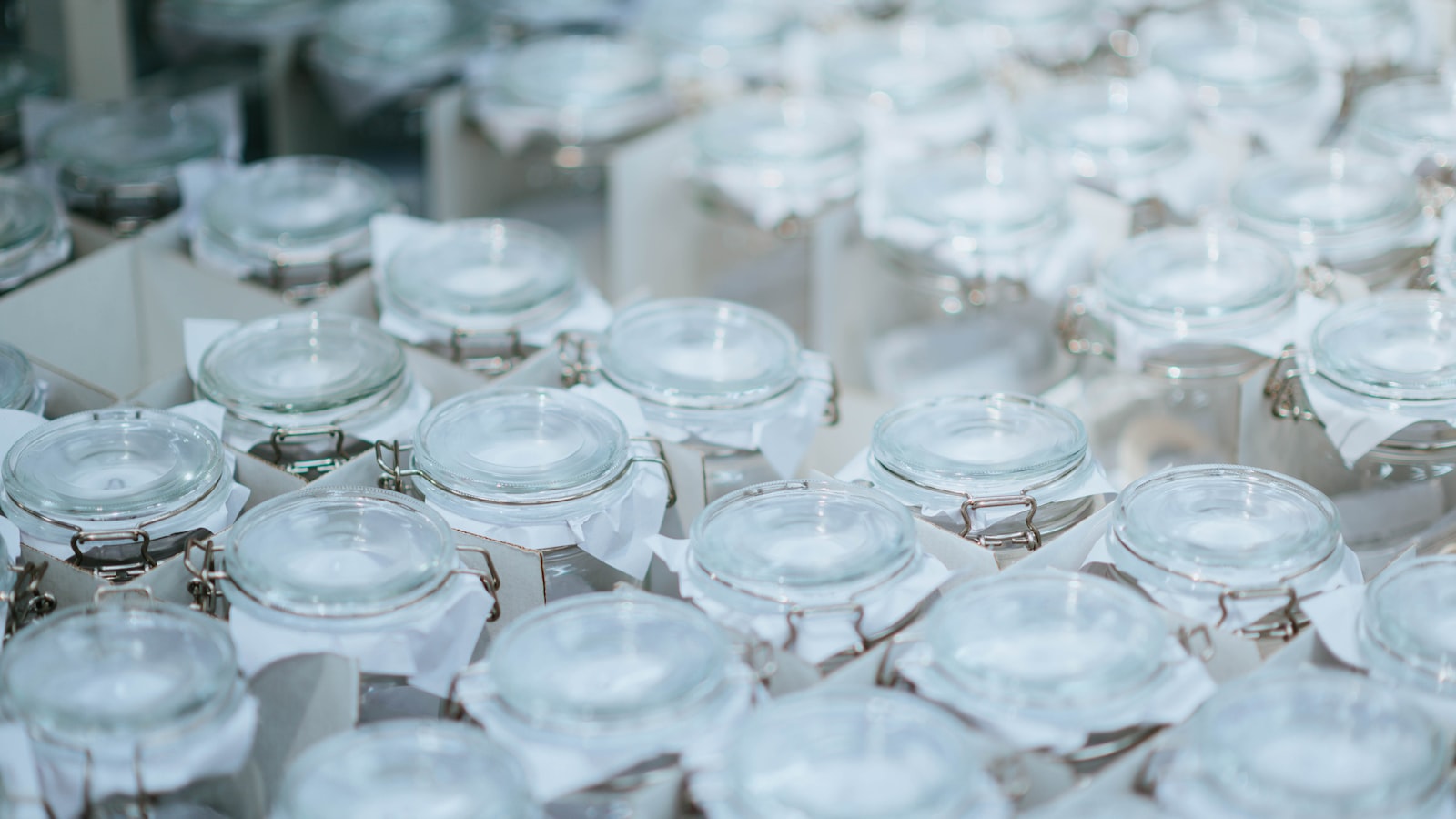 The weld is only as good as the ring under it. SGSBOTTLE inspects finishes across 14 lines in Shandong and Xuzhou.
How Your Seal Gets Tested
Three checks cover it. A peel test pulls the foil off and shows whether the polymer transferred evenly around the full ring, which is what a good bond looks like.
A dye or vacuum leak test finds channels the eye misses. And a simple squeeze on a filled 500 ml (17 oz) bottle tells you quickly whether the membrane holds pressure. Run all three when you set up, then keep the peel test as your routine check.
Where Glass Gives You an Advantage
Plastic containers soften near the seal under a strong field, which limits how much power a line can use. Glass does not care: it stays dimensionally stable, so your process window is wider and your bond is more consistent across a long run.
That stability is worth knowing when you compare packaging. SGSBOTTLE runs sealing-surface gauging on all 14 lines in Shandong and Xuzhou, and the finish tolerance sits on the drawing your closure supplier works from.
What Goes on Your Enquiry
Your fill, the format in ml and oz, the cap and foil liner you use, and your line speed and induction head. SGSBOTTLE comes back with the finish drawing, its sealing-surface tolerance and bottles for a seal trial.