
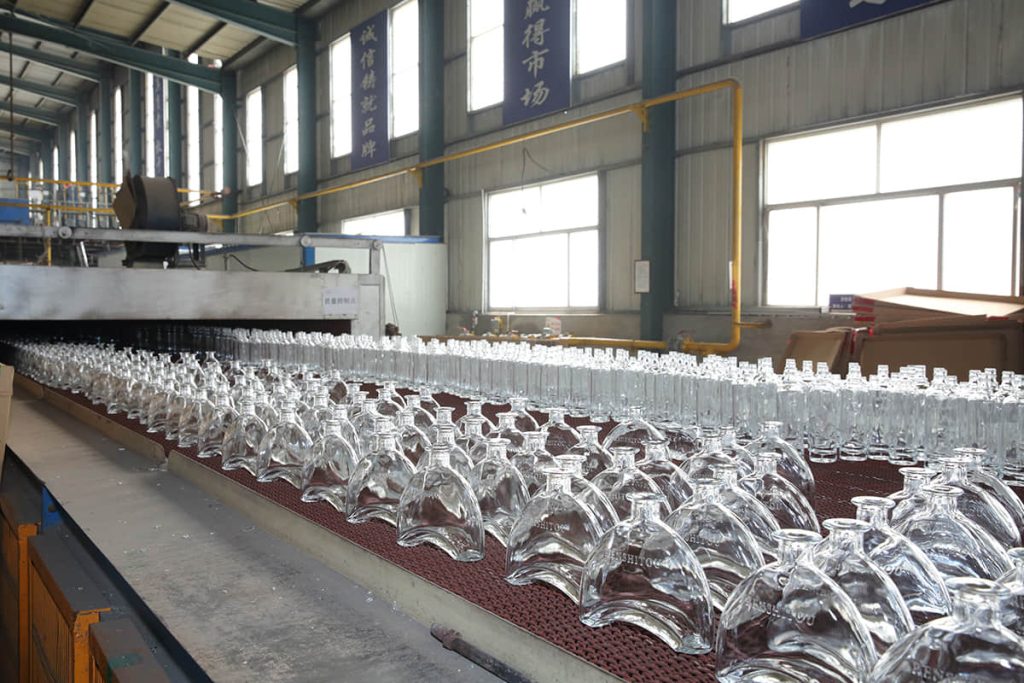
Your mould quotation names a price per cavity. Your delivery date comes from how many of them run at once, which is why cavity count is a scheduling decision as much as a tooling one.
How Your Output Is Built
An IS machine holds several sections, and each section carries your mould set. Every section forms bottles on its own cycle, so the machine produces cavity count times cycles, continuously, for as long as the campaign runs.
That structure means output scales in steps rather than smoothly. Adding cavities adds a fixed block of production, and the useful question is how many blocks your annual quantity actually needs.
The 3 Numbers Behind Your Delivery Date
| Number | Where it comes from | What it does to your schedule |
|---|---|---|
| Cavity count | How many moulds your project pays for. | Sets how many bottles each machine cycle produces for you. |
| Cycle time | Bottle weight, shape and the cooling the glass needs. | A heavy 750 ml (25 oz) bottle cycles slower than a light one. |
| Campaign window | The furnace colour schedule at the base running your order. | Decides when your production can start at all. |
Why Heavier Bottles Cut Your Run Rate
Cycle time follows cooling. A heavy bottle holds more heat, needs longer in the mould and longer in the lehr, so the same cavity count yields fewer bottles per hour.
That links weight to delivery, not only to freight. A premium 500 ml (17 oz) bottle at high glass weight will take longer to produce than a lightweight one, and the difference belongs in your planning rather than in a surprise.
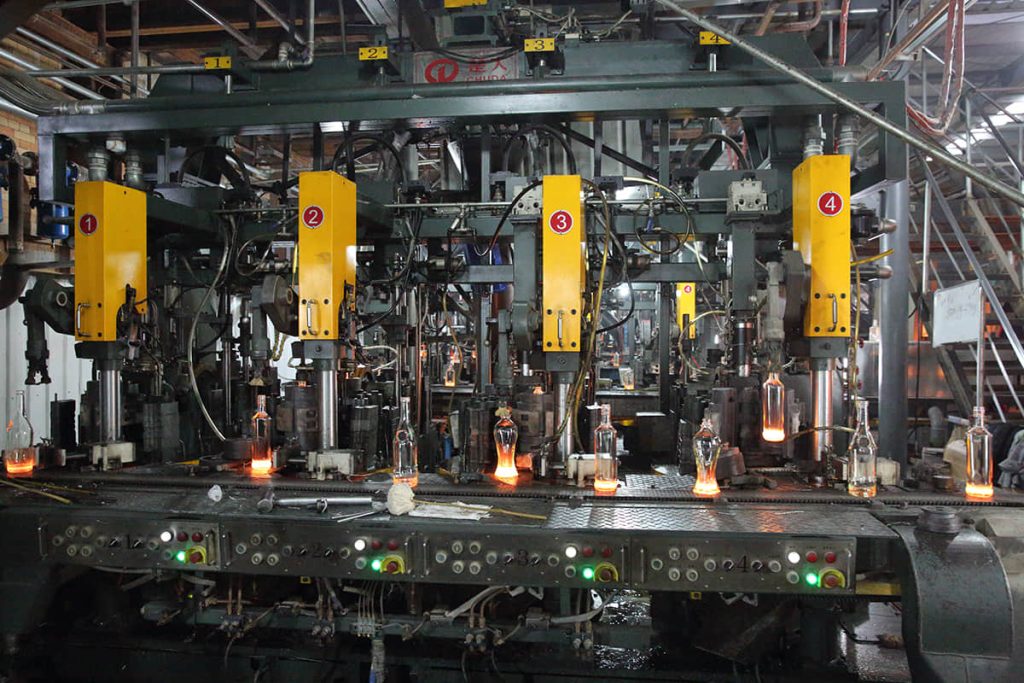 Each section runs your cavities in parallel. SGSBOTTLE operates 14 lines across two sites in Shandong and Xuzhou.
Matching Tooling to Real Volume
Buy cavities for the volume you have, not the volume you hope for. A partial set gets your launch made and keeps money available for stock, decoration and freight.
Extension is straightforward afterwards. SGSBOTTLE cuts later moulds to the same approved drawing, so a second batch matches the first, and engineers schedule the additional cavities into the next campaign.
Where Adding Cavities Stops Helping
Every machine has a ceiling. Once your cavity count fills the sections available, more tooling produces nothing extra, and the constraint moves to the machine and the furnace behind it.
Ask which site and which line your order runs on before buying tooling. SGSBOTTLE quotes the line alongside the cavity count, across the 14 lines in Shandong and Xuzhou, so your tooling matches the machine that will run it.
What to Confirm Before You Commit
Three things. The cavity count in the quotation, the expected output per day on the nominated line, and the campaign window your colour and grade fall into.
Together those give you a delivery date you can defend. A 330 ml (11 oz) order promised without them is a guess, however confident it sounds.
What Goes on Your Enquiry
Your approved drawing, the capacity in ml and oz, your glass weight and colour, and your annual and first-order quantities. SGSBOTTLE comes back with the cavity count, the line, the output rate and the campaign window for your project.