
Tooling starts wearing on the first cycle and never stops. Nothing about that is a fault, but it does mean the bottle you approve at sampling and the bottle you receive in month nine come from steel in different condition.
The 4 Signs Your Tooling Is Wearing
| What you see | Where it comes from | What it costs you |
|---|---|---|
| A thickening seam | Parting faces losing their edge on the blow mould. | Cosmetic quality, and a ridge under your label. |
| Softening embossing | Engraved detail rounding off in the cavity. | Your logo losing definition run by run. |
| Closure fit drifting | Neck ring wear, the fastest wearing part of the set. | Torque moving, and seal failures your line did not cause. |
| Weight creeping up | Cavity dimensions opening as the surface erodes. | Freight cost, and a bottle outside your agreed tolerance. |
Why the Neck Ring Goes First
Your neck ring forms the tightest feature in the whole bottle, at the moment the glass is hottest. That combination wears it faster than any other part of the set.
Its wear shows in your closure fit rather than in anything visible. SGSBOTTLE holds spare neck rings against running projects across the 14 lines in Shandong and Xuzhou, so a worn ring gets swapped rather than tolerated.
Cavity Numbers Turn a Complaint Into a Repair
That small number on the base of your bottle identifies which cavity made it. When a defect repeats, sorting your rejects by cavity separates a tooling problem from a process one in an afternoon.
A failure on one cavity means a mould to repair. The same failure across every cavity means something upstream, and knowing which you have saves a week. Ask for cavity marking on any custom project, since it costs nothing to add.
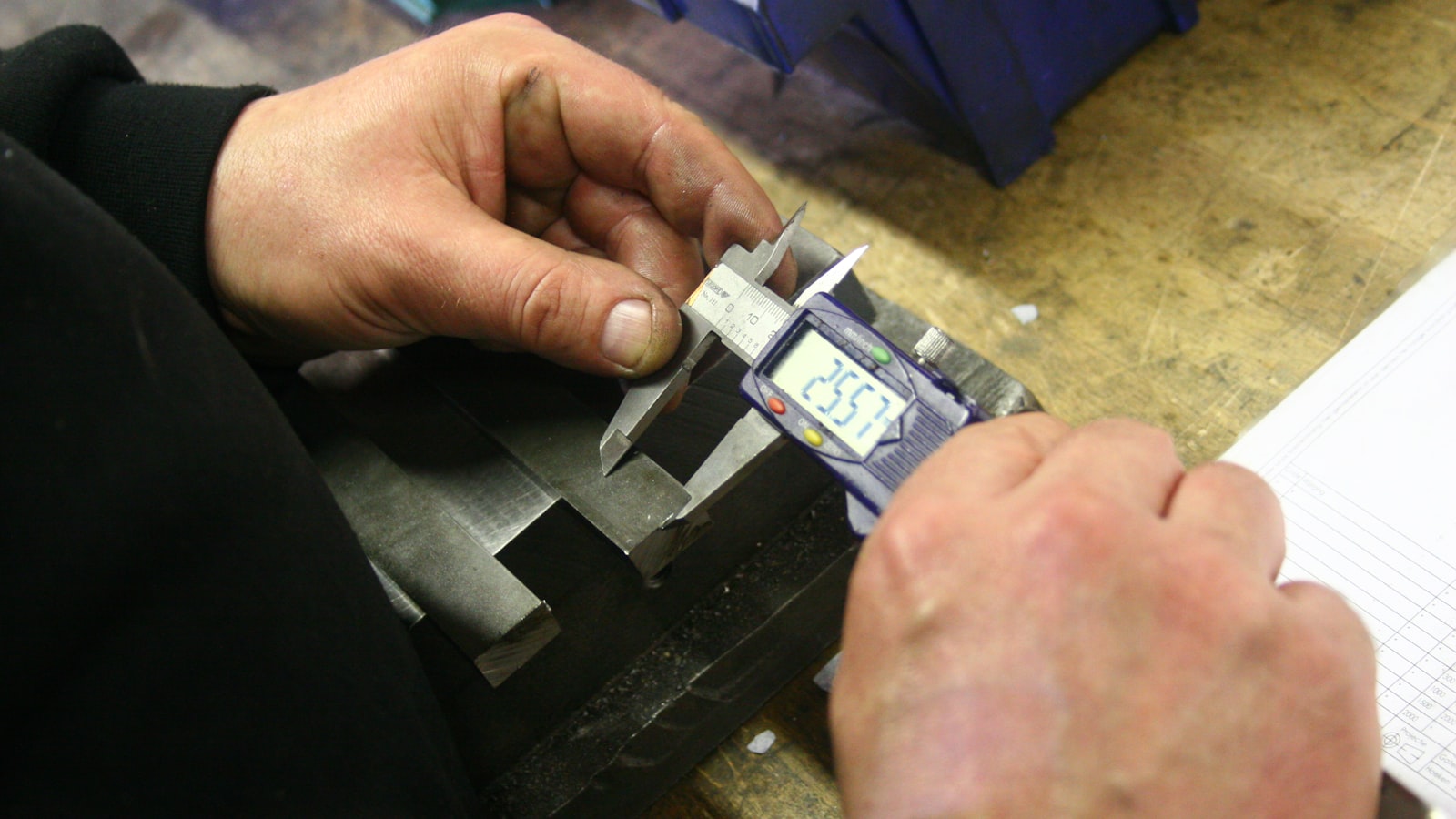
 Cold-end gauging catches drift early. SGSBOTTLE inspects across 14 lines in Shandong and Xuzhou.
What a Maintenance Schedule Should Cover
Three things belong in it. Routine cleaning and polishing of cavity surfaces between campaigns, since glass leaves deposits that print onto later bottles.
Then measurement of critical dimensions against your drawing, so drift gets caught before your tolerance is breached. And a spares policy for neck rings and bottom plates, which are the parts you will need first on a 750 ml (25 oz) programme running for years.
Questions to Settle at Quotation
Four of them, all cheaper to answer early. Who pays for routine maintenance. Who pays when a cavity fails. How many cycles the quotation assumes. And what happens when the set reaches the end of its life.
Get the answers with the tooling quotation. SGSBOTTLE states them alongside the cavity count, so your 330 ml (11 oz) programme has a maintenance plan rather than an argument waiting to happen.
What Goes on Your Enquiry
Your approved drawing, the capacity in ml and oz, your annual volume and the years you expect the design to run. SGSBOTTLE comes back with the tooling quotation, the maintenance terms and the spares held against your project.