
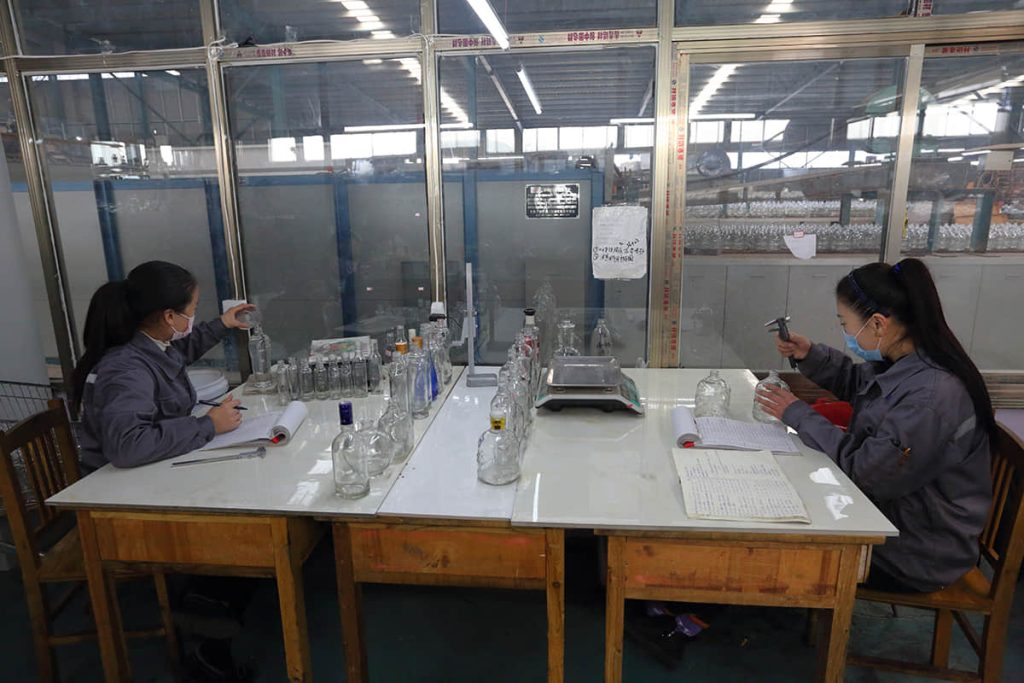
An inspection agency does not improve your goods. It tells you what is in the cartons before the container doors close, which is the last moment a problem costs less than a claim.
The 5 Things an Agency Actually Checks
| Check | What the inspector does | What it protects for you |
|---|---|---|
| Quantity | Counts cartons and verifies pieces per carton. | Against short shipment and mixed-count pallets. |
| Workmanship | Samples to your AQL and classifies every defect found. | Against a lot that fails your agreed quality level. |
| Dimensions and capacity | Measures against your approved drawing. | Against a bottle that will not run on your line. |
| Packaging and marking | Checks cartons, partitions, labels and shipping marks. | Against damage in transit and customs delays. |
| Loading | Watches the container being stuffed and sealed. | Against loading damage and a wrong container number. |
What SGS, TUV and Bureau Veritas Have in Common
All three send a trained inspector who works to your brief, not to their own idea of quality. That brief is the whole value, since an agency reports against what you asked for and stays silent about everything else.
Differences between them are mostly commercial: coverage, booking lead time and price. SGSBOTTLE hosts agency inspections across the 14 lines in Shandong and Xuzhou, and the report goes to you rather than to us.
Why Your Brief Decides the Report
A vague instruction produces a vague report. If your brief says to check quality, the inspector applies a default AQL and a default level, and you get an answer to a question you did not ask.
Name the AQL for each defect class, the inspection level, the drawing to measure against, and the packing specification. A 330 ml (11 oz) order briefed that way comes back with numbers you can act on.
 The factory checks every bottle; the agency samples the packed lot. SGSBOTTLE runs 14 lines in Shandong and Xuzhou.
What an Inspection Cannot Do for You
It cannot test what needs a laboratory. Food-contact migration, lead and cadmium, internal pressure and annealing grade all need equipment an inspector does not carry.
It also cannot fix timing. A pre-shipment inspection happens after production, so a problem found there means rework or delay rather than correction, which is why your sample approval and in-process checks matter more.
How to Combine It With Factory Data
Ask for both and read them together. SGSBOTTLE supplies cold-end inspection data and test results with a 750 ml (25 oz) order, and the agency report tells you whether the packed goods match that record.
Agreement between the two is the useful signal. A gap between them is worth a conversation before the container sails rather than after.
What Goes on Your Enquiry
Your format in ml and oz, your AQL and inspection level, the drawing to measure against, and your packing specification. SGSBOTTLE comes back with the inspection window, the factory data you will receive and the loading date to book against.