
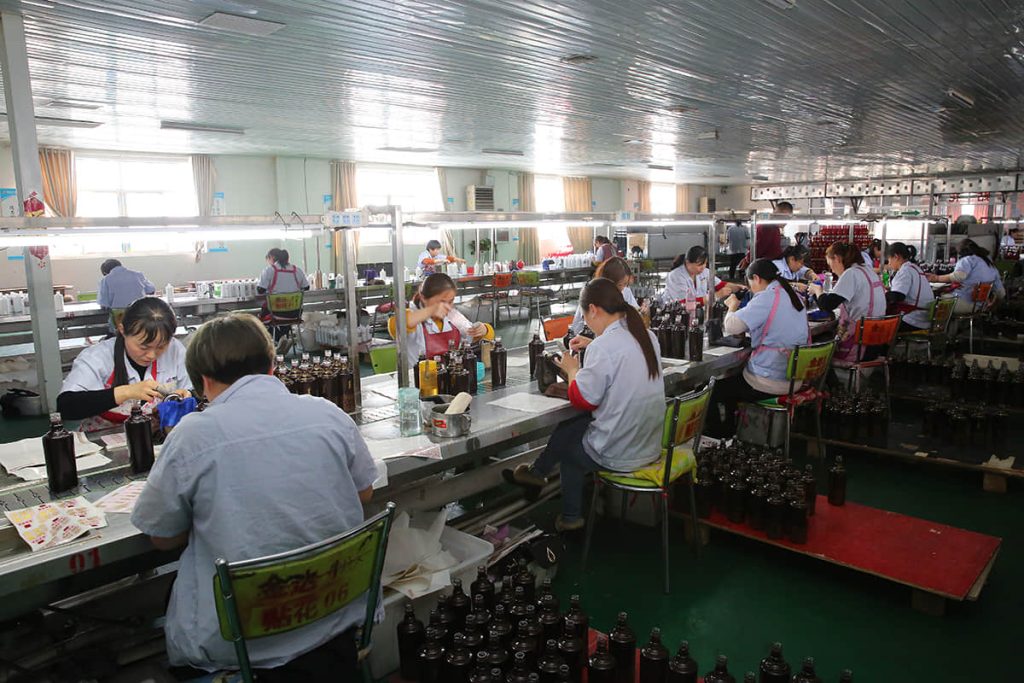
A customs broker, a retailer's compliance desk and a supplier auditor each ask for a different piece of paper, and each piece proves something narrower than its name suggests. Six documents cover almost every request you meet as a glass packaging buyer, and SGSBOTTLE holds all 6 on file at its Shandong office and sends them with your quotation on request. What each one certifies, who issues it, and what it does not cover, in turn.
Which Request Gets Which Document
| Who asks | What they ask for | The document that answers |
|---|---|---|
| A supplier auditor | Proof that your factory runs a controlled process with traceability. | ISO 9001:2015 certificate. |
| A US food, beverage or spirits brand | Proof your glass is safe for food contact under US rules. | SGS test report: FDA leachable lead and cadmium, pass. |
| An EU importer or private-label packer | The food-contact declaration EU law requires from your supplier. | Declaration of Compliance under EC 1935/2004, with its test data. |
| A US retailer, or a brand selling into California | Proof your product needs no Proposition 65 warning. | Proposition 65 statement and the test behind it. |
| An EU retailer who applies substance lists to packaging | Proof your packaging carries no restricted substances. | RoHS statement, alongside the 94/62/EC heavy-metals figure. |
| A buyer commissioning independent tests | A report from a laboratory whose accreditation your own market recognises. | CNAS-accredited laboratory report, or a certificate of analysis for the batch. |
ISO 9001:2015: A Certificate About the System That Makes Your Bottle
ISO 9001 certifies a quality management system: that Maidao Industry Co., Ltd, the SGSBOTTLE parent in Shandong, documents how it controls production, traces a batch back to its furnace and its date, records nonconformities and acts on them, and is audited on all of that by an accredited registrar on a fixed cycle. It says nothing about whether a particular bottle is food-safe or dimensionally right, so your audit reads it together with the test reports and the finish drawing. On the scan you check the legal entity named, the scope line, the certification body and its accreditation mark, and the validity dates; the certificate number is the one you quote back to the registrar to confirm it stands.
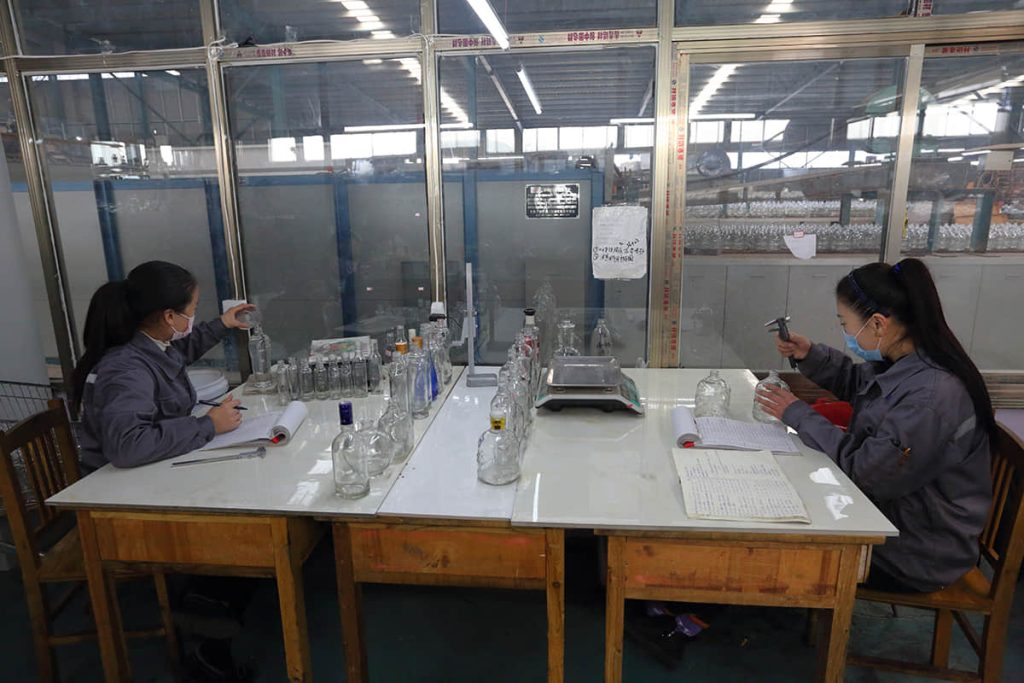 A certificate describes a process. Your audit reads it beside the measurements a laboratory takes.
The SGS Report: FDA Leachable Lead and Cadmium on Glass Jars
The US Food and Drug Administration sets the limits and the method; a laboratory runs the test; the report proves the tested item passed. SGS tested SGSBOTTLE glass jars for leachable lead and cadmium under the FDA Compliance Policy Guide, with a pass result, and that report is the document you file as a US food, beverage or spirits brand. Plain soda-lime glass leaches next to nothing, so the test is really about your decoration: a food-contact test looks at fired colour, a decal or a print within the lip-and-rim area, and a decorated bottle carries its own report. The scan you receive names the sample, the method, the limits and the verdict, and a report on a different item from the one you buy is a report you query.
EC 1935/2004 and the Declaration of Compliance
Regulation (EC) 1935/2004 is the EU framework for every material that touches food: it requires that a material does not transfer anything into food in quantities that endanger health or change the food, and that the supplier can trace it. Glass has no EU-specific measure of its own, so the supplier's Declaration of Compliance rests on the framework itself, on the good-manufacturing-practice rules of Regulation (EC) 2023/2006, and on test data, for glass a lead and cadmium migration test. A declaration names the supplier, the article, the material, the regulation, the intended food-contact use and the test data behind it, and it is signed. Your EU importer files the declaration, and you ask to see the test report when you want to know the signature has data behind it.
California Proposition 65
Proposition 65 is a California law on chemicals the state lists as causing cancer or reproductive harm: a product that exposes a consumer to a listed chemical over the safe-harbour level has to carry a warning. For glass packaging the exposure in question is lead and cadmium in exterior decoration, the colour on your printed bottle or jar, and the test that settles it is a lead and cadmium analysis of the decorated surface. A Proposition 65 statement covers the product sold into California; a plain bottle needs no warning, and a decorated one needs the test that says so. If you sell nationwide through a California retailer, you treat it as a US requirement.
RoHS, and the Packaging Regulation That Actually Applies
RoHS is Directive 2011/65/EU, the EU restriction on hazardous substances in electrical and electronic equipment. It does not apply to packaging in law, but many retailers apply its substance list to everything they stock, so a RoHS statement is a common request and SGSBOTTLE supplies one against Directive 2011/65/EU. The rule that does apply to packaging in the EU is Directive 94/62/EC, whose Article 11 limits the sum of lead, cadmium, mercury and hexavalent chromium in packaging to 100 ppm, and your EU packaging compliance desk actually wants a heavy-metals test to that limit. With both on one sheet, your compliance desk stops writing.
CNAS Laboratory Reports and the Certificate of Analysis
CNAS is the Chinese accreditation body for laboratories and a signatory to the ILAC mutual recognition arrangement, so a report from a CNAS-accredited laboratory carries the same recognition with the accreditation bodies of your own market as one from an accredited lab at home. When you commission your own tests, on capacity, on thermal shock, on internal pressure or on migration, you receive a CNAS report, and it names the laboratory, its accreditation number, the method and the verdict. A certificate of analysis is narrower: a per-batch document stating that the batch you receive met the specification, with the measured values, and it comes on request for that batch.
What a Real Certificate Carries
Every document you file shares the same anatomy: the name of the issuer and its accreditation, a certificate or report number, the legal entity it was issued to, a scope or a sample description that matches what you are buying, the method or the standard, a verdict, and dates. A scan missing any of those is a scan you send back. SGSBOTTLE sends the six as scans with your quotation on request, and the originals and the laboratory's own verification route are available for your auditor; the certificate wall on the Buyer Resources page shows the badges, and your compliance desk works from the documents themselves.