
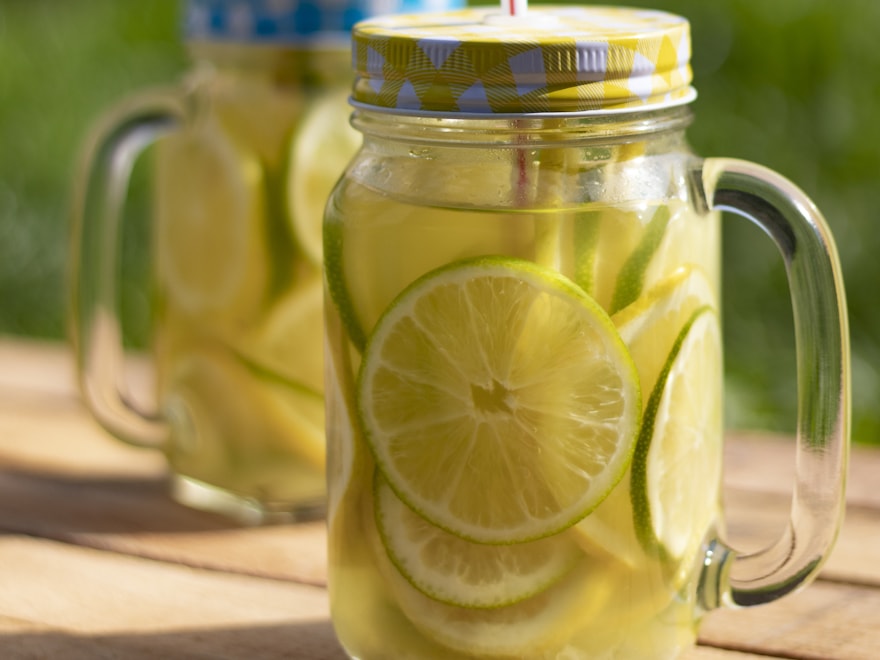
The mason jar is the rare piece of glass packaging where the consumer knows the finish by name. Regular mouth or wide mouth is a decision your buyer makes in the aisle, and behind those two words sit two published finishes that decide which lids, which fillers and which recipes your jar suits.
The Two Finishes
| Finish | Nominal thread diameter | Opening | Where you meet it |
|---|---|---|---|
| 70-450G | About 70 mm. | Around 2.4 in. | Regular mouth: jams, sauces, pickles, drinks, storage. |
| 86-450G | About 86 mm. | Around 3.0 in. | Wide mouth: whole fruit, ferments, dry goods, anything you spoon. |
The 450 series is a continuous thread cut for a two-piece closure: a flat lid with a sealing compound around its rim, held down by a separate screw band. The band takes the torque and the lid takes the vacuum, so your customer reuses the band and replaces only the lid. SGSBOTTLE forms both finishes on 14 lines across Shandong and Xuzhou.
 A two-piece lid seals on the flat rim. Your band only holds it there while the vacuum forms.
Why the G Is on the Drawing
Glass and plastic versions of the same nominal finish are not identical. The glass drawings sit a few hundredths of a millimetre from the plastic chart, enough that a lid made to one and a jar made to the other seals unevenly. The G marks the glass version of the 450 finish, and it belongs on your purchase order as well as your drawing.
That difference is small enough to pass a hand test and large enough to fail a vacuum after a week. Your lid supplier reads the T, E, I, S and H figures from the finish drawing on your SGSBOTTLE quotation and confirms the match on paper.
What the Finish Decides for Your Line
Three things follow from the mouth size. Your filler nozzle has to clear the opening, and a wide mouth is what lets you drop whole fruit or a ferment weight into the jar. Your capping head is set for one thread diameter, and switching between 70 and 86 mm means a change part. And your carton geometry changes: wide-mouth jars are squatter for the same capacity, so a case of 12 stacks differently and your pallet count moves with it.
Capacity itself is a separate decision. SGSBOTTLE runs mason and storage jars from 50 ml to 8 L (1.7 oz to 270 oz) across 14 lines in Shandong and Xuzhou, and both finishes appear across much of that ladder, so a range can hold one mouth size from your smallest jar to your largest.
Where the 450 Series Stops
A two-piece lid is not the only closure a mason-style jar takes. Plastic storage caps, pour lids, sprout screens and drinking lids all mount on the same 70-450G finish, which is part of why the format has survived. What none of them changes is the seal itself: a flat glass rim, a compound, and a vacuum. A chipped rim vents whatever sits on top of it, so every SGSBOTTLE jar gets its finish and sealing surface inspected before packing.
What Goes on Your Enquiry
The mouth size, the capacity in ml and oz, the lid you already stock, and the fill with its temperature. With those, SGSBOTTLE engineers return the jars whose finish drawing your lid fits, with the drawing attached, and a sample goes to your line before a container is committed.