

Someone will show you a study proving your packaging is the wrong choice. It may be right, and five questions will tell you whether it is answering the question you actually have.
The 5 Questions to Ask of Any Result
| Question | What it uncovers | Why it changes the answer |
|---|---|---|
| What were the boundaries? | Cradle to gate, or cradle to grave. | Freight and disposal are where glass gains and loses. |
| What was the functional unit? | Per pack, per litre, or per delivery. | Comparing per pack favours whichever holds less. |
| How many trips were assumed? | Single use, or a refill count. | Refill changes glass results more than any other factor. |
| How was recycled content allocated? | Cut-off, or an end-of-life credit. | Two accepted methods, and very different numbers. |
| Who paid for it? | The sponsor and the reviewer. | It tells you which assumptions to test first. |
Why Boundaries Decide Most Arguments
A cradle-to-gate study ends at the factory door. It captures your melting energy and your process emissions and ignores your freight, which is where a dense product carries its penalty.
A cradle-to-grave study adds transport, use and end of life. That is where infinite recyclability and refill systems appear, so your 750 ml (25 oz) bottle can look poor in one study and strong in the other without either being dishonest.
The Functional Unit Trick
A comparison should measure delivering product, not producing packs. Per bottle, a small pack always looks better, and your customer needs a fixed volume rather than a fixed number of containers.
Insist on a volume basis. Per litre delivered to a shelf is a question your business actually has, and per pack produced is not.
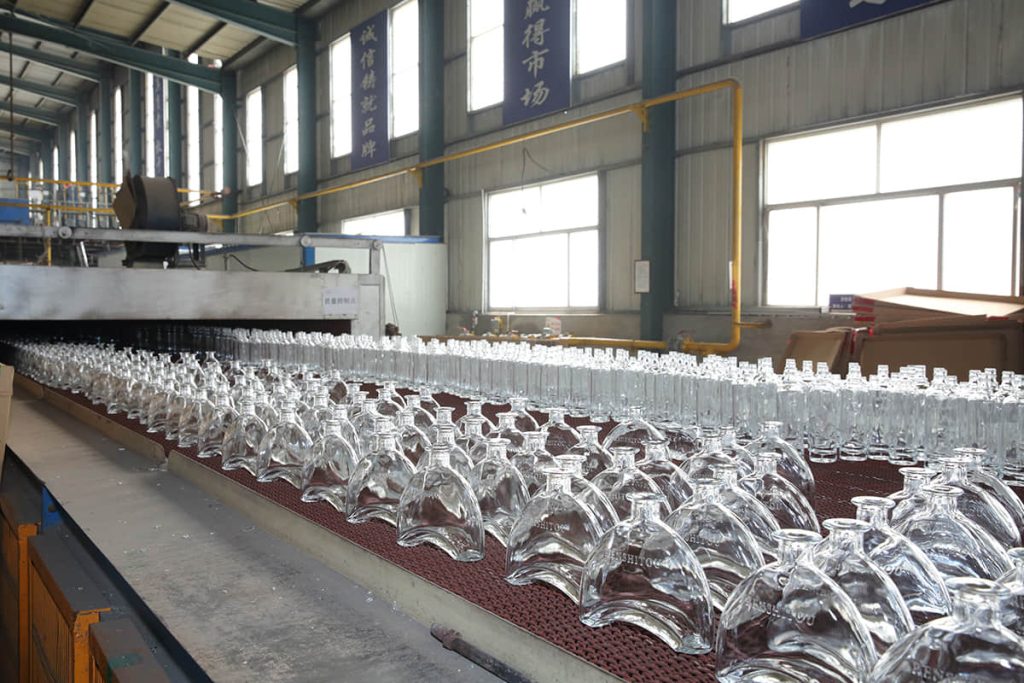 Boundaries decide the answer. SGSBOTTLE supplies weight and cullet data from 14 lines in Shandong and Xuzhou.
Why Trip Count Dominates Glass Results
Your refillable bottle spreads its manufacturing burden across every trip it makes. Assume one trip and it looks heavy; assume many and your per-fill impact falls sharply.
So a study's trip assumption is worth more scrutiny than its headline. Ask what count was used and whether your own market's return rate supports it, because a 330 ml (11 oz) refillable in a working deposit scheme behaves nothing like the same bottle in a market without one.
Allocation, and Why Two Honest Studies Differ
Recycled content can be credited to your product or to the one that supplied the material. Both methods are accepted and they give you different answers.
Neither is a trick, and mixing them is. Check that your comparison used one method throughout, since applying a generous rule to one material and a strict one to another produces whatever conclusion was wanted.
What to Ask Your Supplier For
Three inputs rather than a conclusion. Your bottle weight, the cullet position for your colour, and the packed weights for your freight calculation.
With those you can test any study against your own case. SGSBOTTLE provides all three for glass from the 14 lines in Shandong and Xuzhou, so your assessment uses your own numbers rather than an industry average.
What Goes on Your Enquiry
Your format in ml and oz, your colour, your annual volume, your markets and whether the pack is refilled. SGSBOTTLE comes back with the weight, the cullet position and the packed weights your assessment needs.