
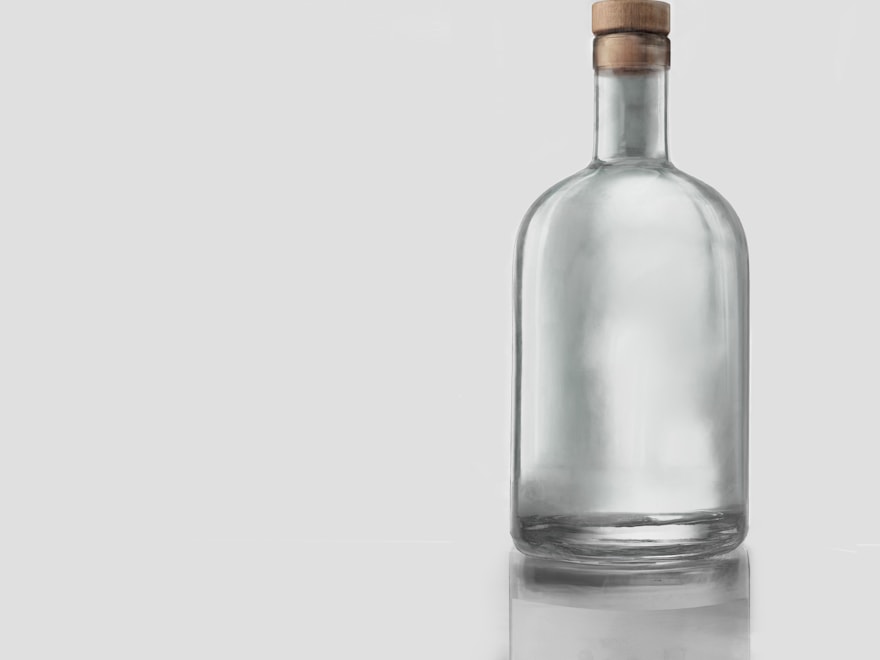
Your litre bottle converts to 33.81 US fluid ounces, a number nobody puts on a front label. The metric figure is the one your market recognises, and the conversion matters mainly when your specification crosses an ocean.
The Conversion and Its Near Neighbours
| Format | US fluid ounces | Where you meet it |
|---|---|---|
| 750 ml | 25.4 oz | Your wine and spirits standard, the global default. |
| 946 ml | 32.0 oz | A US quart, close enough to your litre to confuse. |
| 1000 ml | 33.8 oz | Your spirits value tier, duty free and mixers. |
| 1750 ml | 59.2 oz | Your large North American spirits format. |
Why Your Litre Competes With 750 ml
Both sizes are permitted for spirits in major markets, so your choice between them is commercial rather than regulatory. A litre reads as better value on a shelf and a 750 ml reads as the standard.
Your channel usually decides it. Duty free and value tiers favour the larger format, while your premium listings stay at 750 ml, and SGSBOTTLE quotes production tooling on a 700 to 750 ml basis so your comparison starts from a common reference.
 Your channel decides the format. SGSBOTTLE tools projects for 14 lines in Shandong and Xuzhou.
What the Extra 250 ml Costs Your Pallet
Your litre bottle carries more glass and more product than a 750 ml one, so your pallet weight rises on both counts. Glass reaches the container payload limit before it fills the cube, so that weight is what caps your load.
Plan the load rather than assuming it. SGSBOTTLE gives the packed weight and the piece count with the loading plan for glass from the 14 lines in Shandong and Xuzhou, so your forwarder books against real figures.
Where the Quart Confusion Comes From
Your US quart is 946 ml and sits close enough to a litre that specifications treat them as the same. They are not, and roughly 54 ml separates them.
Write the millilitre figure down. A specification saying 1000 ml cannot be read as a quart, and it costs you four characters.
Weight Is Your Real Decision at This Size
Your glass weight at a litre ranges widely, and it is a brand choice rather than a technical requirement. A heavy bottle signals premium in your customer's hand and costs more in freight and recovery fees every year.
Ask for options. SGSBOTTLE quotes several weights against the same 1 L drawing, so you see your freight and your shelf impression side by side before you commit.
What Goes on Your Enquiry
Your product, the capacity in ml and oz, your destination markets, your target glass weight and your closure. SGSBOTTLE comes back with the stock shapes, the weight options and the pieces per container for each.