
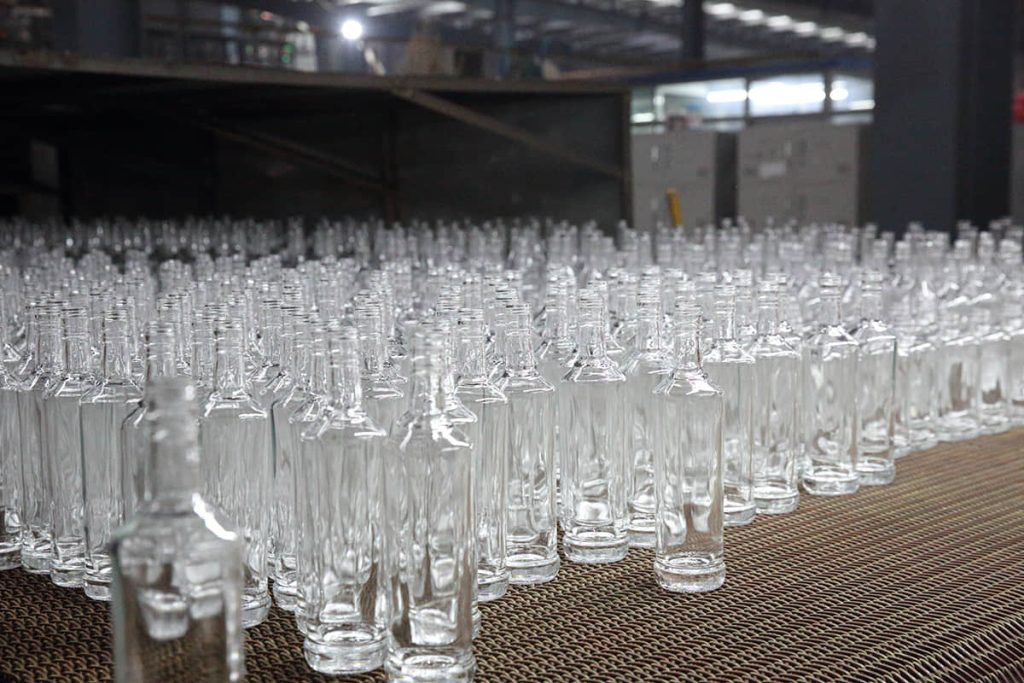
Flint is the trade name for clear soda-lime glass, and extra-flint is the same glass melted from low-iron sand. The difference is a few hundredths of a percent of iron oxide. It decides whether a 750 ml (25 oz) spirits bottle reads water-white or faintly green on the shelf, which of SGSBOTTLE's two sites forms it, and whether your custom mould starts at 12,000 pieces or at 50,000.
What Flint and Extra-Flint Glass Actually Are
Both grades come out of the same batch chemistry: silica sand, soda ash, limestone and cullet. Ordinary sand carries iron oxide, and iron in glass absorbs red light and leaves a green cast that grows with thickness. Standard flint tolerates that iron; extra-flint, also sold as super-flint or premium flint, uses washed low-iron sand and a decolourising addition so the glass stays colourless through a thick base. Nothing changes in strength, food-contact status or forming: your extra-flint bottle goes through the same inspection, annealing and EC 1935/2004 declaration as the flint one.
Where the Green Tint Shows, and Where Your Buyer Sees It
In a 250 ml (8 oz) jam jar with 2 mm walls you will not see the difference from a metre away. In the base of a 700 ml (24 oz) gin bottle, 15 mm of glass thick, standard flint turns a visible green-grey, and the punt of a heavy decanter goes further. The tint also shifts the colour of the fill: a pale gin, a white spirit or a clear perfume takes on the cast of the glass. A printed white panel over green-tinted glass never reads as pure white. Your buyer sees it at the bar, under downlights, where the base and the shoulder are the two thickest and most visible parts of the bottle.
Fills That Need Extra-Flint, and Fills That Do Not
Extra-flint earns its price where the glass itself is the presentation. That means spirits beyond the value tier, perfume and fragrance, reed diffusers, clear premium water, high-end olive oil in clear glass, and any bottle carrying a large clear area over a thick base. Standard flint is the right call for jam, honey, sauce and spice jars, juice and milk bottles, candle jars, soap and most beauty containers. There the walls are thin, the fill has its own colour or the label covers the body.
The rule SGSBOTTLE engineers apply is short. A clear fill over a thick base gets an extra-flint quotation; when either half is missing, standard flint costs you less and nobody will see why.
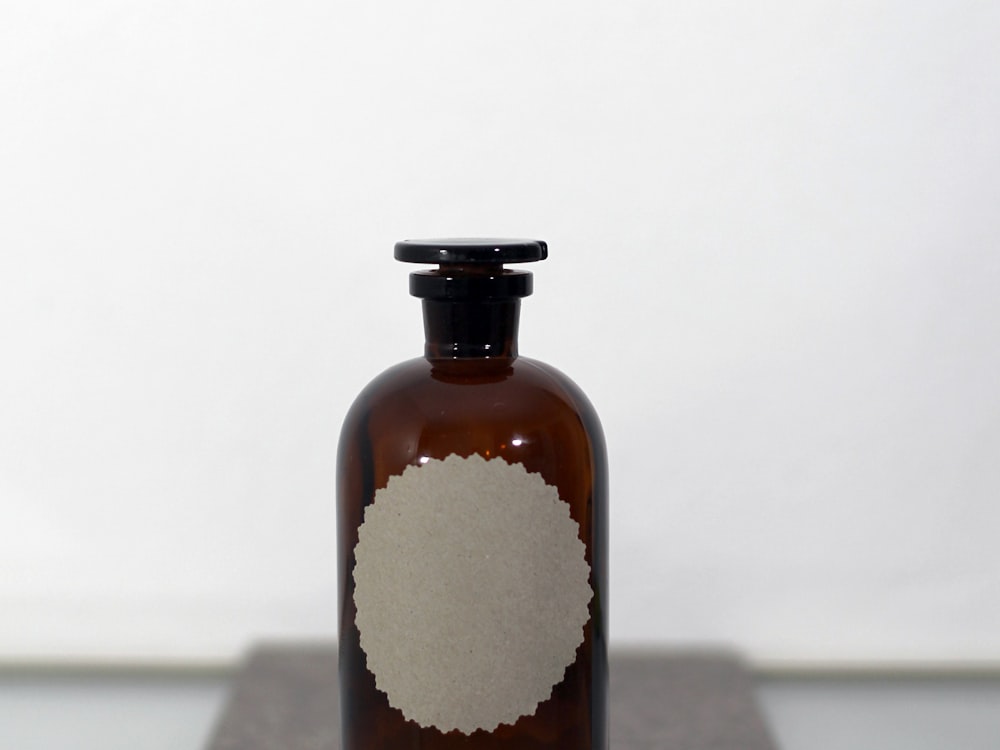 Amber absorbs the light under about 450 nm: the band that spoils your beer, your oils and your botanical extracts.
Amber, Green and the Furnace Colours
Amber comes from iron and sulphur in the melt and blocks almost all light under about 450 nm, the band that oxidises hop compounds, oils and botanicals. It is the default for beer, swing-top, dropper, soap and candle ranges, and for Boston rounds. Green, from chromium, runs from the pale green of wine to the deep antique green of olive oil bottles. It gives partial protection, plus the colour your buyer reads as oil or wine before the label is on. Cobalt blue and black are furnace colours too, on wine and Boston round designs.
A furnace melts one colour at a time, so a colour outside the stock range is a campaign with a minimum and a date. At SGSBOTTLE, Shandong runs flint, amber and super flint and Xuzhou runs flint, and the colour you specify decides which of the two sites your order goes to.
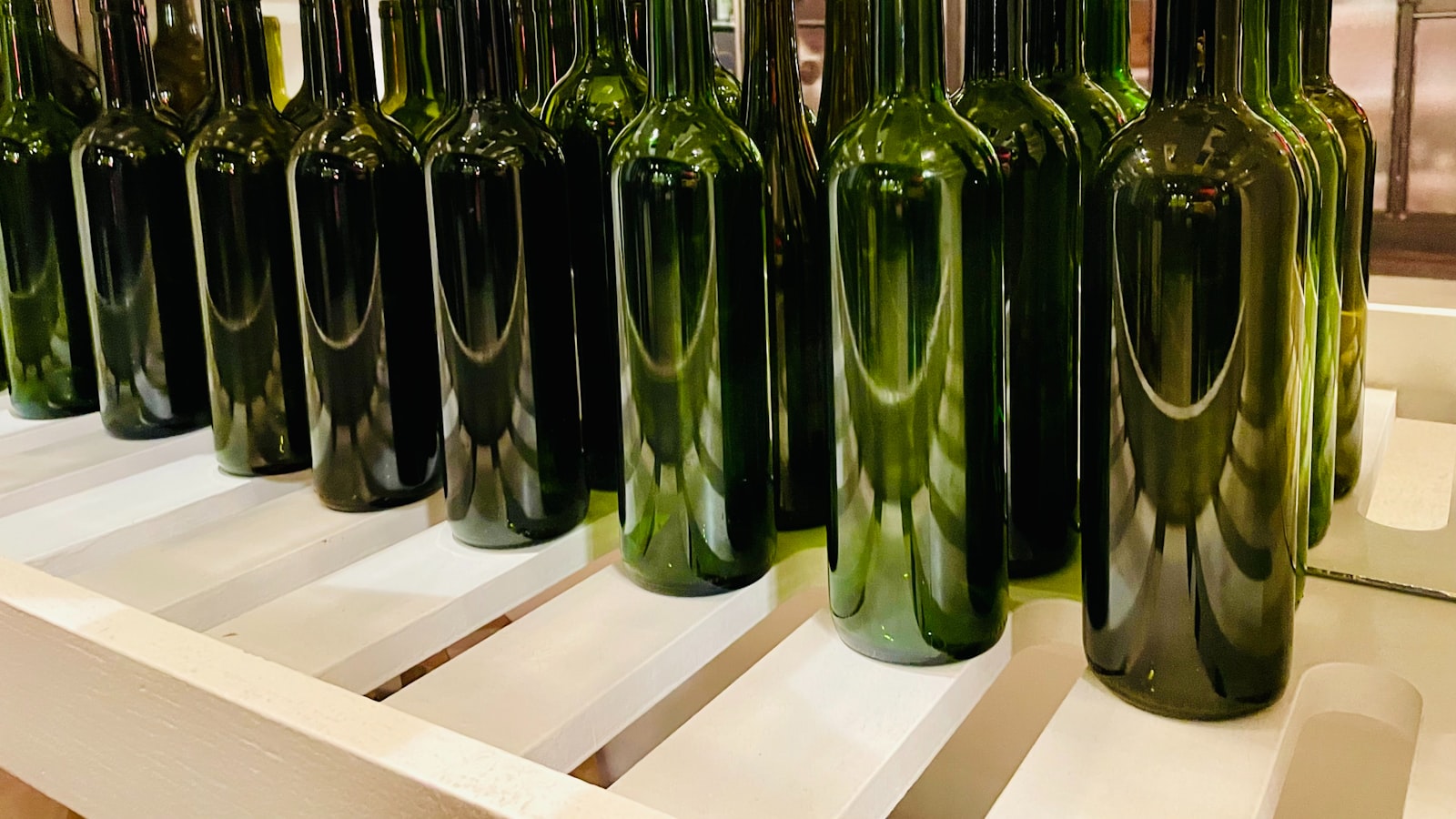 Green comes out of the melt, so your colour is a furnace campaign with its own minimum and its own date.
Coated Colours: Pink, Gold and Black Over Flint
Pink, gold, most pastels, frosted whites and many blacks on stock bottles are spray coatings over flint, cured after forming at the deep-processing plant in Shandong. A coating gives you any Pantone on a stock bottle with no furnace campaign and a decoration minimum instead of a glass one. How much light it stops depends on the coat: a full opaque coat can block light completely, while a thin one that only looks amber stops far less, so a light-sensitive fill is safest in amber glass.
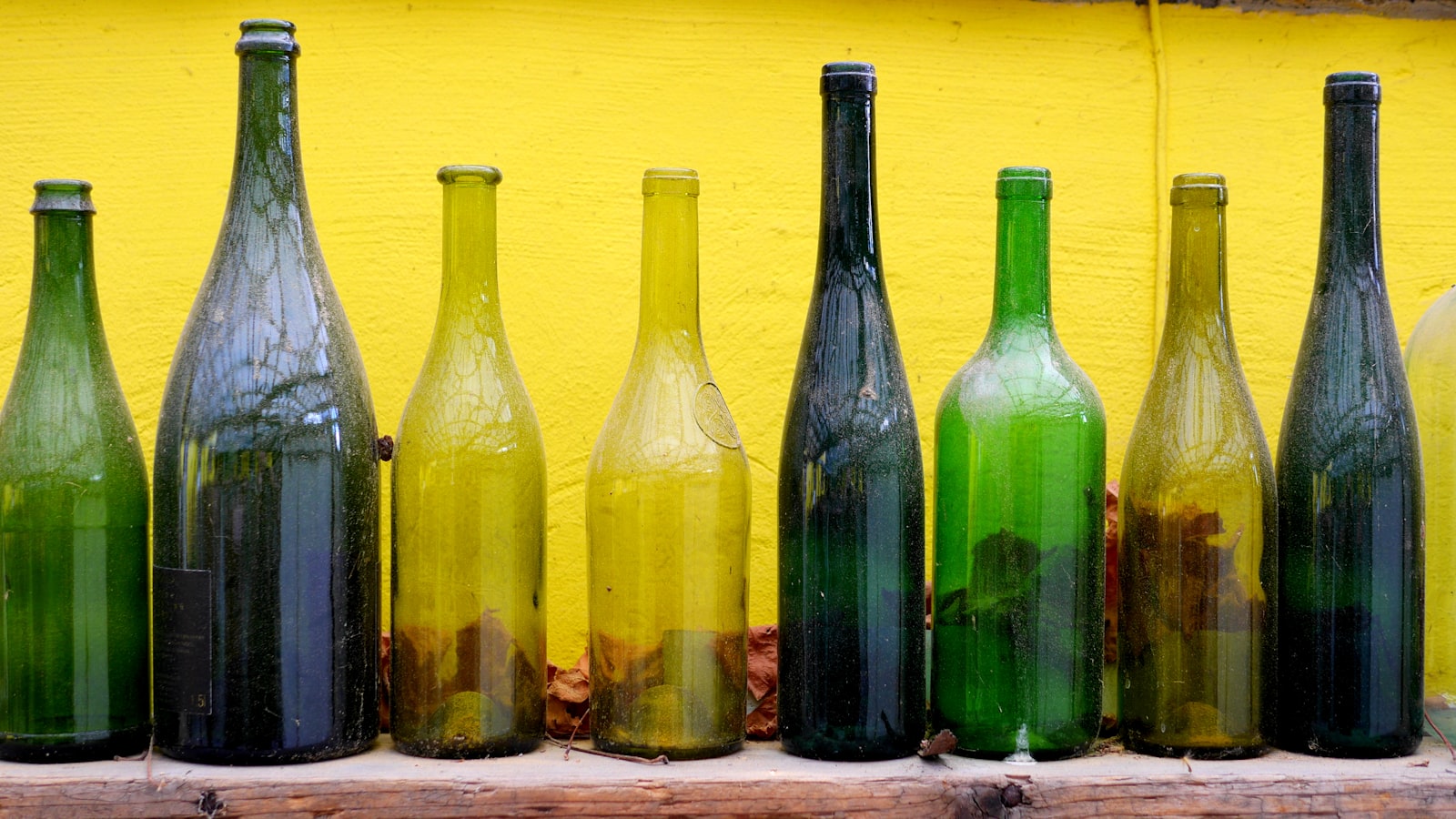 Furnace colours and coated colours read alike on a shelf, and only one of them needs a melt of its own.
What Each Grade Costs You: Base, MOQ and Price
Super flint at SGSBOTTLE runs in Shandong, on 7 lines built around spirits bottles, and a custom mould there starts at 12,000 pieces. Standard flint runs in Shandong and Xuzhou, and a custom mould in it starts at 50,000 pieces, because those lines run container-scale campaigns. On existing moulds there is no tooling minimum in either grade.
Per bottle, extra-flint costs more than flint for the same shape: the washed sand, the decolouriser and a smaller specialist furnace all sit in the price. The figure for your bottle comes with the quotation.
What Goes on Your Enquiry
Three things settle the grade on a quotation: the fill and whether it is clear, the wall and base thickness on the drawing or the stock design, and the market tier the bottle sells into. With those, the engineer picks the grade and the base, and the quotation names both, with the MOQ that follows. A sample in each grade costs you nothing on a stock design. The difference is easiest to judge with both bottles on the same table, under the light your buyer will use.