Every quote answered within 24 hours  ·  Mon–Sat 8:30–18:00 (GMT+8)  ·  sales@sgsbottle.com
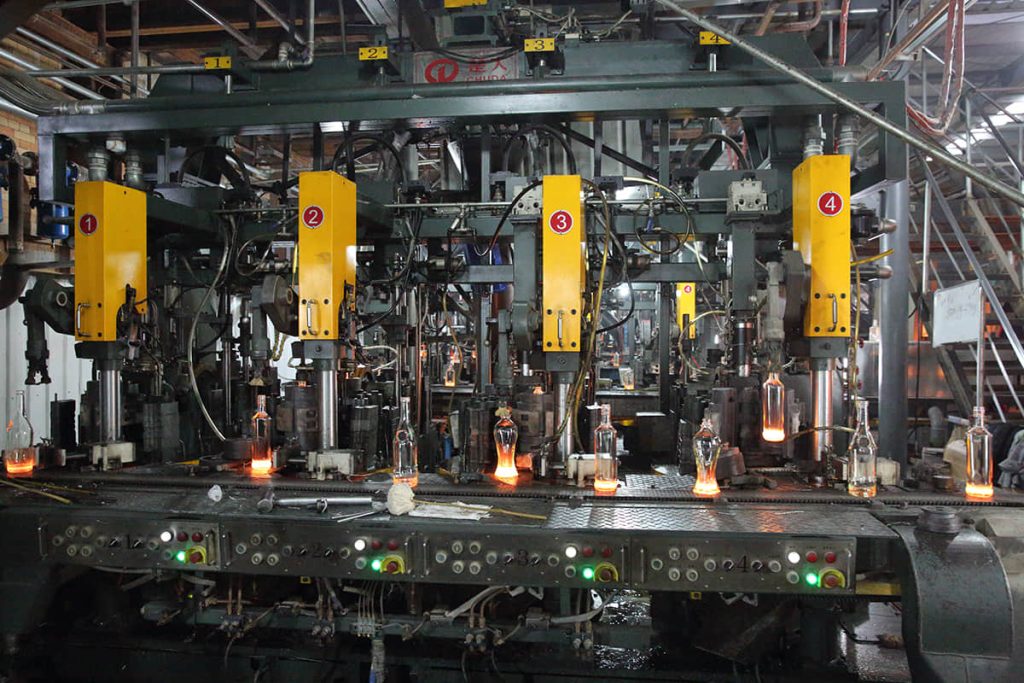
IS forming machine shaping hot glass bottles on an SGSBOTTLE production line

Glass Packaging 101

How a bottle takes shape, what flint, extra-flint and amber glass actually are, and the vocabulary your quotation and finish drawing are written in.

What You Settle Under Glass Packaging 101

Every glass bottle you buy from SGSBOTTLE starts as sand, soda ash, limestone and 20 to 30 percent cullet. Natural-gas furnaces at two sites in Shandong and Xuzhou melt it, and 14 IS lines form it.

Grade, colour and forming process decide what your bottle weighs, how clear it reads on shelf and which site can run it. Those three choices set your minimum before any mould drawing exists, and each of them gets a guide with the numbers attached, so the specification you send us is one we can quote against the first time.

Glass Packaging 101 Guides for Glass Bottle Buyers

Reference

Glass Packaging Glossary: 91 Terms Every Bottle Buyer Meets

Ninety-one glass packaging terms, annealing to twist-off, each with what it costs you when it goes wrong, from SGSBOTTLE's 14 lines in Shandong and Xuzhou.

15 min read · Reviewed September 6, 2026.
Guide

How Glass Bottles Are Made: 8 Steps From Batch to Pallet

From sand and cullet to a palletised container: the eight steps a glass bottle takes at SGSBOTTLE's two sites in China, and what each one decides for your order.

5 min read · Reviewed September 6, 2026.
Guide

Flint vs Extra-Flint Glass: Clarity, Colour and MOQ in 2026

Standard flint or extra-flint (super-flint) for your bottle: where the green tint shows, which fills need water-white glass, and the MOQ behind each grade.

4 min read · Reviewed September 6, 2026.
Guide

Glass vs PET: 6 Factors That Decide Your Packaging

Barrier, weight, shelf life, freight, recycling and shelf presence, compared for your fill. Where glass earns its cost, and where PET is the honest answer.

3 min read · Reviewed September 7, 2026.
Guide

Glass vs Aluminium Cans: 6 Trade-Offs for Your Brand

Cans win on weight, chill speed and breakage; glass wins on shelf presence, reseal and taste neutrality. Where each earns its place in your range.

3 min read · Reviewed September 7, 2026.
Guide

Amber, Green or Clear Glass: What 3 Colours Block

Glass colour is a furnace decision with an optical job. What amber, green, flint and extra-flint block, and how far a sprayed colour protects.

3 min read · Reviewed September 7, 2026.
Guide

Soda-Lime vs Borosilicate: 4 Differences That Matter

Borosilicate takes more thermal shock and costs more to melt. Where the difference is real, where it is oversold, and what container glass actually uses.

3 min read · Reviewed September 7, 2026.
Guide

Glass Batch: 5 Raw Materials and What Each One Does

Sand, soda ash, limestone, cullet and the minor additions. What each contributes to your bottle, and why the batch decides colour and grade before forming.

3 min read · Reviewed September 7, 2026.
Guide

Cullet: How 30% Recycled Glass Changes Your Melt

Cullet is crushed recycled glass fed back into the furnace. What it does to energy, quality and your recycled-content claim, and why colour separation limits it.

3 min read · Reviewed September 7, 2026.
Guide

Glass Furnaces: How 2 Sites Decide Your Colour

A container furnace melts one colour continuously for years. What a campaign is, how furnace scheduling reaches your quotation, and why 2 colours cost more than 1.

3 min read · Reviewed September 7, 2026.
Guide

The Gob and the Feeder: Where 1 Setting Fixes Weight

Molten glass is cut into gobs before forming, and gob weight becomes bottle weight. How the feeder works, and why your freight bill starts here.

2 min read · Reviewed September 7, 2026.
Guide

The IS Machine: 6, 8 or More Sections Making Your Bottle

The individual section machine forms nearly every glass container. How a section works, what sets line speed, and what it means when a quotation names 6S or 8S.

3 min read · Reviewed September 7, 2026.
Guide

Blow-and-Blow Forming: The 2-Stage Narrow-Neck Process

Compressed air settles the gob and blows the parison, then blows it again to shape. How the oldest forming process works and where it still beats the alternative.

3 min read · Reviewed September 7, 2026.
Guide

Press-and-Blow and NNPB: 2 Ways to Lighten a Bottle

A plunger spreads glass more evenly than air. How press-and-blow works, what NNPB added, and how much weight your bottle can lose without losing strength.

2 min read · Reviewed September 7, 2026.
Guide

Parison and Wall Distribution: 4 Places Glass Runs Thin

The parison decides where your glass ends up. How thickness is set before the blow mould, why thin spots cluster in the same 4 places, and what you can ask for.

3 min read · Reviewed September 7, 2026.
Guide

Glass Mould Construction: The 4 Parts and Where Seams Fall

A bottle mould is a set, not one block. What the blank, blow, neck ring and baffle each do, and why your seam lines land exactly where they land.

3 min read · Reviewed September 7, 2026.
Guide

Hot-End Coating: The 1 Layer That Keeps Bottles Strong

Tin oxide is applied seconds after forming, before the lehr. What hot-end coating does to your glass surface, why it comes first, and how the thickness is checked.

2 min read · Reviewed September 7, 2026.
Guide

Cold-End Coating: Why 1 Scratch Costs Strength for Good

The second coating goes on after the lehr and makes bottles slide instead of scrape. What lubricity buys you, how it is tested, and where it interferes with labels.

2 min read · Reviewed September 7, 2026.
Guide

Glass Colour Chemistry: What 4 Metals Do to Your Light

Colour in glass comes from metal ions in the melt, not from a coating. What iron, chromium, cobalt and the sulphur-carbon amber system each block, and what that protects.

3 min read · Reviewed September 7, 2026.
Reference

Bottle and Jar Size Chart: oz to ml Across 11 Formats

One fluid ounce means two different volumes. A conversion chart for every trade size, both ounce systems side by side, and the rounding conventions the trade uses.

2 min read · Reviewed September 7, 2026.
Reference

8 oz in ml: 237 ml, and Why the UK Number Is 227

Eight ounces is 236.6 ml in the US and 227.3 ml in imperial measure. Where the 8 oz jar sits in the trade, and the mistake that ships the wrong size.

2 min read · Reviewed September 7, 2026.
Reference

750 ml in oz: 25.4 US Ounces and 26.4 Imperial

The wine and spirits standard converts to an awkward number in both ounce systems. Why 750 ml became the global format, and what it means for your bottle and your pallet.

2 min read · Reviewed September 7, 2026.
Reference

12 oz or 355 ml? The North American Beverage Size

12 US fluid ounces is 354.88 ml, sold as 355 ml. Why this size dominates North American drinks, how it compares with 330 ml, and what it does to your container count.

2 min read · Reviewed September 7, 2026.
Guide

Nominal, Brimful and Fill Point: 3 Volumes, One Bottle

Brimful, nominal and fill point are three volumes and only one reaches your carton. What each means, which one your filler needs, and where the confusion costs a run.

2 min read · Reviewed September 7, 2026.
Reference

16 oz in ml: 473 ml, and Why a Pint Has 2 Sizes

16 US fluid ounces is 473.18 ml, but an imperial pint is 568 ml. What that gap does to your specification, and where the 16 oz format sits in the trade.

2 min read · Reviewed September 7, 2026.
Reference

1 Litre in oz: 33.8 US Ounces and Where It Is Used

A litre is 33.81 US fluid ounces and 35.20 imperial ones. Where the 1 L format is a legal standard, where it competes with 750 ml, and what it does to your pallet.

2 min read · Reviewed September 7, 2026.
Reference

250 ml in oz: 8.5 Ounces, and Not an 8 oz Jar

250 ml is 8.45 US fluid ounces, so it is not the 8 oz trade size. Where the 250 ml format is a standard in its own right, and what the difference does to your fill.

2 min read · Reviewed September 7, 2026.
Guide

Headspace: The 4 Jobs That Empty Volume Is Doing

Headspace is not wasted volume, it is working volume. What your closure, your product and your process each need from it, and what happens when you take it away.

2 min read · Reviewed September 7, 2026.
Guide

Hot Fill, Cold Fill and Aseptic: 3 Routes for Glass

Your filling method decides your headspace, your closure and your thermal shock margin. What each of the three routes asks of a glass bottle, and where each one fails.

2 min read · Reviewed September 7, 2026.
Guide

Pasteurisation and Glass: Tunnel, Batch and 3 Limits

A pasteuriser heats and cools your filled pack in stages, and glass has limits at every stage. How tunnel and batch differ, and what the differential does to your bottle.

2 min read · Reviewed September 7, 2026.
Guide

Nitrogen Dosing: 3 Things a Gas Headspace Buys You

A drop of liquid nitrogen displaces oxygen and stiffens a bottle. How dosing works, what it does for shelf life and lightweighting, and where it goes wrong on glass.

2 min read · Reviewed September 7, 2026.
Guide

Capping Heads: 3 Types and Why Glass Jams a Line

The capping head that applies your closure decides how repeatable your seal is. How chuck, magnetic and servo heads differ, and what a format changeover really involves.

2 min read · Reviewed September 7, 2026.
Guide

Line Speed and Glass Handling: 4 Places Bottles Get Hurt

A faster line scuffs, jams and breaks more glass. Where the damage happens, what coating and wall distribution do about it, and how to find your real speed ceiling.

2 min read · Reviewed September 7, 2026.
Guide

Labelling Machinery: 3 Systems and What Each Needs

Your labeller decides what your bottle has to give it. How wet glue, pressure sensitive and shrink sleeve machines differ, and which bottle geometry each one demands.

2 min read · Reviewed September 7, 2026.
Guide

Line Changeover Between Formats: 6 Things That Change

Switching bottle format is a job, not a dial. What changes at the conveyor, filler, capper and labeller, and how bottle choices cut your changeover time for years.

2 min read · Reviewed September 7, 2026.

Your Questions About Glass Packaging 101

What is the difference between flint and extra-flint glass?

Both are soda-lime glass. Extra-flint, also called super-flint, comes from low-iron sand, so it reads water-white where standard flint shows a faint green in thick sections. At SGSBOTTLE super flint runs in Shandong on 7 lines, and a custom mould starts at 12,000 pieces there against 50,000 in standard flint.

Is soda-lime glass food-grade?

Yes. Soda-lime glass is the standard food-contact material for bottles and jars worldwide. SGSBOTTLE containers carry an SGS test result for US FDA leachable lead and cadmium, and an EC 1935/2004 declaration for the EU. Borosilicate is the exception, found on a handful of designs and confirmed per model.

The Other Pillars of the Glass Packaging Library

Sourcing Glass Packaging?

Tell us the fill and the market and a sales engineer replies within one business day, with the finish drawing and the loading plan.

Request a Quote

sales@sgsbottle.com · Mon–Sat 8:30–18:00 (GMT+8)