
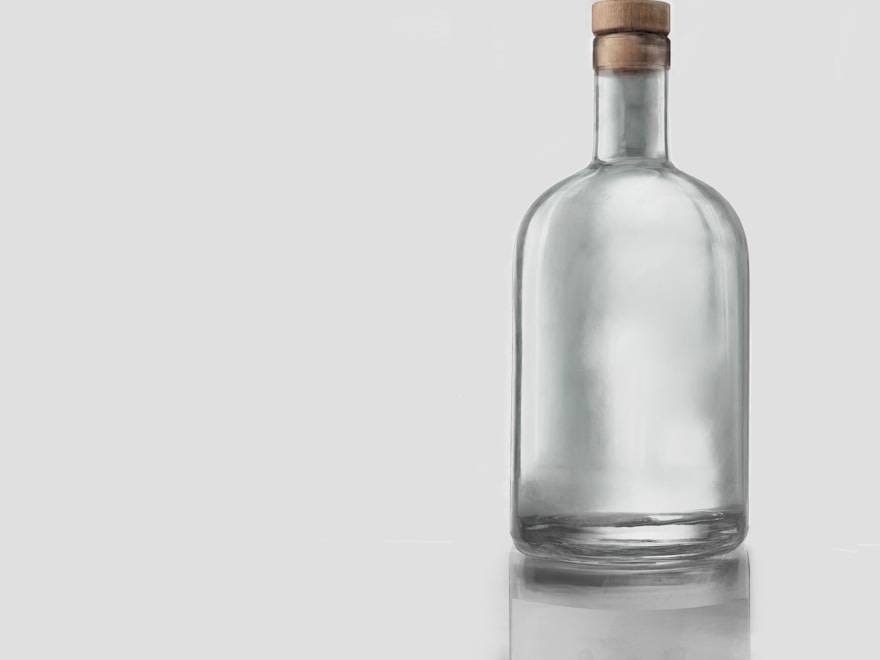
Nobody chooses a packaging material in the abstract. You choose it for one fill, one shelf life and one distribution route, and the answer changes when any of those change. Six factors carry almost all of that decision.
The 6 Factors That Decide Glass or PET
| Factor | Glass | PET |
|---|---|---|
| Barrier | Absolute. Nothing passes in or out, so your shelf life is set by the closure and the fill. | Partial. A little oxygen enters and a little CO2 leaves over months. |
| Taste and migration | Inert. Your fill tastes the same on the last day as the first. | Low but not nil; sensitive fills and long shelf lives show it. |
| Weight | Several times heavier, which your freight and your handling both feel. | Light, and lighter every year as walls thin. |
| Breakage | Real, and managed with packing, coatings and pack format. | Effectively none in transit or in your customer's hands. |
| Recycling | Endlessly recyclable with no loss of quality; your cullet goes back in the furnace. | Recyclable, with quality loss over cycles and a collection system that varies by market. |
| Shelf presence | Weight and clarity your buyer reads as premium before the label. | Functional, and hard to lift out of a value tier. |
Where Glass Earns Its Cost for You
Three situations settle it quickly. A fill that has to hold for a year or more, where oxygen ingress decides quality: beer, wine, spirits, oils, preserves. A fill that a consumer judges on taste, where migration from a package is a risk you cannot take back. And a price bracket where the pack itself is doing the selling, which is most of spirits, fragrance and premium food.
SGSBOTTLE forms 700 million bottles a year across 14 lines in Shandong and Xuzhou for exactly those categories, and the pattern holds: the further your product sits from a value tier, the more the pack has to carry.
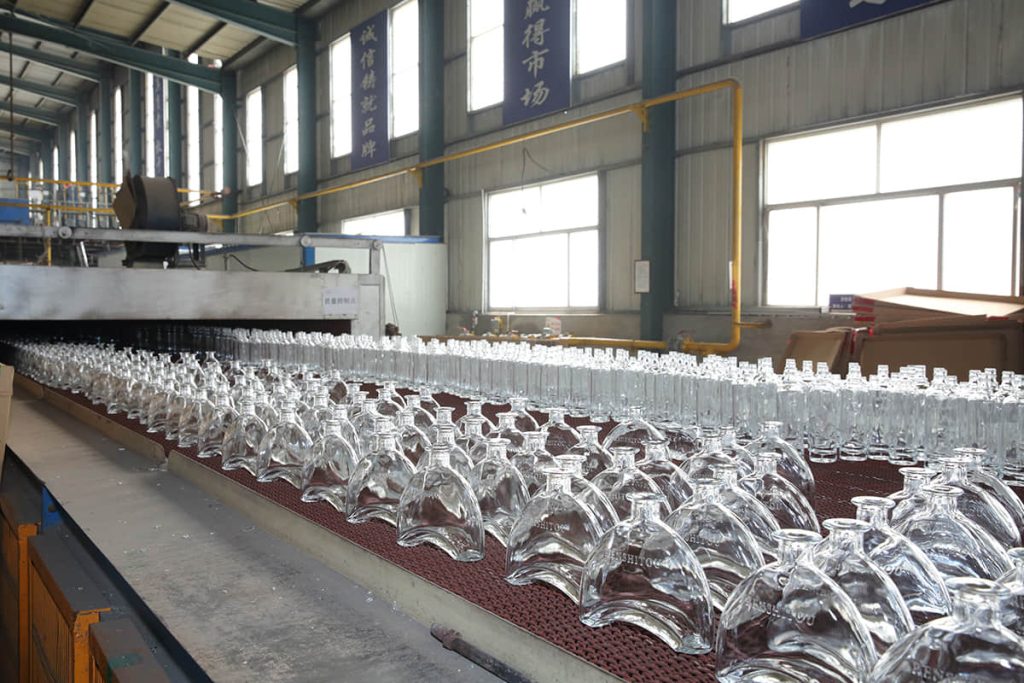 An inert package sets your shelf life by the closure and the fill, and by nothing else.
Where PET Is the Honest Answer
A short shelf life and a high-volume, low-margin fill point at PET, and pretending otherwise wastes your money. So does a distribution route where breakage is a real cost: outdoor events, sports venues, pool-side and travel formats, or a market where your product moves through many small hands.
Weight is the other honest limit. A glass bottle costs more to move at every leg, and on a long lane that difference compounds. Where your freight is the largest line in your landed cost, the material choice deserves a spreadsheet before it deserves an opinion.
The Middle Ground: Glass and PET in One Range
Plenty of ranges run both. Glass for the retail shelf and the gift pack, PET for food service, event and multipack formats. The brand stays consistent because your decoration does the work: the same colour, the same print, the same label artwork on two substrates.
Where you do that, the glass side is worth lightweighting properly. NNPB forming on the 7 lines in Shandong takes grams out of a bottle at the same strength, which narrows the freight gap without touching how the pack reads.
What Moves Your Numbers
Four levers change the comparison for your own case. Your shelf life, because a long one erases PET's cost advantage in waste and returns. Your lane length, because freight scales with weight. Your pack format, because a glass bottle that loads 25,000 to a 40HC and one that loads 22,000 differ by 12 percent in freight per unit. And your market's recycling infrastructure, which decides what your sustainability claim can honestly say.
What Goes on Your Enquiry
The fill, the shelf life you need, the market and the format in ml and oz. SGSBOTTLE engineers come back with the stock designs that fit, their loading plan and the weight of each, so your comparison runs on your own numbers.