
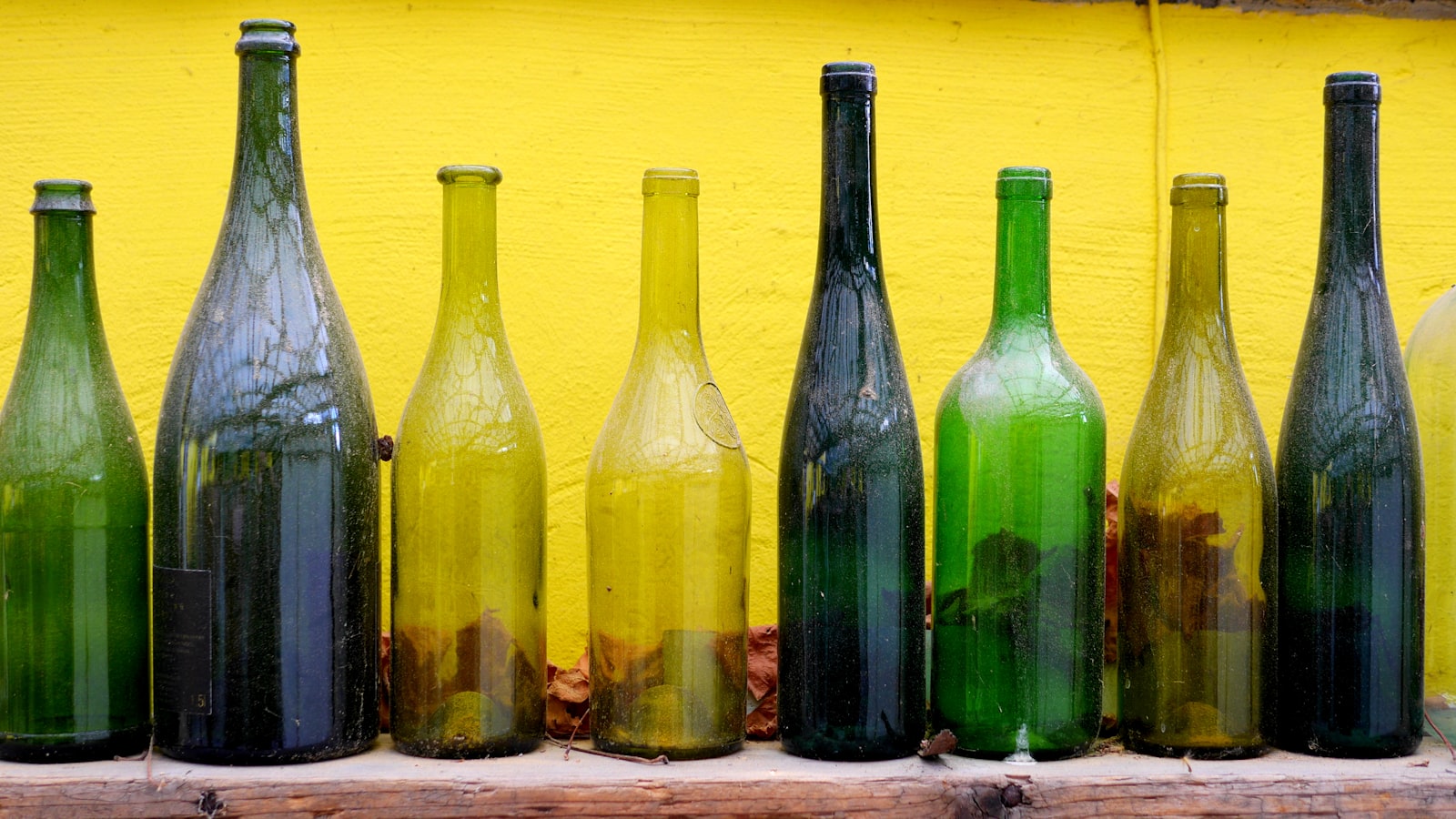
Glass colour looks like a design choice and behaves like a technical one. What your bottle blocks decides how long your fill survives daylight, and what it costs decides whether the colour is available to you at all.
What Amber, Green and Clear Do to Light
| Colour | What it absorbs | What your fill gets |
|---|---|---|
| Amber | Almost everything under about 450 nm, from iron and sulphur in the melt. | The strongest protection glass gives you against light-driven spoilage. |
| Green | Part of the same band, from chromium in the melt. | Partial protection, and a colour your buyer reads before the label. |
| Flint | Very little. | Full visibility of your fill, and no light protection at all. |
| Extra-flint | Very little, with none of the green cast standard flint shows. | Water-white clarity through a thick base, at a higher price. |
| Cobalt and black | Varies; black is close to opaque. | Presentation first, with protection as a by-product. |
Why Amber and Green Are Furnace Decisions
A furnace melts one colour at a time and runs for years between rebuilds. Changing colour means a campaign: a scheduled block of production in that melt, with its own minimum and its own date. Your stock colours are the ones the sites are melting now, and anything else is a project rather than a pick.
That is why the colours available to you differ by supplier and by season. SGSBOTTLE melts flint, amber and super flint in Shandong on 7 lines and flint at Xuzhou on 7, so a colour outside those runs on a campaign basis.
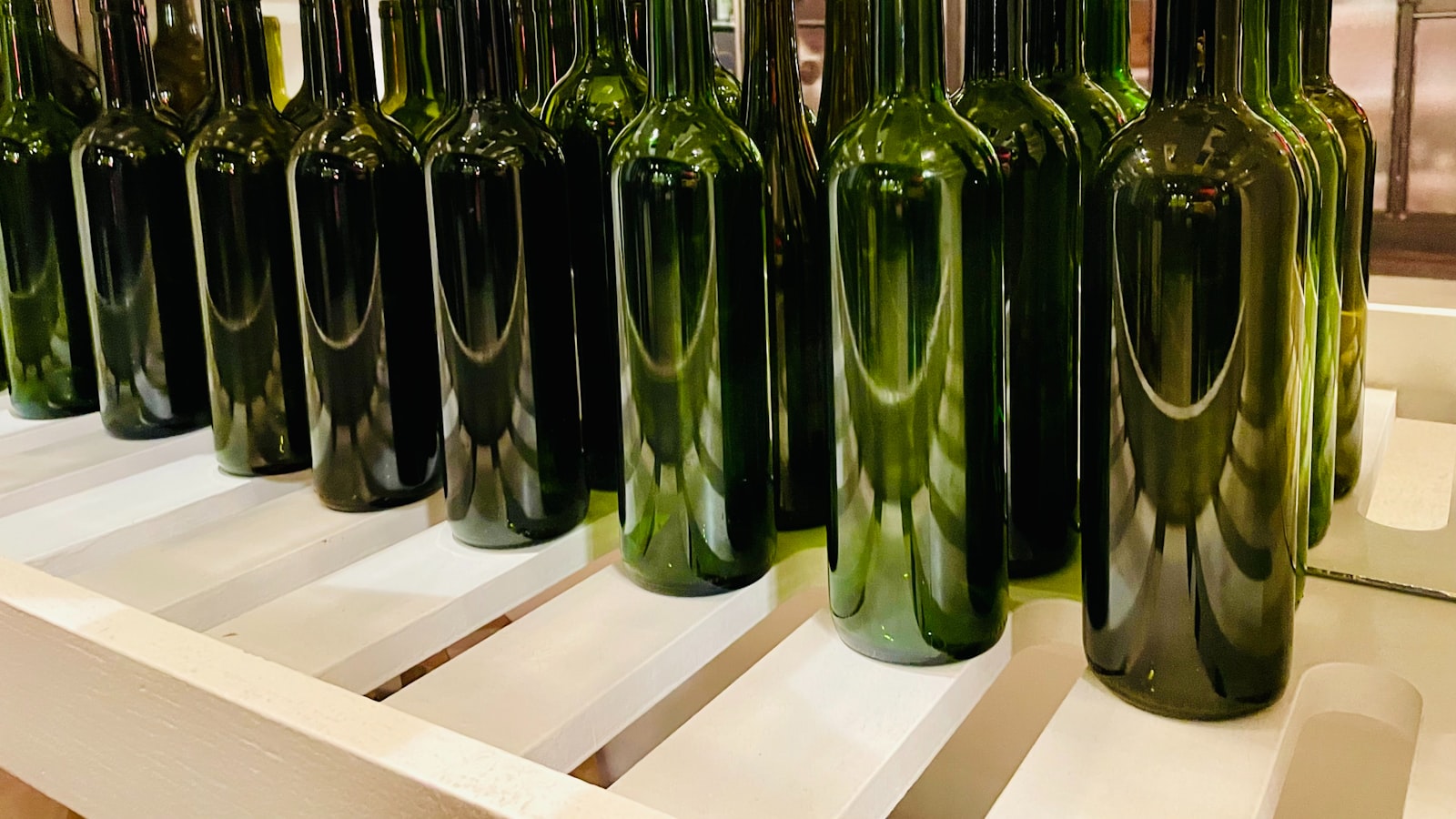 Green comes out of the melt, so your colour carries its own minimum and its own date.
Where a Coating Suits Your Brand Colour
Spray coating gives you any Pantone on flint stock with no furnace campaign, in matte or gloss, opaque or gradient. For a brand colour, a seasonal edition or a range that needs six shades of the same bottle, it is far cheaper and far faster than a melt.
Its light protection is a question of thickness. A full opaque coat can block light completely; a thin coat that only looks amber stops far less than amber glass does. Where your product degrades in daylight, that gap is the whole decision: amber glass closes it, and so does a carton or a secondary pack.
How Thickness Changes What You See
Colour depth follows glass thickness, so the same melt reads differently across a bottle. A thin sidewall in green looks pale and the heel looks deep. A heavy base in standard flint turns visibly green-grey where a 250 ml (8 oz) jar wall shows nothing.
That interacts with your fill. A pale gin, a white spirit or a clear serum takes on the cast of the glass, and a printed white panel over green-tinted glass never reads as pure white. For a 750 ml (25 oz) spirits bottle with a thick base, that is where extra-flint earns its price.
What Your Category Usually Does
SGSBOTTLE melts amber and flint on 7 lines in Shandong, and the pattern by category is settled. Beer and light-sensitive drinks run amber. Wine and oil run green or dark green for partial protection and category signalling. Spirits, perfume and diffusers run flint or extra-flint, because the glass itself is part of the presentation. Food jars run flint, since the fill sells and the carton or the shelf position handles light.
None of that is a rule, and a brand that breaks it usually pays for the break elsewhere: a clear beer bottle needs a shorter shelf life or a carton, and both are real costs.
What Goes on Your Enquiry
The fill and how it behaves in light, the shelf life you need, the format in ml and oz, and whether a carton protects the pack in your channel. SGSBOTTLE engineers come back with the colours running now, the coated alternatives, and what each does to your minimum.