
A changeover is where your range design shows up as lost hours. Two bottles that look like a family on a shelf can be two unrelated jobs on your line, and the difference was decided at the drawing.
The 6 Things That Change
| Station | What follows the new format | Part or setting |
|---|---|---|
| Conveyor and rails | Guide rail width, set to your body dimension. | A setting, unless the rails themselves are wrong. |
| Star wheels | Pockets sized to your body diameter or width. | A change part, and one of the slowest to swap. |
| Filler | Valve height and fill volume for your new capacity. | A setting, plus a volume calibration. |
| Capper | Chuck insert and head height for your finish. | A change part, unless the finish is shared. |
| Labeller | Panel position, label length and bottle rotation. | Settings, plus new label reels. |
| Case packer | Pack pattern and grippers for your carton. | Change parts and a pattern program. |
Why Diameter Costs More Than Height
Height is usually an adjustment. Several machines raise or lower a head, and your line is back running.
Diameter is parts. Star wheels have pockets cut for a specific body size, so a different diameter means physically swapping them, and swapping star wheels is the slowest step on most lines.
How Your Range Design Buys Back Hours
Shared finishes remove your capper change entirely. Shared base diameters keep your star wheels and rails in place even when capacity differs, since a taller bottle at the same diameter is a height adjustment.
Design the range that way and the saving repeats every changeover for years. SGSBOTTLE engineers draw a family to shared dimensions when you tell them the line it runs on.
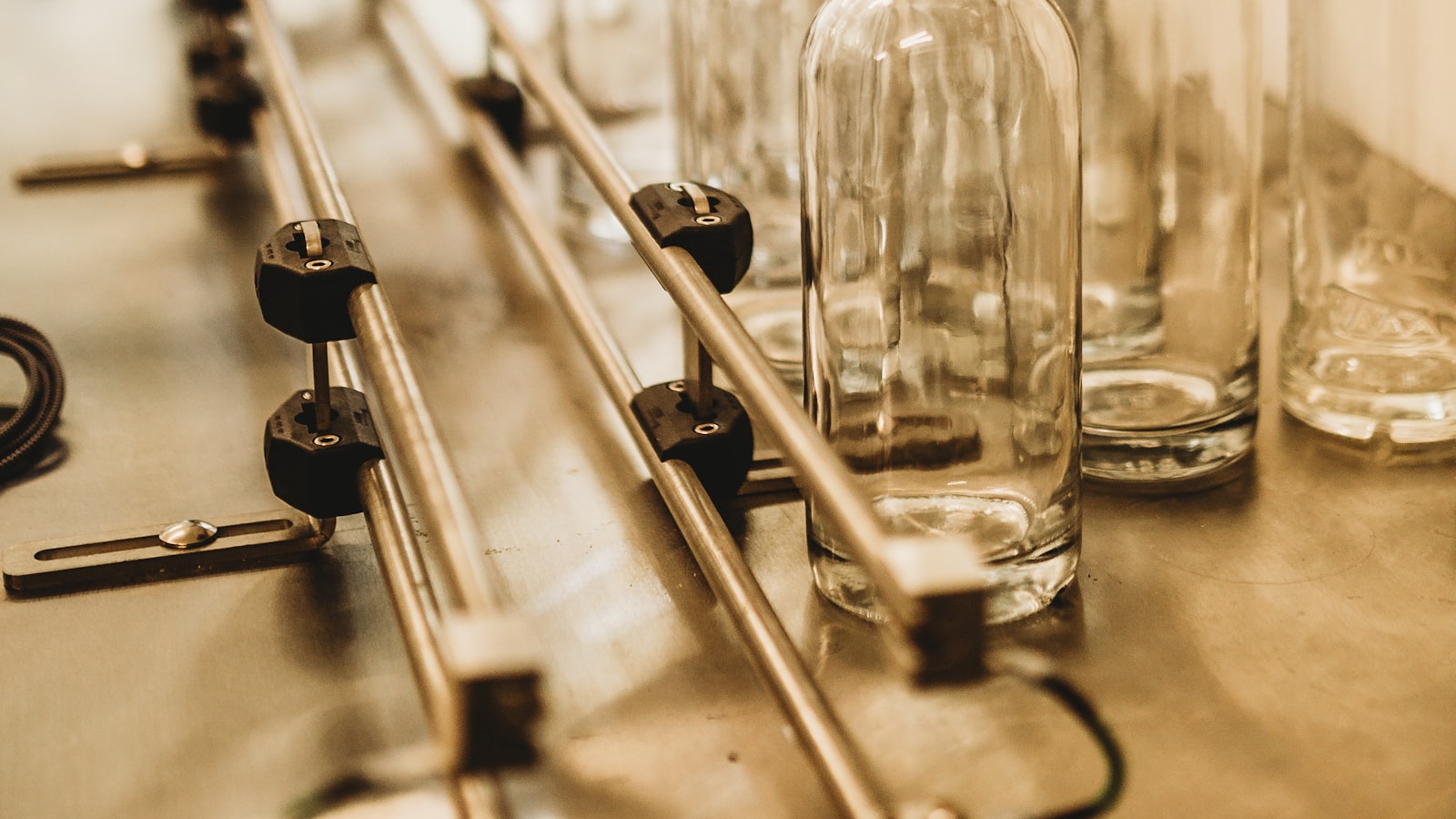 A shared finish removes a change part. SGSBOTTLE draws families across 14 lines in Shandong and Xuzhou.
What to Tell Your Glass Supplier
Give them the line, not just the bottle. The formats already running, the finishes those use, the star wheel sizes you own, and the labeller you run.
With that, a new 750 ml (25 oz) design can be drawn to fit what you already have. Without it, you get a good bottle that costs you a change part nobody budgeted for.
Where Glass Quality Shows Up in Changeover
A line set for a nominal dimension runs badly on bottles that drift within a loose tolerance. Your changeover then becomes a period of adjustment rather than a swap.
Tight, stated tolerances shorten that. SGSBOTTLE gauges body dimensions, height and base flatness at the cold end on all 14 lines in Shandong and Xuzhou, and the figures sit on your drawing.
What Goes on Your Enquiry
Your line and the formats already on it, the finishes and star wheels you own, your labeller and case packer, and the new format in ml and oz. SGSBOTTLE comes back with a drawing designed to share what your line already has.