
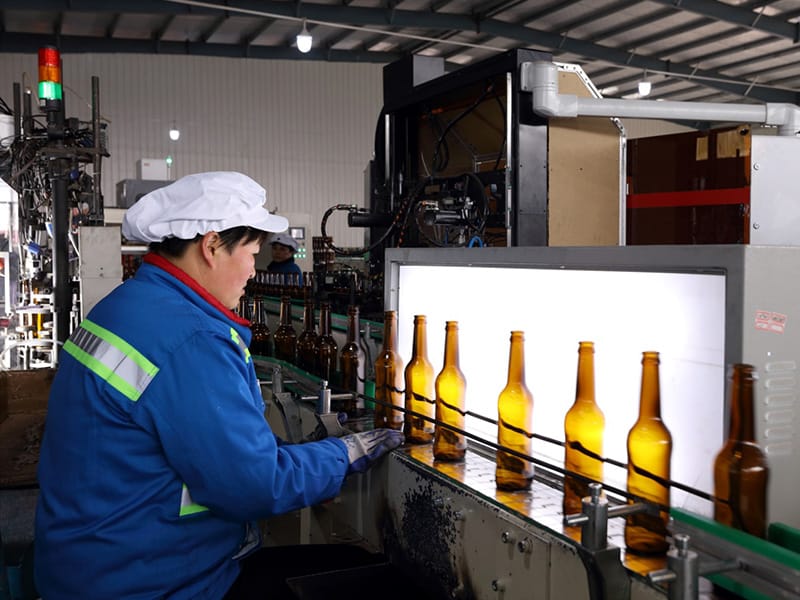
Your bottle is decided long before anything is blown. The batch is a weighed recipe that fixes colour, grade, melting cost and what the furnace can run next, and everything downstream works within it.
The 5 Materials in Your Batch
| Material | Share of the batch | What it does for your bottle |
|---|---|---|
| Silica sand | The bulk of it, roughly seventy percent. | Forms the glass network itself. Its iron content decides whether your glass is flint or extra-flint. |
| Soda ash | Around a sixth. | Drops the melting temperature by hundreds of degrees, so a furnace can run at a workable cost. |
| Limestone and dolomite | Roughly a tenth. | Makes the glass durable and chemically stable, so your fill never attacks it. |
| Cullet | 20 to 30 percent at SGSBOTTLE, replacing raw material. | Melts at a lower temperature than raw batch and cuts energy per tonne. |
| Minor additions | A few percent in total. | Alumina for durability, colourants for amber, green or blue, and refining agents that clear bubbles. |
Why Sand Decides Your Grade
Ordinary silica sand carries iron oxide, and iron absorbs red light. In a thin 250 ml (8 oz) jar wall nobody notices; in the base of a 750 ml (25 oz) spirits bottle the glass reads visibly green-grey.
Removing it means washed low-iron sand plus a decolourising addition, which is the whole difference between flint and extra-flint. That choice reaches you as a price and as a minimum: an extra-flint custom mould starts at 12,000 pieces in Shandong, against 50,000 in standard flint at Xuzhou.
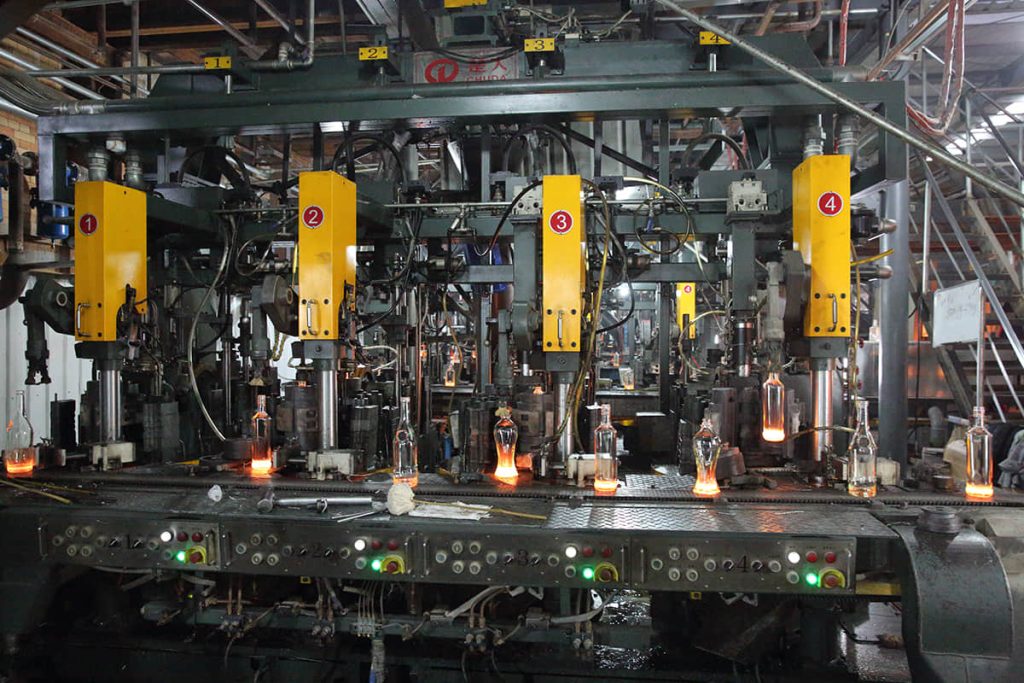 The batch has already decided colour and grade. Forming only decides shape.
Why the Batch Ties Your Colour to a Schedule
A furnace holds one batch recipe at a time and runs continuously for years between rebuilds. Changing colour means finishing one campaign and starting another, which is a scheduled block of production with its own minimum and its own date.
That is why your available colours are the ones the sites are melting now. SGSBOTTLE melts flint, amber and super flint in Shandong on 7 lines and flint at Xuzhou on 7, and a colour outside those runs as a campaign.
What the Batch Cannot Fix
Three things belong to forming and annealing instead, and no recipe change will rescue them. Wall distribution, which decides pressure resistance and breakage. Residual stress, which decides whether your bottle cracks weeks later. And surface damage, since glass strength lives almost entirely at the surface.
Reading the batch correctly saves you from asking the wrong supplier question. When your bottles break in transit, the answer sits in annealing, coating and handling, and never in the sand.
The Sustainability Figure Your Buyer Asks For
Recycled content comes out of the batch, and it is the number a retailer wants in writing. Cullet at 20 to 30 percent lowers the energy per tonne, because it melts under the temperature raw batch needs, and it is the single largest lever on your carbon figure after bottle weight.
SGSBOTTLE furnaces have run on natural gas since 2016, which cuts CO2, SO2 and NOx per tonne against coal firing. Both figures come from the batch and the furnace rather than from anything you can change at the bottle.
What Goes on Your Enquiry
The grade you need, the colour, the format in ml and oz, and whether your buyer asks for a recycled content figure. SGSBOTTLE engineers come back with the melts running now, what each does to your minimum, and the coated alternatives where a campaign does not suit your volume.