
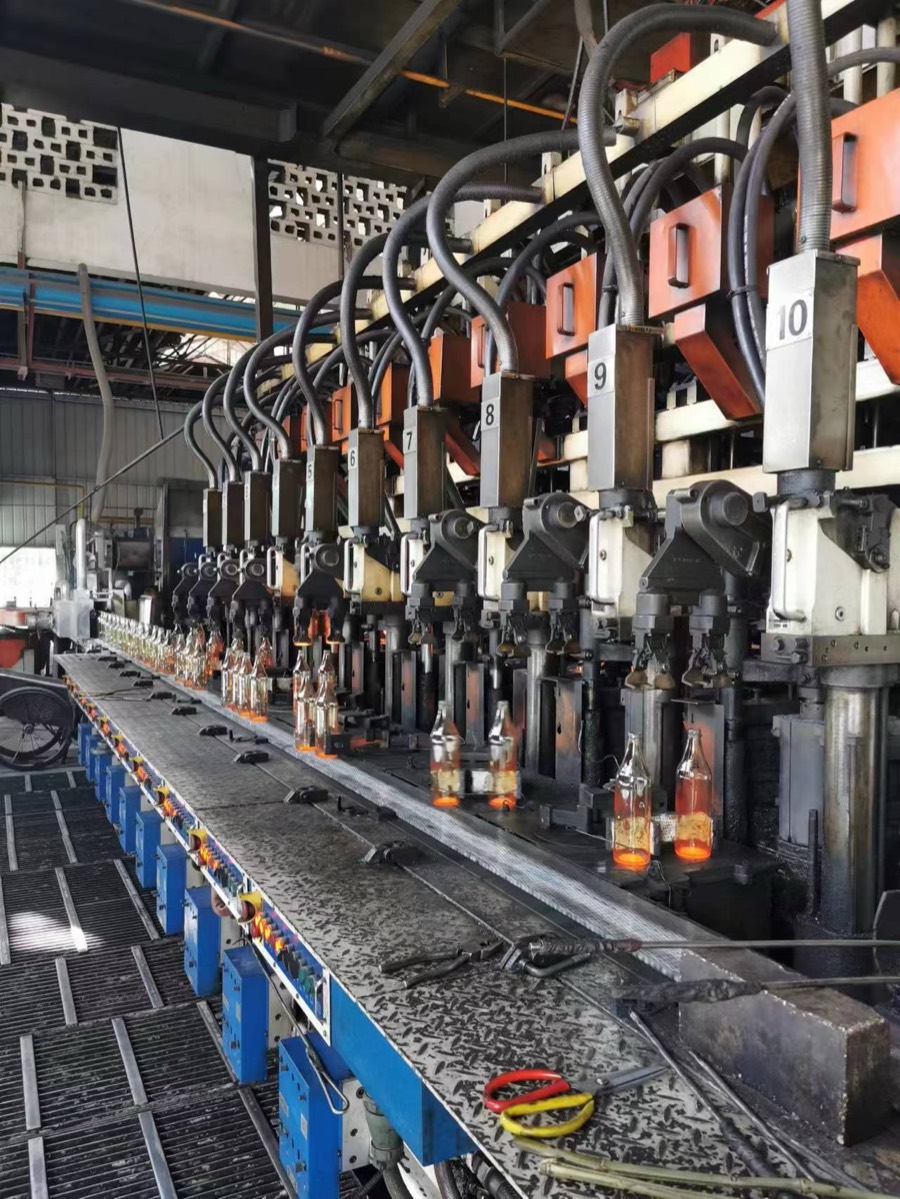
Almost every surprise in your glass quotation traces back to the furnace. It explains why your colour carries a minimum, why your lead time moves with the season, and why a supplier who says yes to all of it is usually a trading company.
What Your Furnace Actually Is
The furnace behind your bottle is a refractory-lined tank holding hundreds of tonnes of molten glass at around 1,500 °C. Batch and cullet enter at one end, the melt refines so bubbles rise out, and glass leaves at the other end through a forehearth that carries it to the forming machines.
It never stops for you. Cooling and reheating a tank cracks the refractory, so a furnace runs from the day it is lit until the day it is rebuilt, often a decade later. Everything about how your glass is sold follows from that.
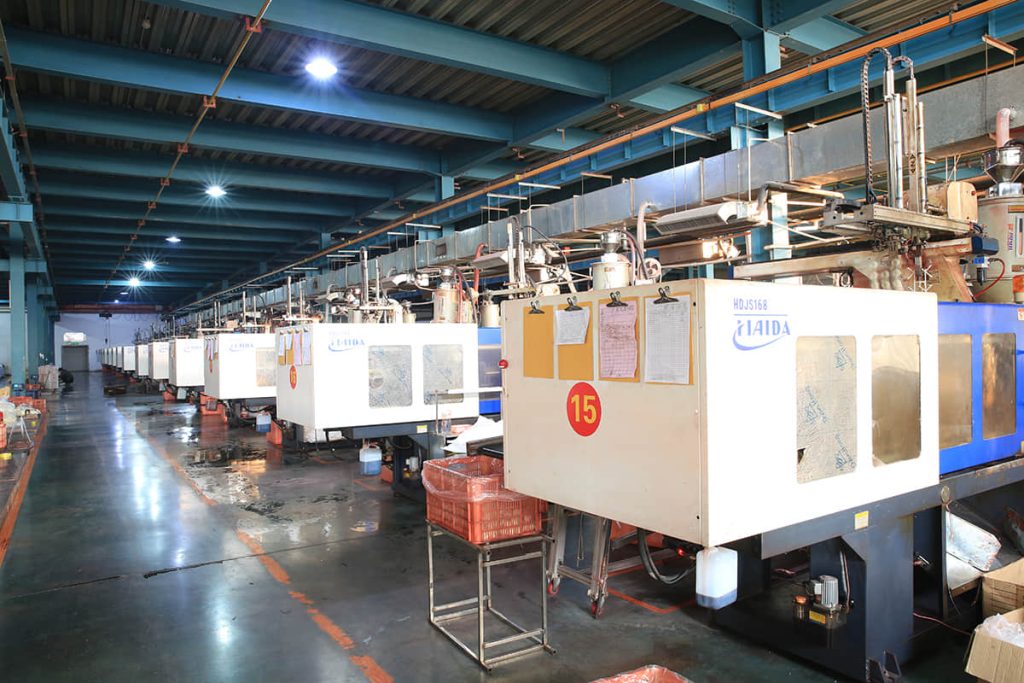 A furnace feeds many lines at once, so your order shares its melt with everything else running that week.
What a Campaign Means for Your Order
Within that long run, production is organised into campaigns: scheduled blocks making one colour and, broadly, one family of products. Your order books a place in a campaign, and that has three consequences you will feel.
Colour comes with a date. A colour the base is melting now is available; anything else waits for its campaign and carries a minimum that makes the change worth scheduling. Volume gets rewarded, because a large order fits a campaign more neatly than a small one. And lead time moves with the calendar rather than with effort, since no amount of urgency reschedules a melt.
The Two Sites and What Each Melts
| Site | Lines | What it melts |
|---|---|---|
| Shandong | 7 lines. | Flint and amber at volume on NNPB, with hot-end and cold-end coating, and super flint for spirits, perfume and diffusers. |
| Xuzhou, Jiangsu | 7 lines. | Flint, with one line running up to 8 products at once. |
The pattern is worth reading before you enquire. Your grade decides the site, the site decides the minimum, and both are settled before anyone discusses a shape.
Why Two Colours Cost More Than One
Your range in two furnace colours draws on two campaigns, and the two rarely align in the same week. You get two minimums, two schedules and often two shipments, so a multi-colour launch in glass usually finds the logistics harder than the tooling.
Coating is your way around it. A sprayed colour on flint gives you any Pantone at a decoration minimum instead of a furnace one, and your whole range runs from a single melt of 500 ml (17 oz) and 750 ml (25 oz) stock. Where light protection matters, amber glass is the safe choice, and there the schedule wins.
What Furnace Economics Explain
Three things puzzle first-time buyers. Why your minimum exists at all, since lines running 2 million pieces a day cannot economically schedule a few thousand. Why your supplier's colour list is shorter than a catalogue suggests. And why the honest answer to your urgent colour request is a date instead of a price.
SGSBOTTLE forms 700 million bottles a year across those 14 lines in Shandong and Xuzhou, and the schedule behind that number is what your quotation is really booking.
What Goes on Your Enquiry
The colour and grade, the annual volume, the format in ml and oz, and how firm your launch date is. SGSBOTTLE engineers come back with the melts running now, the campaign dates for anything else, and the coated route where a campaign does not suit your volume.