
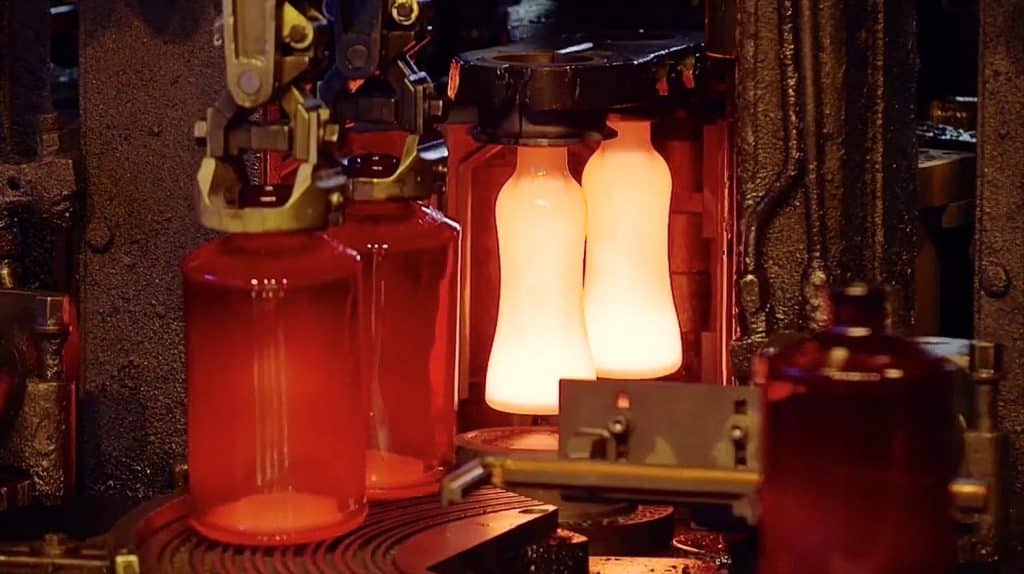
Between the furnace and the forming machine sits a small mechanism that decides more about your cost than anything downstream. The feeder meters molten glass into measured lumps, and the weight it cuts is the weight you ship.
How Your Feeder Works
Glass leaves the furnace through a forehearth, cooling to a working temperature on the way. At the end sits the feeder: a rotating tube and a plunger over an orifice ring, with shears underneath.
The plunger pushes a measured volume of glass through the orifice, the shears cut it, and gravity delivers the gob down a chute into the mould. Three settings control the result. Plunger stroke meters the volume. The orifice ring sizes the stream. Shear timing decides where the cut falls. Together they repeat that weight thousands of times an hour.
Why Gob Weight Is Your Freight Bill
Weight per bottle multiplies across everything. A 750 ml (25 oz) spirits bottle at 500 g and the same shape lightweighted to 420 g are two feeder settings, and the difference reaches you three times over: in the glass price, in the pallet weight, and in what your container carries before it reaches its limit.
A 40HC of 25,000 bottles at 500 g holds 12.5 tonnes of glass. The same count at 420 g holds 10.5, which is two tonnes of freight you no longer pay for on every container, for the life of the design.
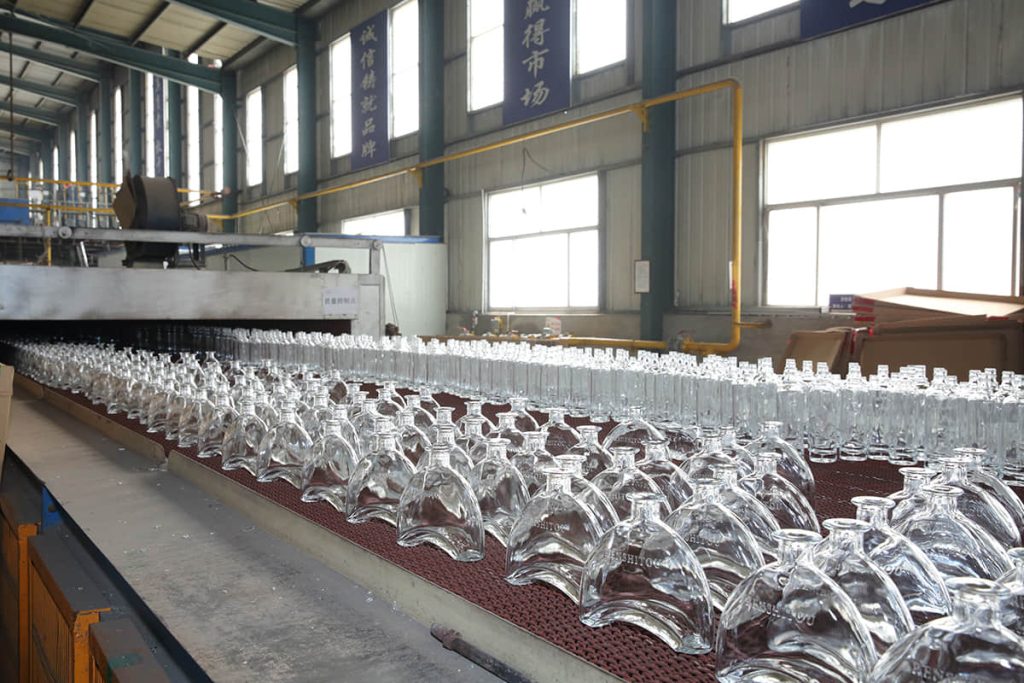 Every bottle on this conveyor came from one feeder setting, repeated thousands of times an hour.
Single, Double and Triple Gob
A feeder can cut more than one gob per cycle. Each gob feeds a cavity, so a double-gob machine forms two bottles per section per cycle and a triple-gob forms three.
That decision belongs with your mould. More cavities means more tooling to cut and maintain, and far more output from the same line. It is why a plant with 14 lines in Shandong and Xuzhou reaches container-scale volumes without a proportionate number of machines, and why your tooling quotation names the cavity count.
What Your Drawing Should Say About Weight
Two figures, and most enquiries carry only one. The nominal weight, which your price and your freight follow. And the tolerance, which decides how much variation your filler and your case packer see.
A tolerance nobody discussed is a tolerance you are living with. Where your line weighs bottles, or your market regulates fill by weight, the figure belongs on the drawing next to the capacity.
Where Lightweighting Actually Comes From
Cutting the gob smaller only goes so far before walls thin in the wrong places. Real lightweighting comes from spreading the same glass more evenly, which is what NNPB forming does, and it usually needs a fresh drawing rather than a feeder adjustment.
SGSBOTTLE runs NNPB on the 7 lines in Shandong for exactly that, and a lightweighting project starts with what your bottle weighs now and what your line will accept.
What Goes on Your Enquiry
The format in ml and oz, the weight you have today if you are moving a design, the fill, and whether your market regulates by weight. SGSBOTTLE engineers come back with the weight of each candidate design and the loading plan that follows from it.