
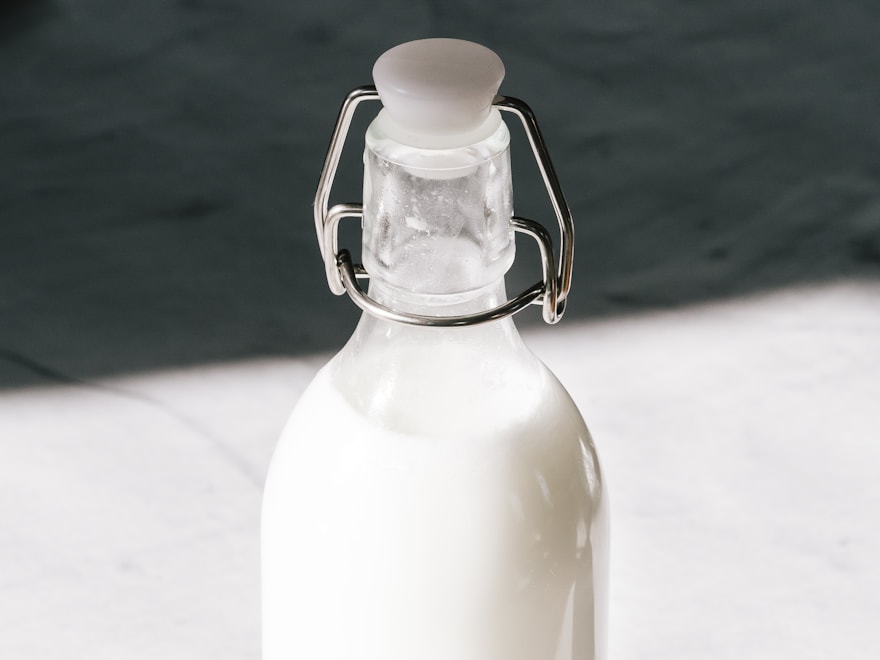
A new bottle leaving the forming machine is close to as strong as it will ever be. Everything that happens afterwards takes strength away, and the first defence goes on within seconds.
What Actually Weakens Your Glass
Glass does not fail because the material is weak. It fails because a scratch on the surface concentrates stress at its tip, and a container picks up scratches every time it touches another container.
Your conveyor, your filler, your capper and your pallet all do it, on a 200 ml (7 oz) jar as readily as on a case-packed bottle. A bottle that leaves the factory strong can arrive at your filling line measurably weaker, and nothing about the glass itself has changed.
Why Tin Oxide, and Why So Early
The hot end applies a tin compound as vapour while your bottle is still near forming temperature. At that heat it decomposes and bonds into the surface as tin oxide, forming a layer far thinner than anything you can see or feel.
Timing is the whole point. Once your bottle passes through the lehr it is too cool for that reaction, so the treatment has one narrow window between the forming machine and the annealing oven. SGSBOTTLE runs hot-end applicators on all 14 lines in Shandong and Xuzhou, ahead of every lehr.
 The hot end has one window: after forming, before the lehr. SGSBOTTLE holds it on 14 lines.
The 2 Coatings Work as a Pair
| Coating | Where it goes on | What it does for you |
|---|---|---|
| Hot end (tin oxide) | After forming, before the annealing lehr. | Bonds to your glass and anchors the second layer. |
| Cold end (lubricity) | After the lehr, near room temperature. | Gives your bottles a slippery surface so contact does not scratch. |
Neither layer does the job alone. Without the hot end the cold-end coating has nothing to hold onto and wears off in the washer; without the cold end the tin oxide gives your bottles no lubricity at all.
How Thickness Is Controlled
Coating weight reads in CTU on a meter, sampled from the line rather than assumed. The target sits in a band because both extremes cost you something.
Too little leaves your bottles unprotected, which shows as scuffing rings around the contact points after transport. Too much can cloud the surface, and on a 330 ml (11 oz) bottle destined for a pressure-sensitive label it can weaken adhesion enough to lift a corner.
What to Ask a Supplier
Three questions cover it. The CTU reading for your production run rather than a nominal target. Whether the coating is compatible with your label adhesive and your washer chemistry, if bottles get returned and refilled. And whether coating checks appear in the inspection report you receive with the shipment.
What Goes on Your Enquiry
Your format in ml and oz, the label type, whether the bottle is pasteurised or washed, and how far it travels after filling. SGSBOTTLE quality engineers in Shandong come back with the coating specification and the CTU band for your order.