
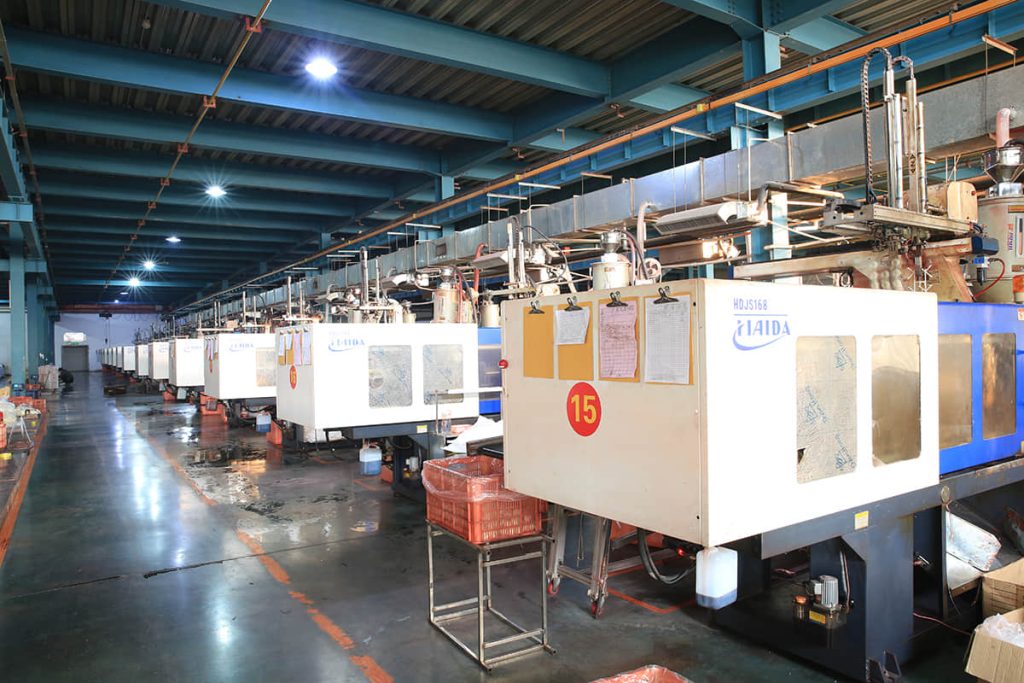
The difference between a heavy bottle and a light one is rarely the mould. It is how the glass was spread inside it, and a plunger spreads glass better than air does.
What a Plunger Changes
In press-and-blow a metal plunger enters the gob inside the blank mould and presses it outward against the mould wall. The glass takes the thickness the gap allows, which is a controlled dimension rather than a consequence.
Air behaves differently. A counter blow inflates the gob along the path of least resistance, so glass thins where it is already thin and stays thick where it is already thick. Both processes produce a good bottle; only one of them decides the wall thickness deliberately.
Wide Mouth First, Narrow Neck Later
Press-and-blow began on jars, where a wide finish gives a plunger room to enter. For decades that limited it: a beer or beverage bottle with a 26 mm crown finish had no space for the tooling.
NNPB solved that with a slimmer plunger and tighter thermal control, and it changed the economics of beverage glass. Your lightweight beer, juice and water bottles come from that development, and it is why SGSBOTTLE runs NNPB on the 7 lines in Shandong.
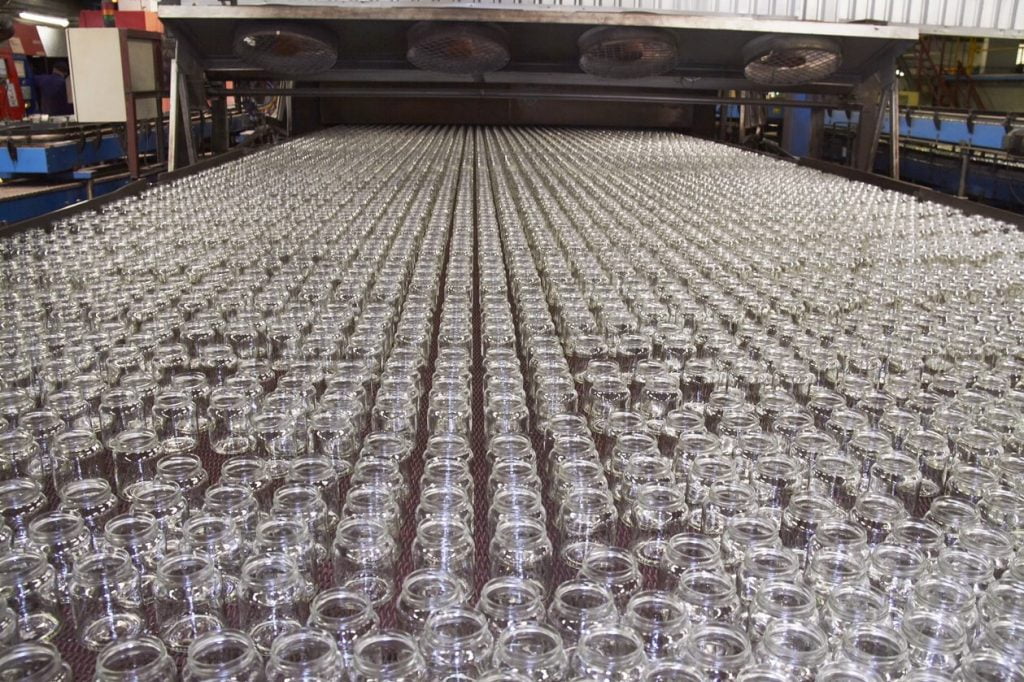 Even walls let a bottle carry the same load with less glass, and your freight follows the difference.
What Even Walls Buy You
| Benefit | Why it follows from the process |
|---|---|
| Lower weight | Your glass sits where it does work, so less of it achieves the same strength. |
| Better pressure resistance per gram | Thin spots are what fail first, and a plunger removes them. |
| Lower freight | Lighter pallets carry more bottles inside the same container weight. |
| Lower carbon per bottle | Less glass melted, and less mass moved on every leg of your lane. |
| Steadier inspection results | Repeatable walls make defects easier to see against a stable baseline. |
Where the Process Does Not Suit You
Heavy premium bottles are the clearest case. When your brand wants 700 g of glass in the hand, the whole point of NNPB disappears, and blow-and-blow handles the weight more comfortably.
Complex shapes are the second. Deep punts, sharp shoulders and asymmetric bodies give a plunger trouble, and air follows an awkward form more forgivingly. And short runs are the third, since tighter thermal control means more setup for the same output.
Reading a Lightweighting Proposal
When a supplier offers to take grams out of your bottle, three questions keep the conversation honest. What process is it moving to, since a weight saving without a process change usually means thinner walls in the same distribution. What happens to the pressure and vertical load figures, tested to ISO 7458 and ISO 8113 on the new design. And what does your filling line think, because a lighter bottle behaves differently on a conveyor and under a capping head.
What Goes on Your Enquiry
Your current bottle weight if you have one, the format in ml and oz, the fill and its pressure, and your annual volume. SGSBOTTLE engineers come back with the process that suits your design and the weight each route produces, from the 14 lines SGSBOTTLE runs across Shandong and Xuzhou.