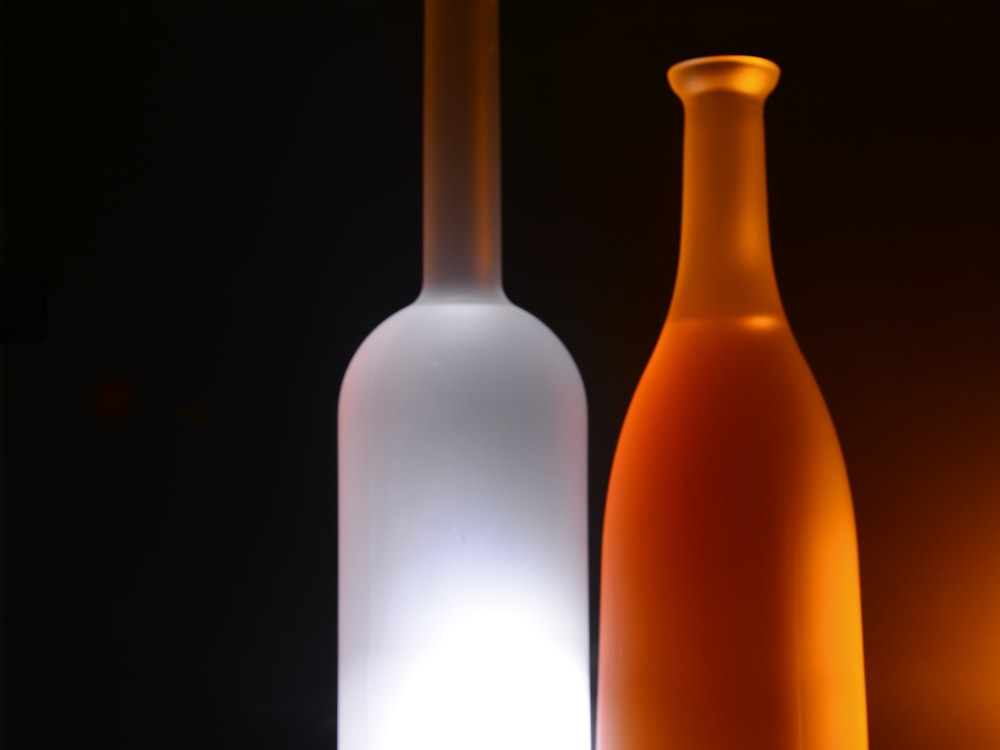

Frosting, spray coating, screen printing, hot stamping, electroplating and labelling on glass, and what each process asks of your artwork, your minimum and your budget.
Decoration turns a stock glass bottle into your bottle: a frosted 750 ml (25 oz) spirits bottle from SGSBOTTLE with a two-colour screen print reads as a custom shape at a fraction of the tooling.
SGSBOTTLE runs its own deep-processing plant in Shandong, opened in 2020, for screen printing, decals, spray coating and electroplating, so decorated samples come off the same site as the glass and your artwork is proofed against the real curve of the bottle.
Artwork is proofed against the real bottle before any run, on glass drawn from the 14 SGSBOTTLE lines in Shandong and Xuzhou, from a 100 ml (3.4 oz) dropper to a 1 L (34 oz) jar, so what you sign off is what the print head puts on your order.
Every process here starts from your artwork and your panel, so your drawing comes before the quotation. Send your colour reference, your label type and the face your mark has to sit on. Your sample then comes back on your own glass rather than on a substitute.
Frosting, spray coating, screen printing, decals, hot stamping, electroplating and labelling on glass bottles: what each survives and what it asks of your artwork.
A fired ceramic print is part of the glass; a label sits on it. Durability, cost, colour, minimums and lead time compared for your decoration decision.
Raised lettering is cut into steel, not printed. How embossing depth, radius and draft work, what glass will and will not fill, and how to keep your logo legible.
Frosting is a surface change, not a coating. How acid etching, sandblasting and frost coatings differ, what each does to fingerprints, and which suits your artwork.
Spray coating puts colour on the outside of a finished bottle. How the layer goes on and cures, what it survives, and why it beats coloured glass on small runs.
Screen printing pushes ceramic ink through a mesh and fires it into the glass. How the passes work, what registration costs, and the artwork rules that decide the result.
A decal carries photographic artwork onto a bottle and fires it into the glass. How the transfer works, what it costs against screen printing, and when your art needs it.
Hot stamping presses metallic foil onto glass with a heated die. What it can and cannot reproduce, why the panel matters, and how it compares with a fired print.
Metallised glass looks like solid metal and weighs nothing extra. How vacuum metallising and electroplating differ, what the layer survives, and where it fails.
Most label failures are surface failures. How wet glue, pressure-sensitive film and shrink sleeves differ on glass, and why coatings change what your adhesive can do.
Artwork made for print fails on glass for predictable reasons. Vector formats, Pantone on a curve, minimum line weight, seam clearance and how to mark a proof.
Frosting, spray coating in solid or gradient colour, screen printing, hot stamping, electroplating and labelling, on stock and custom bottles alike. Each process carries its own minimum and its own artwork rules, and on a custom project a decorated sample for sign-off is part of the sample-mould stage.
It can. A screen print or a spray coat runs as its own pass with its own set-up, so a small decorated order costs more per bottle than the same glass plain. On stock glass the minimum stays a pallet-scale order; the decorated minimum for your artwork comes with the quotation.
Tell us the fill and the market and a sales engineer replies within one business day, with the finish drawing and the loading plan.
Request a Quotesales@sgsbottle.com · Mon–Sat 8:30–18:00 (GMT+8)