
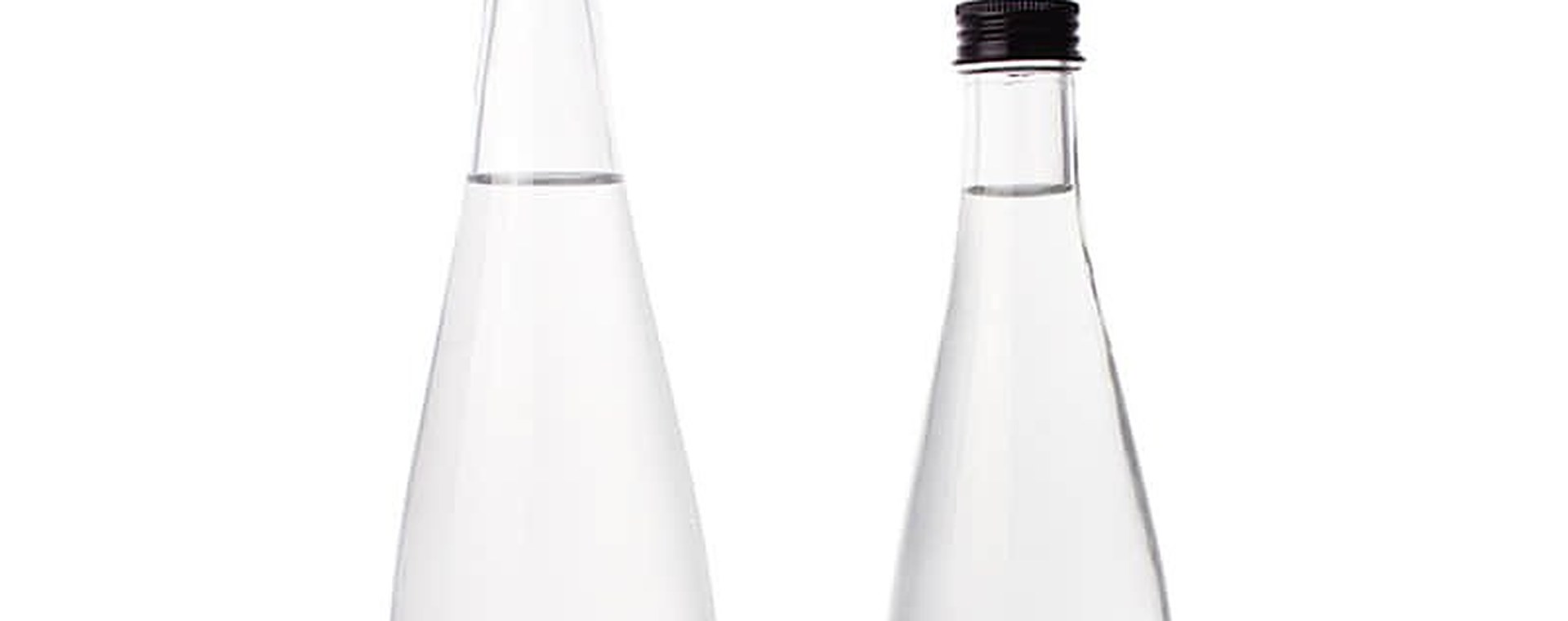
Your finished bottle carries a fixed amount of glass, and the only real question is where that glass sits. The answer is decided a second before your bottle exists, in a hollow preform called the parison.
Why Your Parison Governs Everything After It
The final blow does not add glass or move much of it. It stretches what the parison already holds against the blow mould, and stretching thins what is already thin.
That gives you one useful rule. A defect in wall distribution is almost never a blow-mould problem; it is a blank-side problem showing up one stage later. Engineers who chase your thin shoulder in the blow mould are looking in the wrong place.
The 4 Places Your Wall Thickness Runs Thin
| Where | Why it happens there | What it costs you |
|---|---|---|
| Shoulder | The largest stretch in the final blow, from a short parison to a wide body. | Impact resistance where your bottle is most often knocked. |
| Heel | Glass drains downward and the corner is the last area to fill. | Vertical load, and the first place a dropped bottle breaks. |
| One side of the body | The gob loaded off-centre, or the parison hung unevenly. | Pressure resistance, since your thin side fails first. |
| Near the seam | Cooler mould metal at the joint stiffens the glass early. | Cosmetic seam marks, and a stress line under thermal shock. |
What the Factory Controls in Your Blank Mould
Three variables do most of the work. Gob weight and shape, set by the feeder, decide how much glass arrives and how it lands. Blank mould temperature, held by cooling air through the mould body, decides where your glass stiffens first. And parison reheat time between the two moulds lets the surface warm from the core, so the final blow stretches evenly.
Those settings explain why the same drawing runs differently from one line to the next. SGSBOTTLE holds them per line and per cavity across the 14 lines in Shandong and at Xuzhou in Jiangsu, and a cavity that drifts gets corrected rather than tolerated.
 Non-contact gauges read the wall of every bottle on all 14 SGSBOTTLE lines before your pallet is built.
Why Minimum Wall Beats Your Average Weight
Buyers usually ask for a bottle weight, which is an average. Your bottle does not fail at its average; it fails at its thinnest point, so the number that predicts performance is your minimum wall.
A heavier bottle is therefore not automatically a stronger one. A 500 g bottle with one 0.9 mm shoulder breaks before a 430 g bottle whose thinnest point is 1.4 mm, and only a sectioned sample tells you which one your order contains.
What You Can Ask For at Sampling
Three requests are reasonable. A sectioned sample with wall readings at the shoulder, body, heel and base of a 330 ml (11 oz) bottle, so you see the distribution and not just the weight. Your minimum wall figure written into the specification alongside the weight. And confirmation that cold-end wall gauges run on the line producing your order.
None of that is exotic. It is what a factory measures anyway, and asking turns an internal number into a term of your agreement.
What Goes on Your Enquiry
Your drawing or reference bottle, the format in ml and oz, the fill and any pressure it carries, and how your bottle is handled after filling. SGSBOTTLE engineers come back with a weight, a minimum wall figure and the test results behind them.