
An Incoterm is three letters that decide who pays for what, who carries the risk at each moment, and which documents each side produces. Choosing the wrong one rarely shows up until something goes wrong.
The 7 Rules for Any Mode of Transport
| Rule | Where your supplier's job ends | What you take on |
|---|---|---|
| EXW | At their door, goods available for collection. | Everything, including export clearance. |
| FCA | Handing over to your carrier, export cleared. | Main carriage onward, and the risk with it. |
| CPT | Delivering to the carrier, freight prepaid. | Risk from handover, though freight is paid. |
| CIP | Delivering to the carrier, freight and insurance prepaid. | Risk from handover, with cover in place. |
| DAP | At the named place, ready for unloading. | Unloading, import duty and clearance. |
| DPU | At the named place, unloaded. | Import duty and clearance only. |
| DDP | At your door, duty paid. | Very little, at a price built into the goods. |
The 4 Sea and Waterway Rules
FAS puts your goods alongside the vessel. FOB puts them on board, which is where most glass buying starts, and risk passes to you at that moment.
CFR adds prepaid freight to the destination port, and CIF adds insurance on top. Those four exist because a container moving by sea has a defined loading moment that other modes do not, and they should not be used for air or road.
Why FOB and EXW Feel Different in Practice
EXW leaves you with export clearance in a country where you may have no presence. That paperwork is routine for your supplier and awkward for you, which is why FOB is the more common starting point.
Under FOB the risk passes once the goods are on board the vessel, and the freight decision stays with you. SGSBOTTLE quotes both, plus CIF and DAP, for glass from the 14 lines in Shandong and Xuzhou, so a 750 ml (25 oz) order can be compared on the same basis.
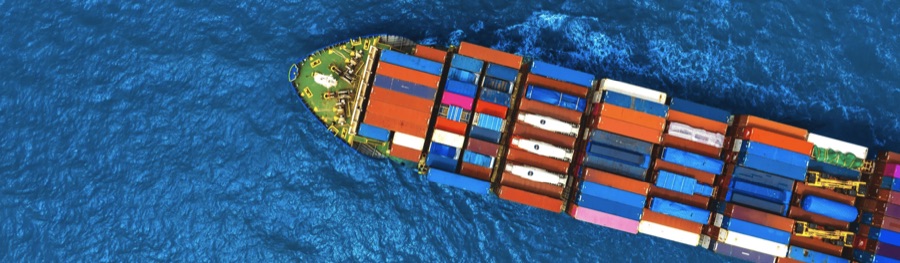 The rule decides where risk passes. SGSBOTTLE ships from 14 lines in Shandong and Xuzhou.
What an Incoterm Does Not Cover
Three things people assume it does. Payment terms, which belong in your contract. Ownership of the goods, which transfers by contract rather than by delivery rule.
And what happens when a 330 ml (11 oz) shipment arrives broken. The rule tells you who carried the risk at that moment; your contract and your insurance decide what follows.
How to Write One Correctly
Always name the place, and be specific. FOB Qingdao means something; FOB China means nothing, and a dispute over an unnamed port is a dispute nobody wins.
Add the year as well. Writing Incoterms 2020 with the rule and the named place removes the ambiguity that older revisions still create in long-running contracts.
What Goes on Your Enquiry
Your format in ml and oz, your quantity, your destination port or door, and whether you arrange freight yourself. SGSBOTTLE comes back with the quotation on the rule you name, plus the alternatives priced the same way.