Every quote answered within 24 hours  ·  Mon–Sat 8:30–18:00 (GMT+8)  ·  sales@sgsbottle.com
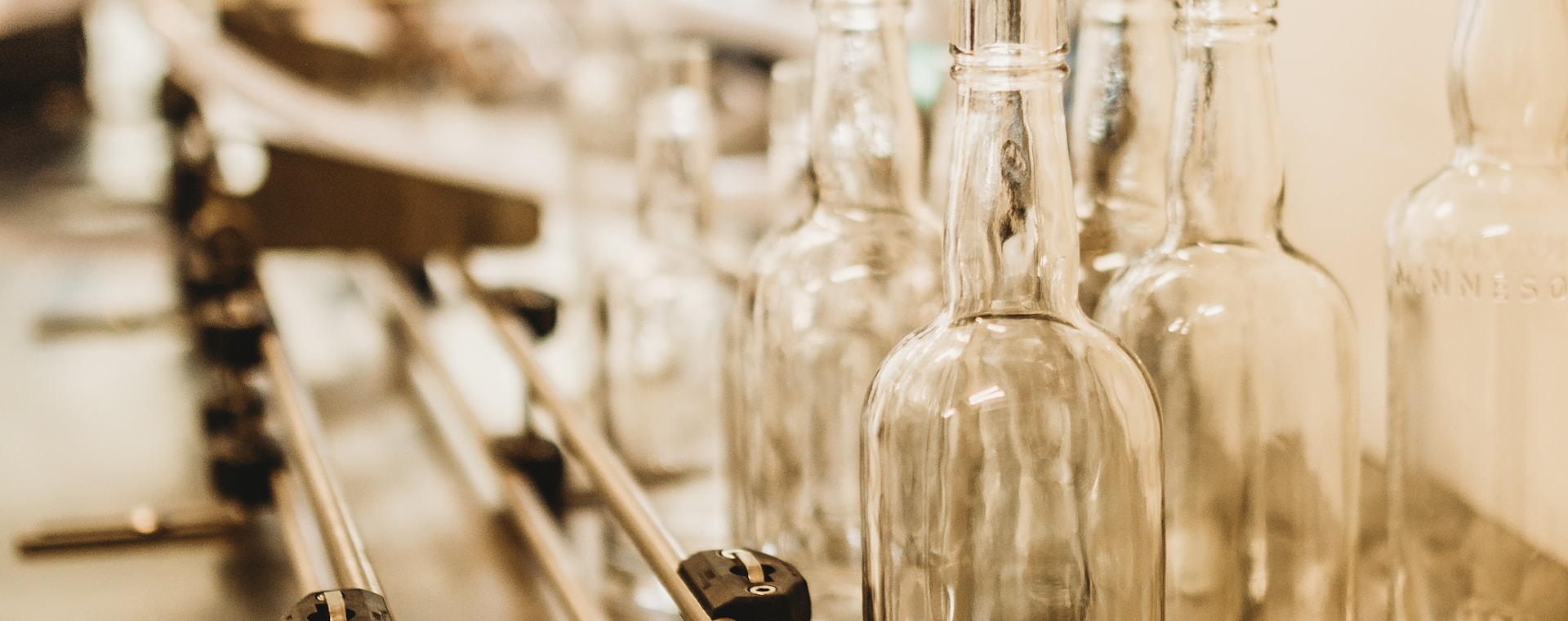
Rows of empty clear glass bottles on a cold-end conveyor after annealing

Glass Bottle Buyer Questions

The questions that come up before a first order — samples, moulds, minimums, lead times and paperwork. Questions about one bottle shape belong on that bottle's own page.

A sales engineer answers these questions most days. Each answer runs two or three sentences and points you at the guide that carries the working detail. For questions about a particular shape — the neck bore on a gin bottle, why your beer bottle should be amber, which sizes a Boston round runs in — the category pages answer those next to the designs themselves.

Free Glass Bottle Samples

Samples of stock designs cost you nothing but the courier. A request normally goes out as 5–10 pieces, picked from 10,000+ stock SKUs, so you can put real glass through your filler, your capper and your own drop test before you commit to a run.

Step 1

Tell us the spec

Your capacity, your closure and any decoration you are planning. A photo of the bottle you use today works just as well as a drawing.

Step 2

We match and confirm

A sales engineer at Tai’an matches your spec against stock designs and replies inside 24 hours with what fits and what it costs.

Step 3

Samples ship

Your samples leave our warehouse once you confirm the selection. You cover the courier; the glass itself is free.

Stock samples are free. Custom samples are not.

A bottle that does not exist yet has to be made before you can hold it, and that costs money either way. Your choice turns on whether the sample has to hold liquid or only has to look right on a desk.

RouteWhat you payHow longWhat it proves
Stock sampleCourier onlyShips that weekHow an existing design handles on your line
Acrylic prototype$500About 10 daysYour silhouette and shelf presence — it cannot be filled
Sample mould$1,200About 35 daysReal glass in your own shape, decorated and fillable

Request samples

Glass bottle samples

What you can hold before you commit to a run.

Can I get samples before I place an order?

Yes. Stock samples cost you nothing but the courier, and a request normally goes out as 5–10 pieces — enough to run through your filler, your capper and your own drop test. Tell us your capacity and your closure — a 5 oz (150 ml) woozy, a 750 ml (25 oz) wine bottle — and we pick the closest match out of 10,000+ stock SKUs.

Request samples →

What is the difference between a stock sample and a custom sample?

A stock sample already exists, so we pick it off the shelf and it ships that week. A custom bottle does not exist yet: you either commission a sample mould at $1,200 and wait about 35 days, or you start with an acrylic prototype at $500 in about 10 days.

Sample moulds explained →

Can I see my decoration on the sample?

Our decorating plant in Shandong screen prints, frosts, sprays and hot stamps your samples in-house, so you judge your artwork on real glass instead of on a rendering. You sign the decoration off as its own step before we release the run.

Decoration techniques compared →

Are custom samples free as well?

No. A stock sample already exists, so only the courier costs you anything. A bottle in your own shape has to be tooled first, which runs $1,200 for a sample mould or $500 for an acrylic prototype. The prototype answers a shelf question; the sample mould answers a filling-line question.

Stock mould or custom mould →

Custom glass bottles and moulds

What tooling costs you, who owns it, and how to avoid cutting one too early.

What does a custom glass bottle mould cost?

A production mould runs $1,200–2,200 per cavity, and your volume decides the cavity count — your shape does not. A sample mould, which proves the shape before you commit to the full set, costs $1,200. Cavity count, neck finish and a wider parting line move that figure.

What drives mould cost →

Who owns the mould, and does my design stay confidential?

A mould you pay for carries your bottle and we offer it to nobody else. Settle ownership, storage and what happens if you move production in writing before our mould shop cuts steel — that guide sets out what a mould agreement normally covers.

Mould ownership and NDAs →

Should I start with a sample mould or go straight to a production mould?

A sample mould costs you $1,200 and answers whether your shape forms cleanly, fills correctly and sits right in the hand. Skipping it saves that money, and it suits you when your shape sits close to something our 14 lines already run.

Stock mould or custom mould →

Can I prototype a bottle without cutting a mould at all?

Our mould shop machines an acrylic prototype to your drawing for $500 in about 10 days. It carries your silhouette, your proportions and your shelf presence, which is what a brand decision usually turns on, though you cannot fill it or pressure test it.

Acrylic prototypes →

Minimum orders, lead times and shipping

The commitment, the timing, and what fills a container.

What is your minimum order for glass bottles?

Extra-flint starts at 12,000 pieces and flint at 50,000, because a colour change on the furnace sets that floor, whatever shape you order. You can mix stock designs across SKUs to fill a container, so your first order need not run one design deep.

Browse stock designs →

How long does a glass bottle order take?

A stock order takes 15–20 days from your confirmation to dispatch. A custom bottle takes 30–45 days from your mould sign-off, with tooling time ahead of that. Our Shandong plant decorates in-house, so your decorated bottle keeps the same dates as a plain one.

How a custom project runs →

How many glass bottles fit in a container?

A 40HC leaving Shandong holds roughly 25,000 × 750 ml (25 oz) bottles, about 22,000 when your shape runs irregular, and around 60,000 × 12 oz (355 ml) bottles. Weight rather than volume decides it once your glass gets heavy, so your quotation carries a loading plan.

40HC loading in detail →

Which Incoterms do you ship on?

Quotations normally run EXW, FOB or CIF, and your choice turns on whether your freight forwarder or ours sits better placed at each end. That guide shows you where risk and cost change hands under each term.

Incoterms 2020 explained →

Quality, inspection and compliance

Who melts your glass, how we check it, and what travels with your pallets.

Are you a glass bottle manufacturer or a trading company?

Our 14 lines across two sites in Shandong and Xuzhou form your bottles, our own decorating plant finishes them and our own warehouse team loads them. The factory has run in Shandong since 2005 and SGSBOTTLE has shipped to 40+ countries since 2013, so no trading desk sits between you and the furnace.

The factory and its lines →

How do you inspect bottles before they ship?

We inspect to an AQL sampling plan and sort defects into critical, major and minor, which gives you a number to hold us to instead of a promise. Where your own buyer or your insurer wants an independent record, a third-party inspector checks the load before it seals.

AQL and defect classes →

What documents can you supply for customs and food safety?

Food-contact test reports carry most of the weight, and the standard that applies follows the market you sell into rather than the country your glass comes from. Tell us your destination and we send the set your importer will ask for.

Certificates explained →

Do glass bottles need rinsing before filling?

Bottles leave the annealing lehr hot and go straight into cartons at the cold end, so they reach you clean rather than sterile. Most fillers rinse anyway as part of their own line, and your product and your food safety plan decide whether you rinse or sterilise.

Annealing and the lehr →

More glass packaging questions

Our resource library carries the long form of every answer here, and a sales engineer replies to a written question inside 24 hours, Mon–Sat 8:30–18:00 (GMT+8).

Buyer resource library → · Ask a question →

sales@sgsbottle.com · Mon–Sat 8:30–18:00 (GMT+8)